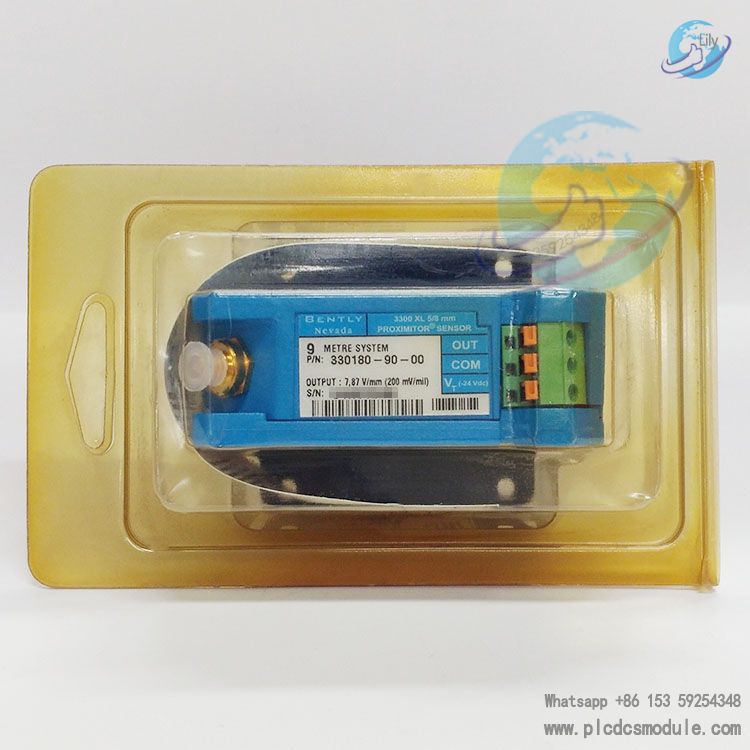
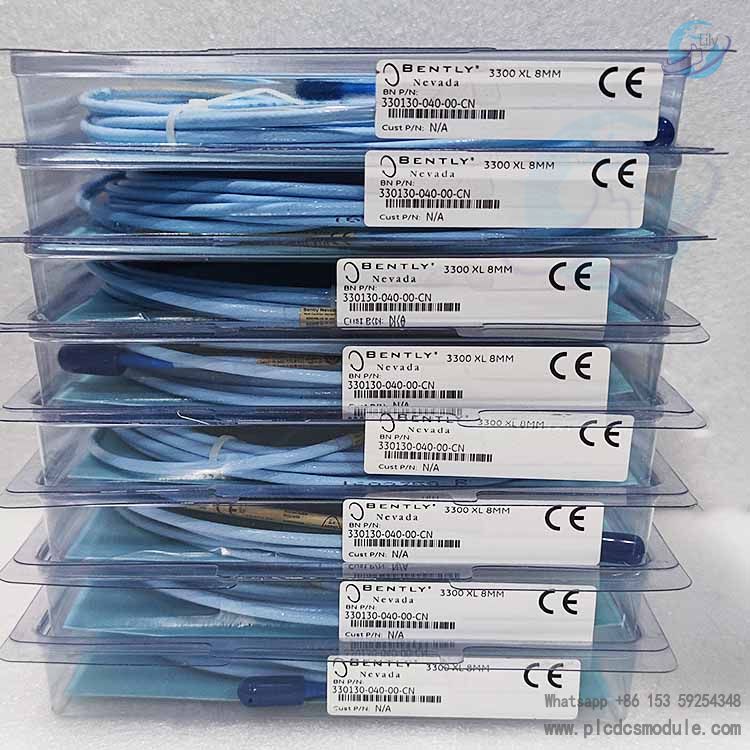
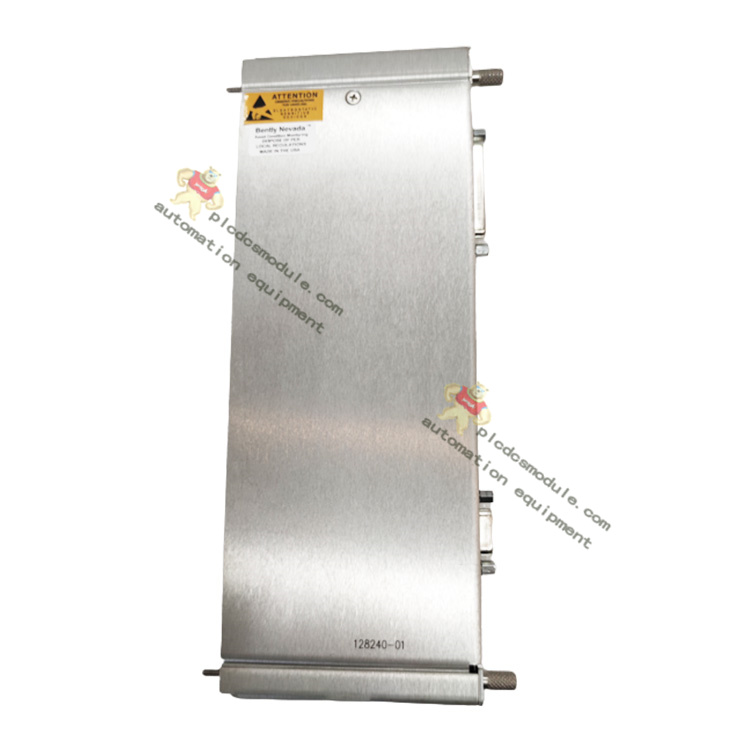
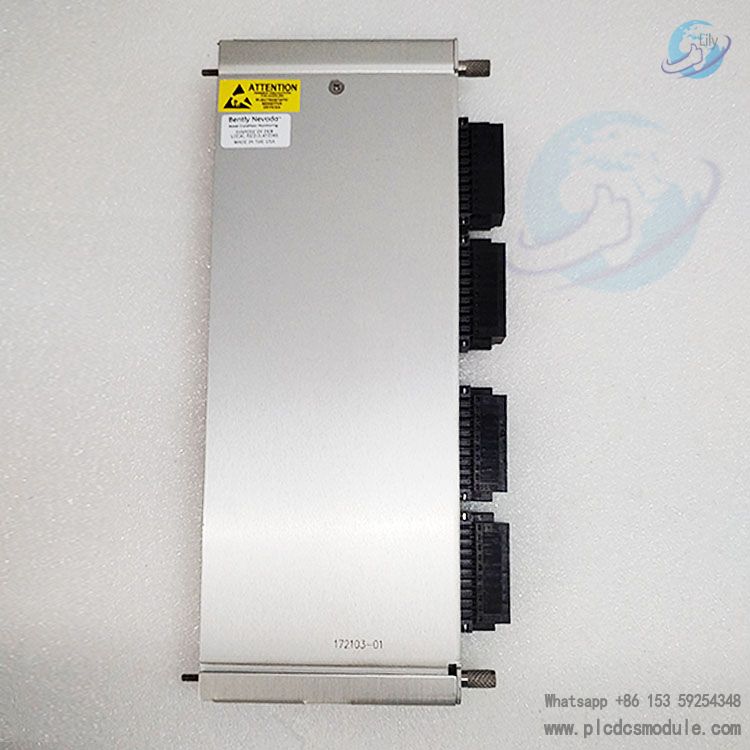
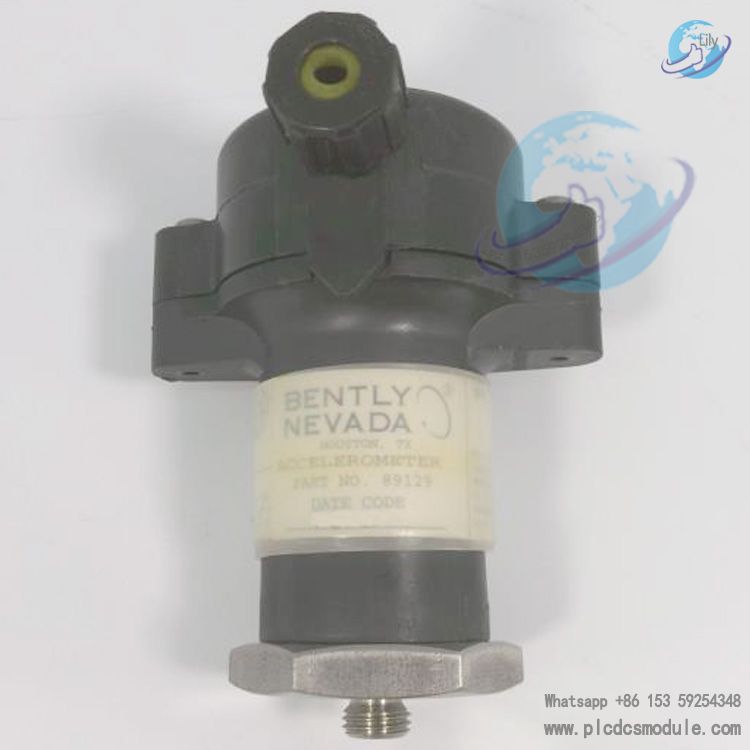
Note; All products on this site are special products, the market price has been fluctuating, the specific customer service offer shall prevail, because the product is a new product, the picture is not a real shot, please confirm with customer service before placing an order model and product, price and other details, the site used, new are for sale, please contact customer service communication. Bently Nevada 89129 (Model 89129-02-07) is a classic piezoelectric case-mounted seismic accelerometer under the Bently Nevada brand, designed specifically for vibration condition monitoring of industrial rotating machinery. It serves as the standard accelerometer for early 1900 Series monitoring systems (such as 1900/25 and 1900/27) and the Trendmaster 2000 system.
Equipped with a piezoelectric ceramic sensing element, the sensor converts mechanical vibration acceleration into a proportional charge signal, which is conditioned by the internal circuit into a differential voltage output. It features stable sensitivity, broadband frequency response and high environmental adaptability, and is mainly used for absolute vibration acceleration measurement on bearing housings and equipment casings. It can accurately capture abnormal vibration characteristics such as equipment unbalance, misalignment, bearing wear and gear defects, providing critical data support for equipment protection and preventive maintenance.As a classic legacy model, its performance parameters and installation specifications have been carried forward by successor models including the 200150 series, making it a proven and reliable solution in the field of industrial vibration monitoring.
Technical Specifications
1. Electrical Specifications
- Sensitivity: 100 mV/g (10.2 mV/m/s²) ±12% (at 80 Hz reference)
- Frequency Response: 10 Hz–1000 Hz (±10%, at 80 Hz reference)
- Measuring Range: ±25 g (±245 m/s²) peak
- Amplitude Linearity: ±2% within 1 g–10 g
- Transverse Sensitivity: < 5% of main axis sensitivity (at 80 Hz)
- Mounted Resonant Frequency: > 5000 Hz
- Output Polarity: Positive voltage output for motion toward the connector
- Noise Floor: < 0.015 g (0.147 m/s²) RMS
- Isolation Withstand Voltage: 600 V (pin-to-housing)
2. Environmental Specifications
- Operating / Storage Temperature: -40℃ to +85℃
- Humidity: 100% (condensing, non-immersed)
- Shock Resistance: < 5% change in sensitivity after 3 ft drop onto vinyl flooring
3. Mechanical Specifications
- Mounting Thread: Bottom 3/8-24 UNF internal thread
- Mounting Torque: 2.8 N·m (25 in-lb)
- Weight: Approx. 71 g
- Housing Material: Thermoplastic engineering plastic (rugged and moisture-resistant)
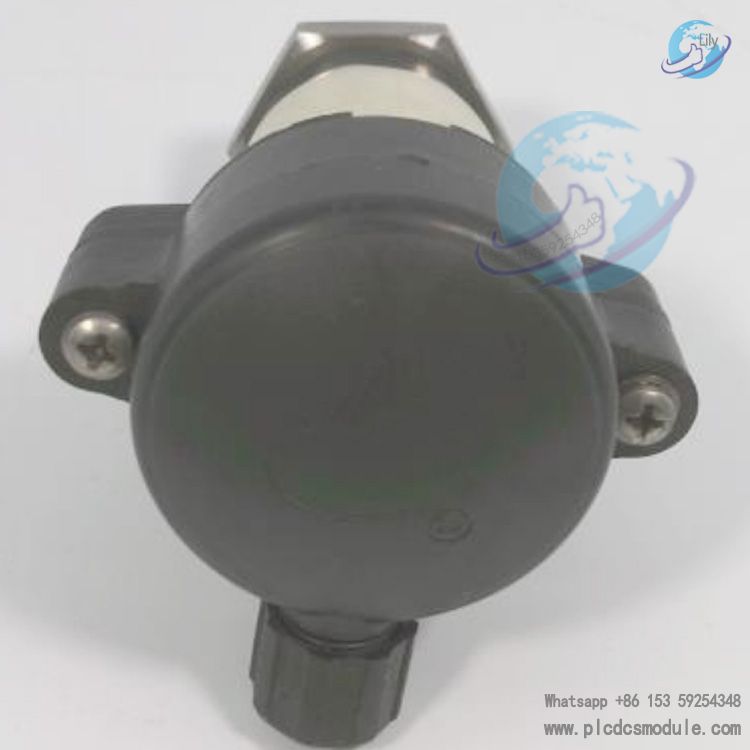
- Connector: Top 4-pin threaded connector (supports quick wiring)
Frequently Asked Questions (FAQ)
Q1: What is the difference between 89129-02-07 and its replacement model 200150?
A: The 89129 is a classic model, while the 200150 is its upgraded replacement. Their core specifications (sensitivity, measuring range, frequency response) are essentially identical. The 200150 features a stainless steel housing for improved sealing and shock resistance, making it suitable for harsher environments. It has a compatible mounting interface and can directly replace the 89129 using adapters, working with existing monitoring systems.
Q2: What problems are caused by loose sensor mounting?
A: Loose installation significantly reduces high-frequency response and generates false vibration signals, resulting in low measured amplitude, distorted frequencies, and failure to detect high-frequency fault characteristics such as gear and bearing defects. It may even cause resonance and damage the sensor.
Q3: Can it be used in extreme high or low temperature environments?
A: The standard unit has an operating temperature range of -40℃ to +85℃. Temperatures below -40℃ may cause sensitivity drift and cable embrittlement. Temperatures above 85℃ can damage the piezoelectric element and internal circuitry. For extreme temperatures, Bently Nevada high-temperature dedicated accelerometers (such as 330450 HTAS) should be used.
Q4: Why is the signal affected by motor or VFD interference?
A: Strong electromagnetic interference can couple into the cable and sensor circuitry, introducing noise. Solutions include using double-shielded cables, routing wires through metal conduits, keeping away from interference sources, single-point grounding, optimizing grounding loops, and installing signal filters if necessary.
Q5: What is the typical service life of the sensor?
A: Under normal operating conditions with proper installation and maintenance, the service life is 5–8 years. Exposure to high temperatures, high humidity, severe shock, or continuous vibration will shorten its lifespan. Regular calibration and timely replacement of aging components can extend service life.
Q6: Can it be connected directly to a PLC/DCS system?
A: No direct connection is possible. It must be used with a Bently Nevada acceleration-to-velocity conversion module (TIM) such as 89130 or 89546, or a monitor such as 1900/25 or 1900/27, to condition the signal into 4–20mA or digital format before connecting to the control system.
Q7: Does transverse mounting affect measurement?
A: Yes. Although transverse sensitivity is less than 5%, mounting off the primary sensing axis will cause signal attenuation and phase deviation, preventing accurate representation of target vibration. The sensor must be installed along its sensitive axis.
Q8: How to choose between adhesive mounting and threaded mounting?
A: Threaded mounting provides the best rigidity and stable signal, so it is the preferred method. Adhesive mounting is suitable for non-threaded surfaces or where drilling is impractical. Ensure secure bonding and full curing; rigidity is slightly lower than threaded mounting.