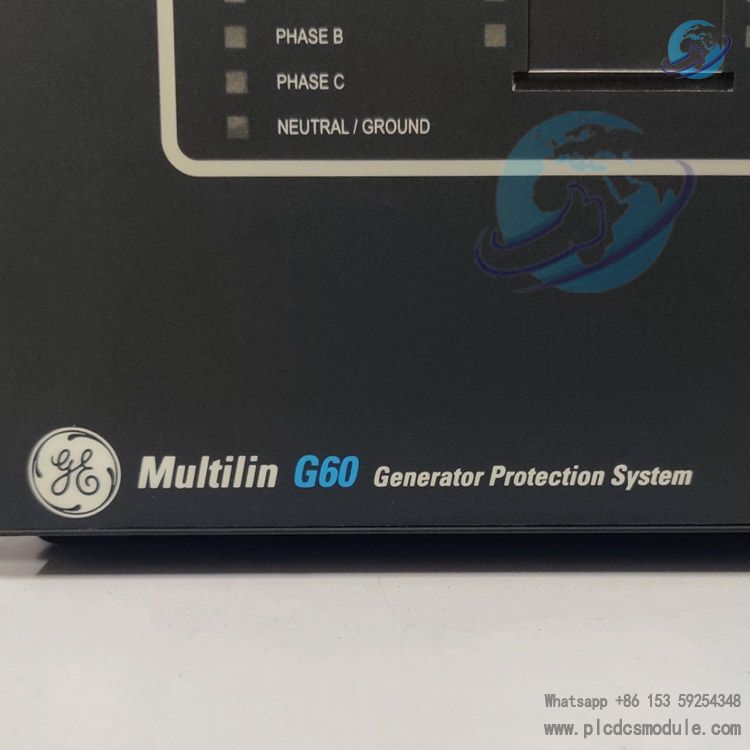
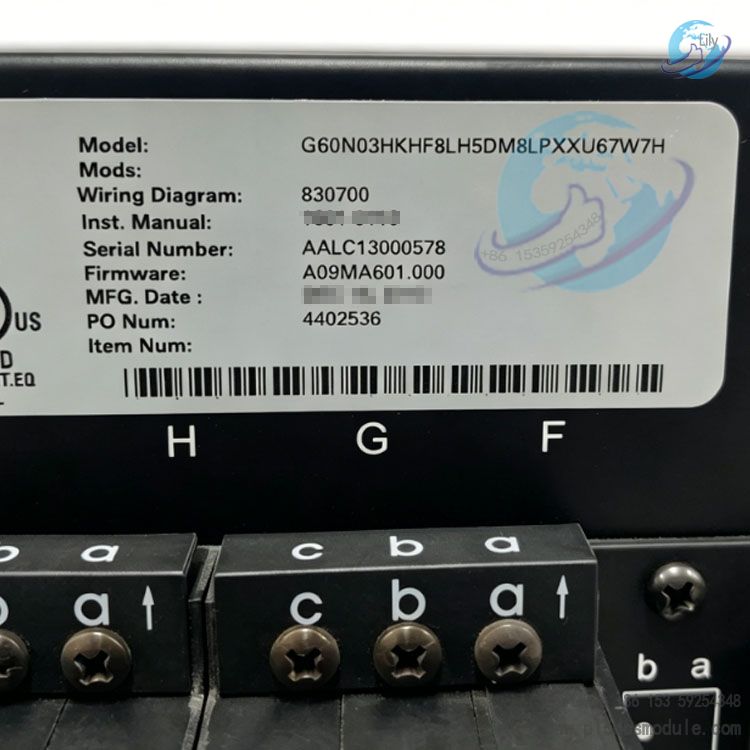
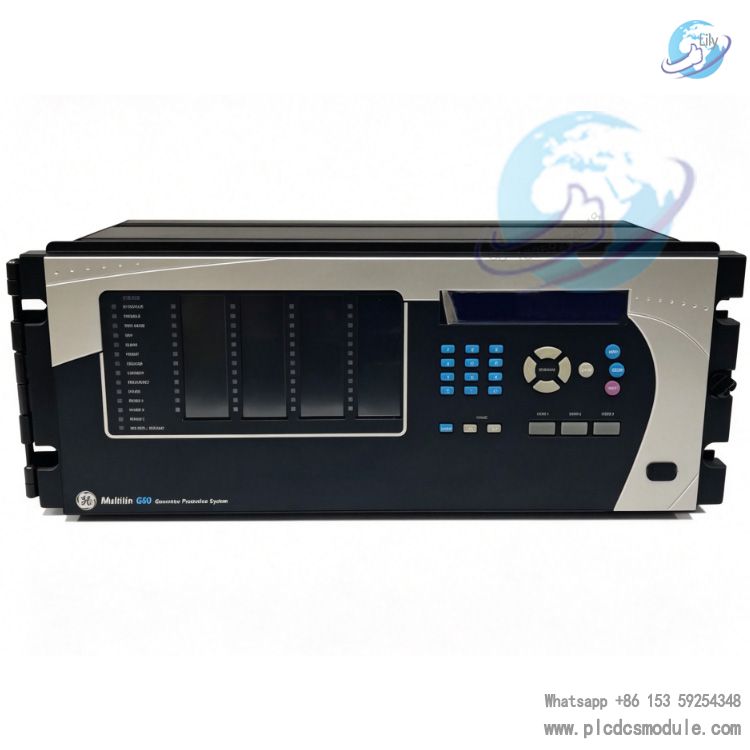
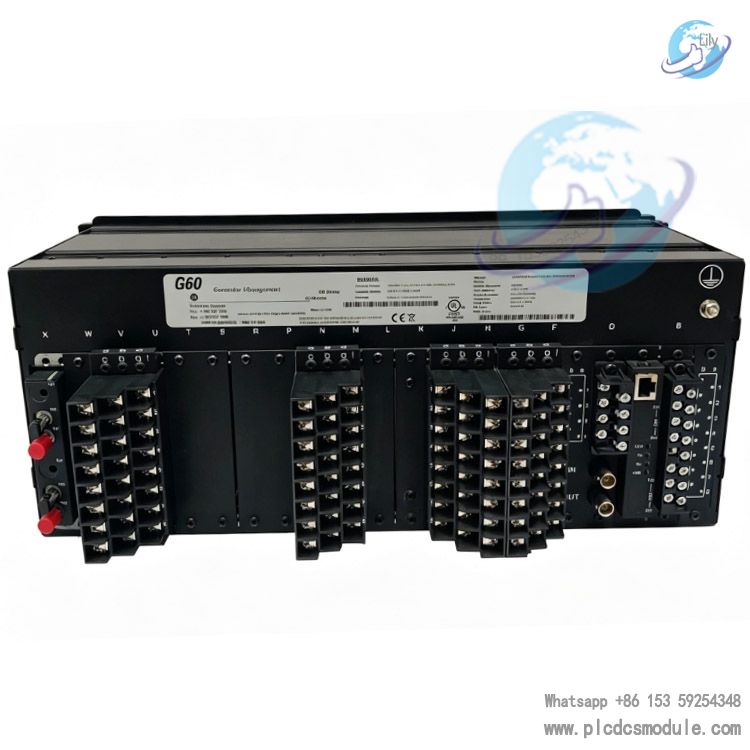
Note; All products on this site are special products, the market price has been fluctuating, the specific customer service offer shall prevail, because the product is a new product, the picture is not a real shot, please confirm with customer service before placing an order model and product, price and other details, the site used, new are for sale, please contact customer service communication. Multilin G60N03HKHF8LH5DM8LPXXU67W7H is a
high-end generator protection system of the UR series under
GE Vernova. Designed specifically for medium and large-sized steam turbine, gas turbine, combined cycle and hydroelectric generating units, it integrates protection, control, measurement, fault recording and communication functions in one device. Compliant with the IEEE C37.102 standard, it serves as the core protection equipment for power stations.
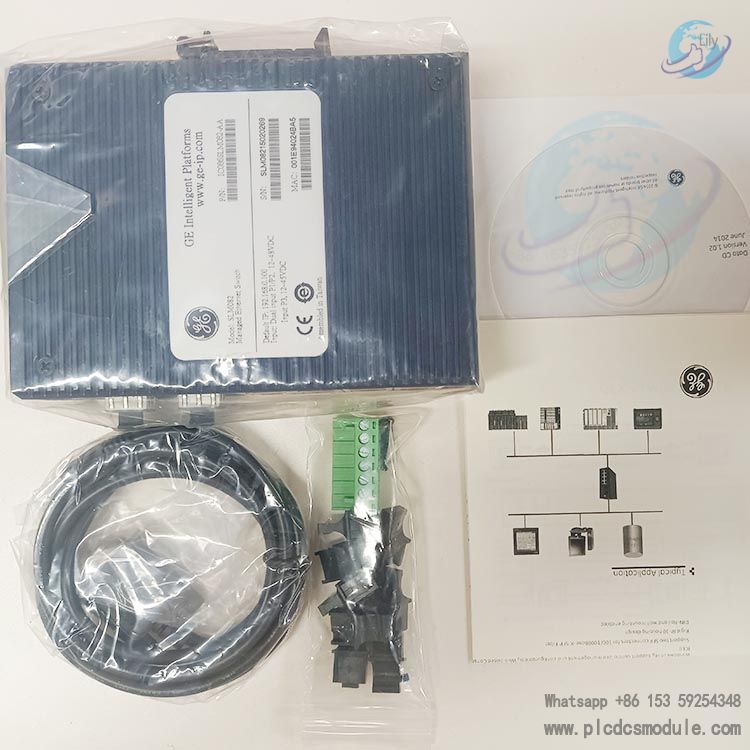
It features outstanding core advantages: it delivers comprehensive high-speed protection, covering 100% stator ground fault, differential protection, loss of excitation, overexcitation, reverse power and other protection functions with fast and reliable tripping performance; fully compatible with IEC 61850 Ed.1/Ed.2, it supports process bus (9-2LE) and R-GOOSE, enabling seamless communication for cross-substation wide-area protection; built with integrated networking and cybersecurity design, it embeds a fully managed Ethernet switch with dual power supply redundancy, and its CyberSentry function meets cybersecurity requirements such as NERC CIP; it comes with a built-in PMU compliant with IEEE C37.118, supporting power grid dynamic monitoring without additional external devices. In addition, it offers flexible expandability and user-friendliness with modular I/O, programmable FlexLogic and a 5.7-inch color display, enabling local and remote visual operation and maintenance, fully meeting the protection and management requirements of medium and large generator units.
Key Features
1. Protection Functions
100% coverage of stator/rotor ground fault protection, stator differential protection and split-phase protection.Loss of excitation / overexcitation protection, reverse power / under power protection, and abnormal frequency protection (overfrequency / underfrequency, rate of change of frequency).System swing blocking, out-of-step tripping, circuit breaker failure protection and synchronism check.Additional step-up transformer differential protection realizes multi-functional integration in one device.
2. Measurement and Fault Recording
High-precision measurement: Current, voltage, power, energy and frequency, with synchronized phasor output supported.Fault recording: 64 samples per cycle, up to 64 fault records; 1024 time-stamped events with 0.5 ms input scanning speed.
3. Communication and Interfaces
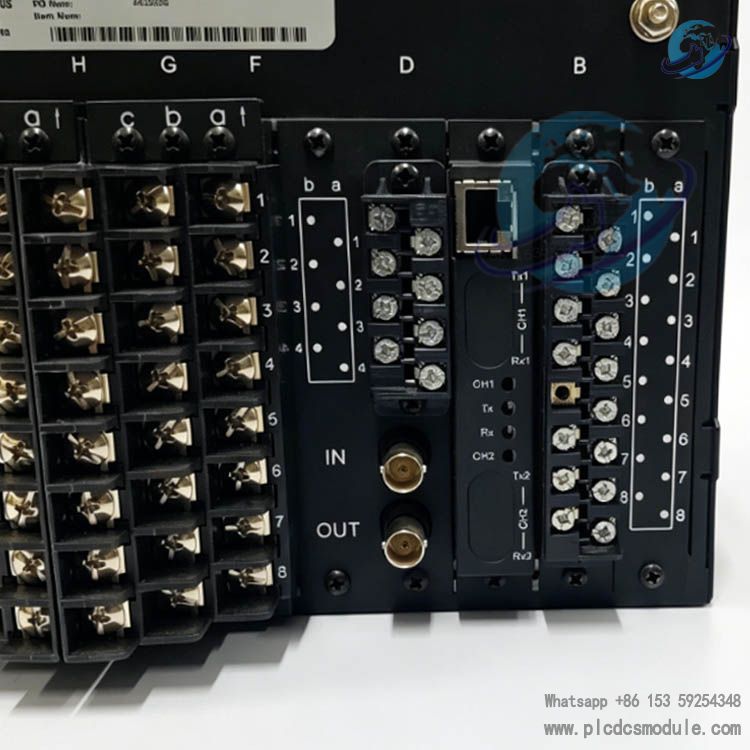
3 independent Ethernet ports (optical / electrical), supporting PRP zero-switchover redundancy.Protocols: IEC 61850, DNP3.0, Modbus TCP/RTU, EGD, IEEE 1588 PTP time synchronization.I/O: High-density DI/DO, analog input and RTD temperature measurement input, meeting complex control requirements.
4. Hardware and Environmental Adaptability
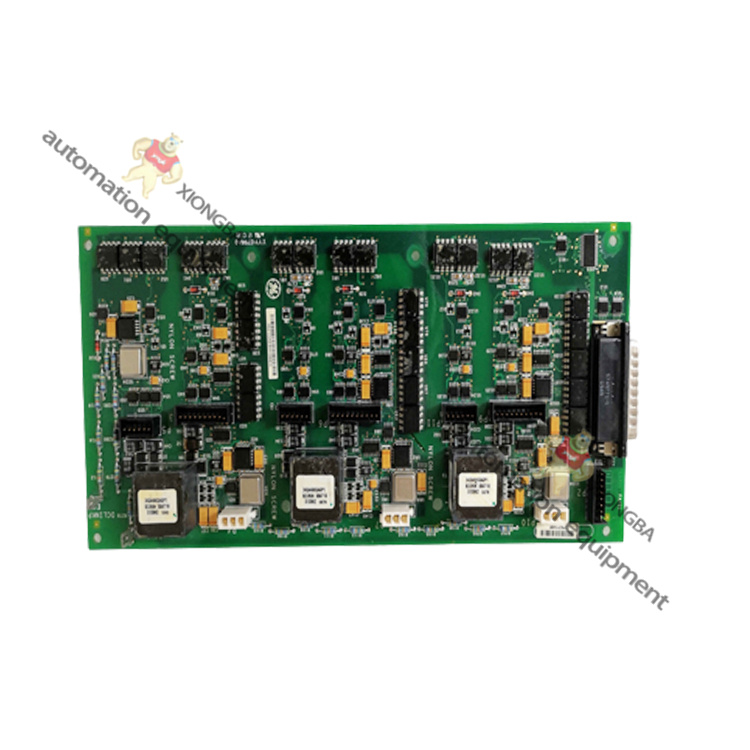
Modular design with hot-swap support for easy maintenance.Wide operating temperature range: -40℃~+70℃, excellent electromagnetic interference resistance, suitable for harsh industrial environments.
Application Scenarios
Large Thermal / Gas-Fired Power PlantsFor steam and gas turbine generators of 600MW and above, high-sensitivity differential protection prevents winding short-circuit faults.
Pumped Storage Power StationsAdaptable to frequent unit start-stop and operating condition switching; no need to switch CT secondary circuits, compatible with both generating and motoring dual operating modes.
Combined Cycle Power PlantsCooperates with gas turbine control systems to realize rapid islanding and support black-start functions.
Hydropower / Wind Power Step-up SubstationsProvides protection for multi-circuit hydroelectric units and the low-voltage side of main transformers for large doubly-fed wind turbines, and is capable of identifying high-resistance ground faults.
Industrial Captive Power Plants / Synchronous CondensersOffers protection for key rotating equipment to ensure power grid stability.
User Guide
1. Installation and Wiring
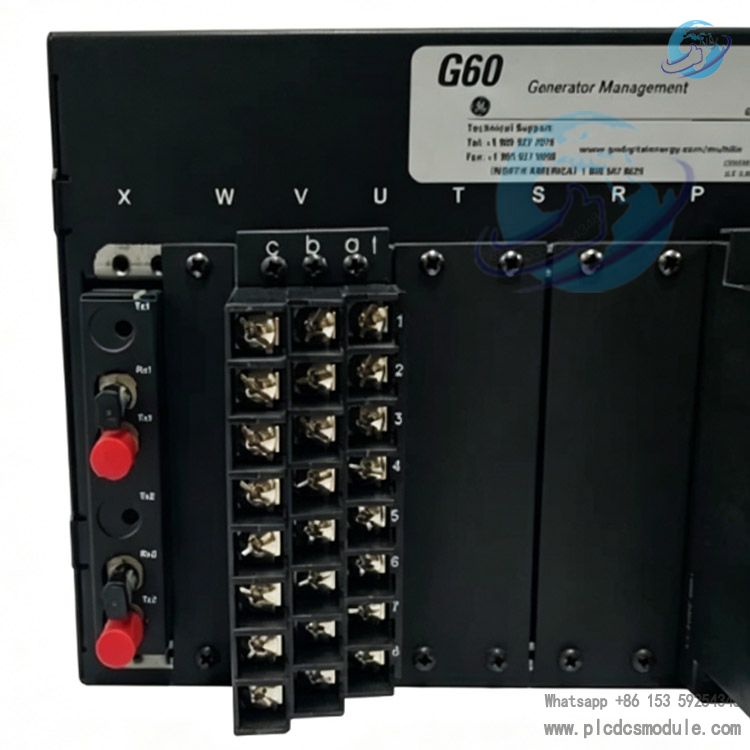
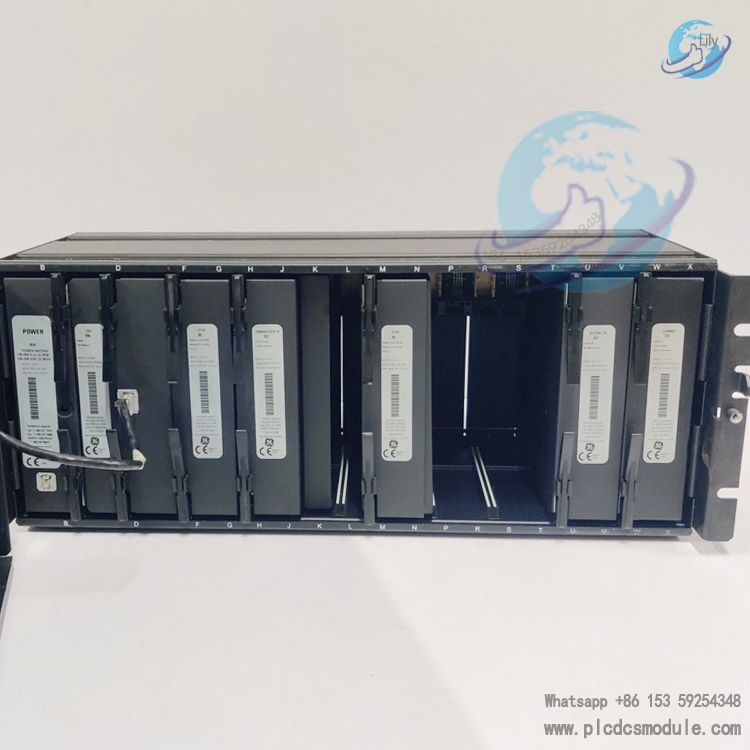
Adopt standard 19-inch rack mounting, available for vertical or horizontal installation with reserved heat dissipation space.Use shielded cables for CT/PT secondary wiring with single-end grounding; adopt AC and DC dual power supply to enhance operational reliability.Connect the Ethernet port to a switch and configure the IP address to ensure communication with the monitoring system.
2. Software Configuration
Install the configuration software, connect to the G60 via USB or Ethernet, and the device will be automatically recognized.Basic parameters: Set the rated unit voltage/current, frequency, and CT/PT transformation ratio.Protection settings: Configure the enable/disable status and setting values for differential, grounding, loss of excitation and other protections in accordance with IEEE standards and manufacturer recommendations.Communication configuration: Set IEC 61850 parameters, GOOSE subscribe/publish, and PMU synchronized phasor output.Logic programming: Customize interlock, tripping and alarm logic via FlexLogic™.Download the configuration to the device and restart for it to take effect; generate an SCL file for import by the background system.
3. Front Panel Operation
Color display: Real-time display of voltage, current, power, protection status and alarm information.Menu navigation: Use keys to access Protection Settings, Event Records and Waveform Recorder; on-site parameter modification is available with authorization.Permission management: Three-level password protection to prevent misoperation.
4. Commissioning and Commissioning Operation
Power-on self-test: After the device completes self-testing without faults, perform analog input testing and output tripping test.Communication test: Verify normal data interaction with SCADA/background system as well as GOOSE message sending and receiving.On-load test: After unit grid connection, check the accuracy of protection measurement values and the balance state of differential protection.
Comparison (G60 vs Siemens 7UT61/62 & ABB REG670)
| Comparison Dimension | GE Multilin G60 | ABB REG670 |
|---|
| Platform Positioning | High-end UR platform, dedicated for power generation | RELION platform, universal for power generation and substation applications |
| Protection Completeness | 100% stator grounding + rotor grounding + full-range generator protection | Complete stator and rotor grounding protection; loss-of-excitation protection logic is relatively complex |
| IEC 61850 Support | Ed.1 / Ed.2 + Process Bus + R-GOOSE, full-function compatibility | Ed.2 compatible; weak cross-substation GOOSE capability |
| Synchronized Phasor | Built-in PMU compliant with IEEE C37.118, no additional device required | Built-in PMU, supports IEC 61850-90-5 |
| Cybersecurity | CyberSentry™ compliant with NERC CIP, dual authority control | ABB Cyber Security solution with good compliance performance |
| HMI | 5.7-inch color display, graphical mimic panel, local visual operation | 4.3-inch color display with complicated operation logic |
| Expandability | Modular I/O, hot-swap supported, high customization flexibility | Modular design yet high cost and long customization cycle |
| Price Range | Mid-to-high end with excellent cost performance | High-end with the highest price level |
Frequently Asked Questions
Q1: What are the core differences between G60 and G30?A: The G60 is a high-end protection relay for medium and large generators, featuring full functional coverage, complete IEC 61850 compatibility, built-in PMU, and a color display. The G30 is an economical model for small and medium units with simplified protection functions, no PMU, basic communication only, and a lower price.
Q2: How to resolve unwanted tripping of G60 differential protection?A: 1. Check CT wiring polarity and consistency of transformation ratios;
2. Adjust the differential restraining slope within 10%~30%;
3. Verify CT secondary load to avoid CT saturation;
4. Upgrade firmware to the latest version for optimized differential algorithm.
Q3: What time synchronization methods does the G60 support?A: It supports IEEE 1588 PTP (Master/Slave), IRIG-B (DC/AC), and NTP/SNTP, with synchronization accuracy up to 1μs, fully meeting power grid timing requirements.
Q4: How to configure the CyberSentry security function?A: 1. Enable dual authority control (Administrator / Operator);
2. Configure AAA authentication and RADIUS server;
3. Activate command logging and security event alarms;
4. Disable unused ports and restrict IP access.
Q5: How to export and analyze G60 fault recording files?A: 1. Local operation via panel: Insert a USB flash drive, enter
Waveform Management, and export files in COMTRADE format;
2. Software operation: Connect to the device via EnerVista, download fault records, and analyze waveforms with GE Waveform Analyzer.
Q6: Is additional configuration required for pumped storage units?A: No extra CT secondary switching circuit is needed. The G60 has built-in dual-mode protection logic for generating/motoring operation, automatically identifying working conditions and simplifying wiring and maintenance.