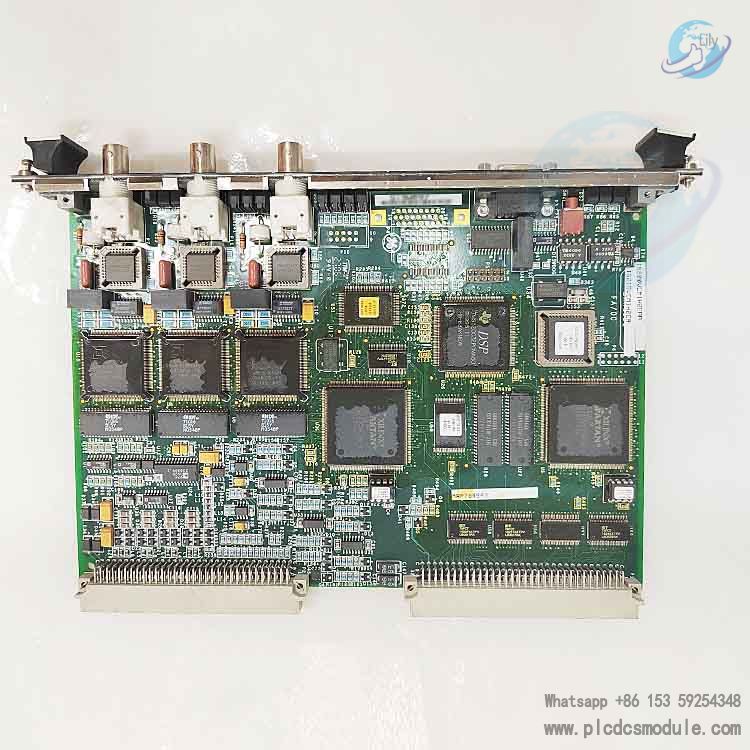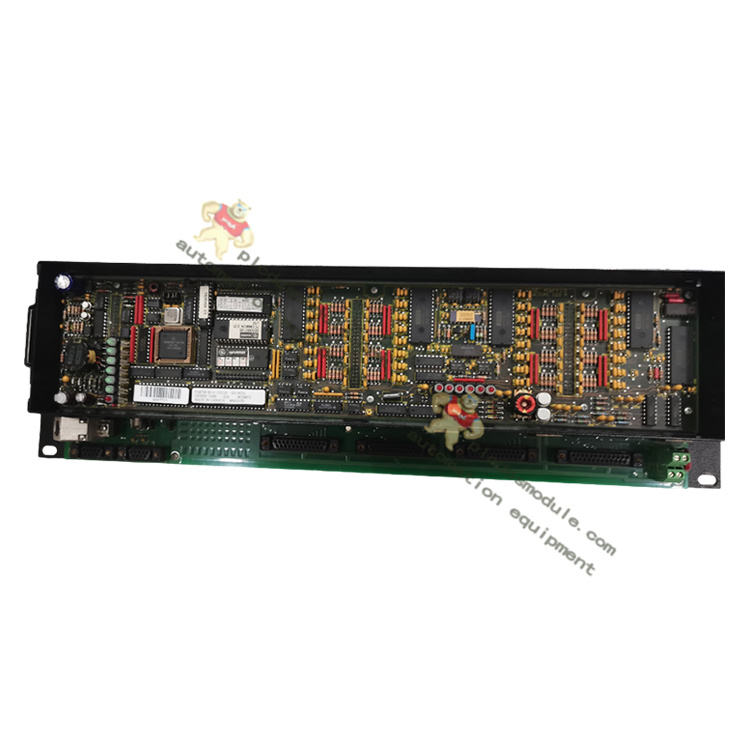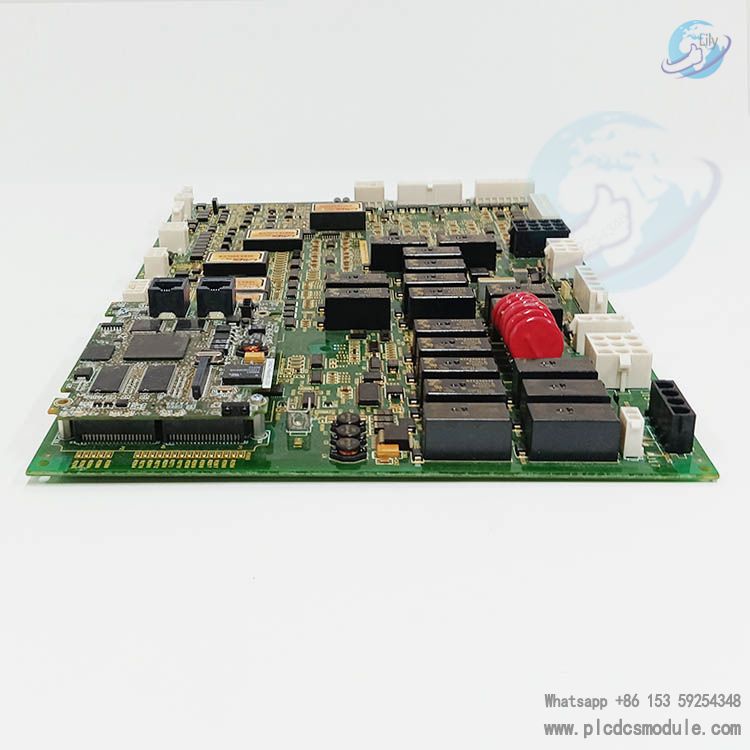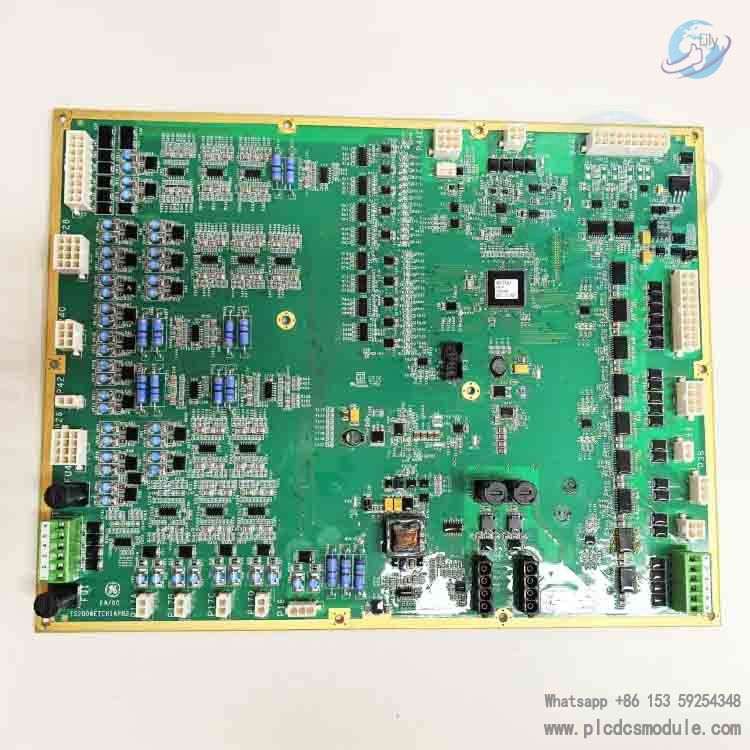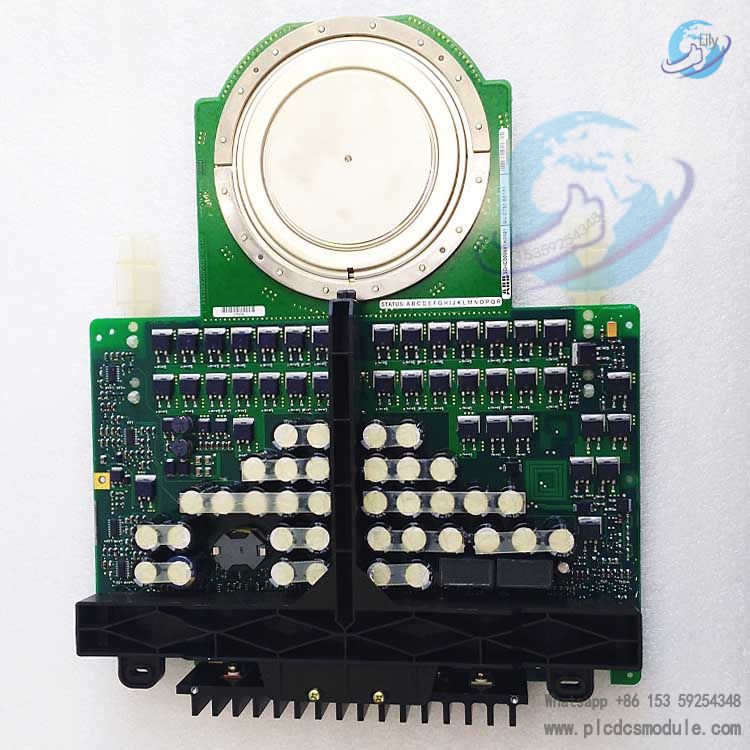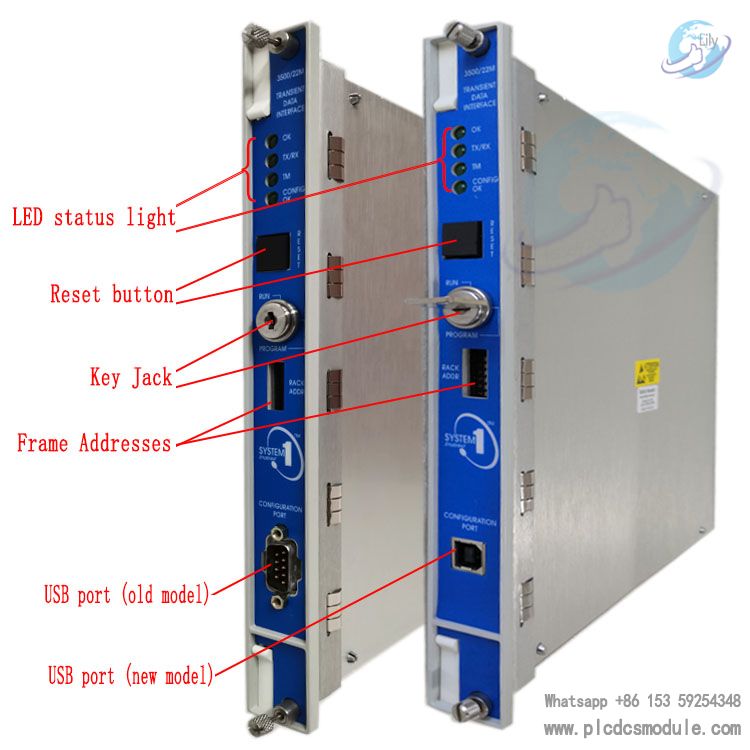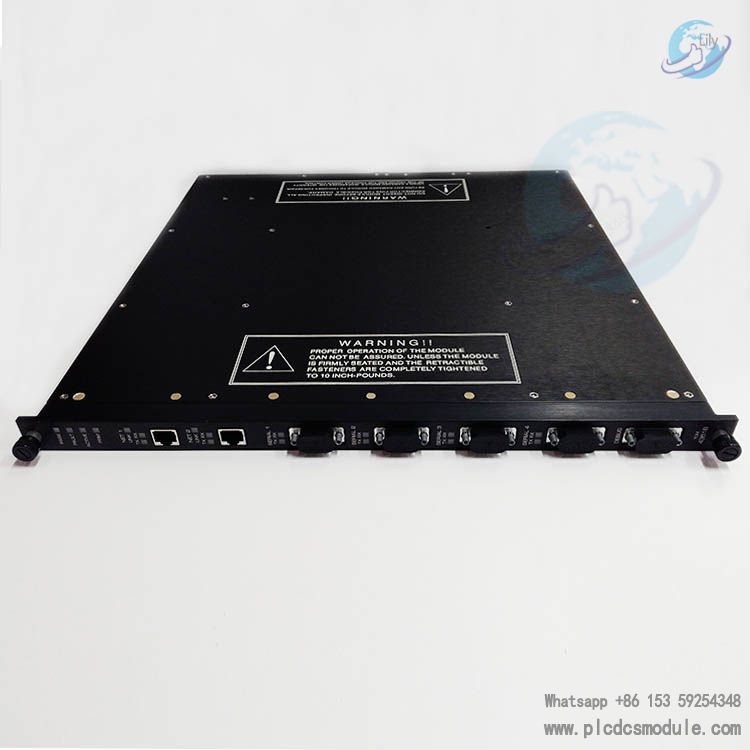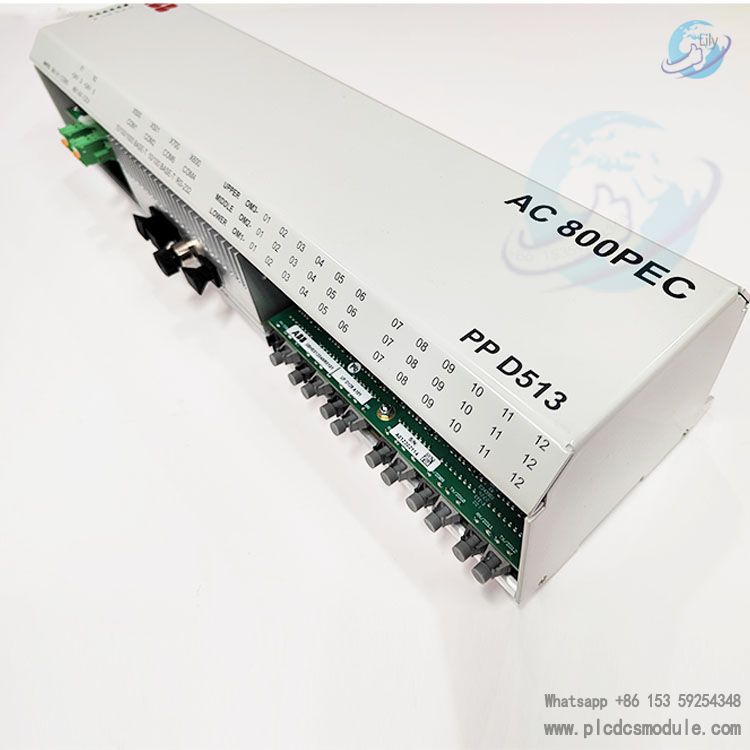


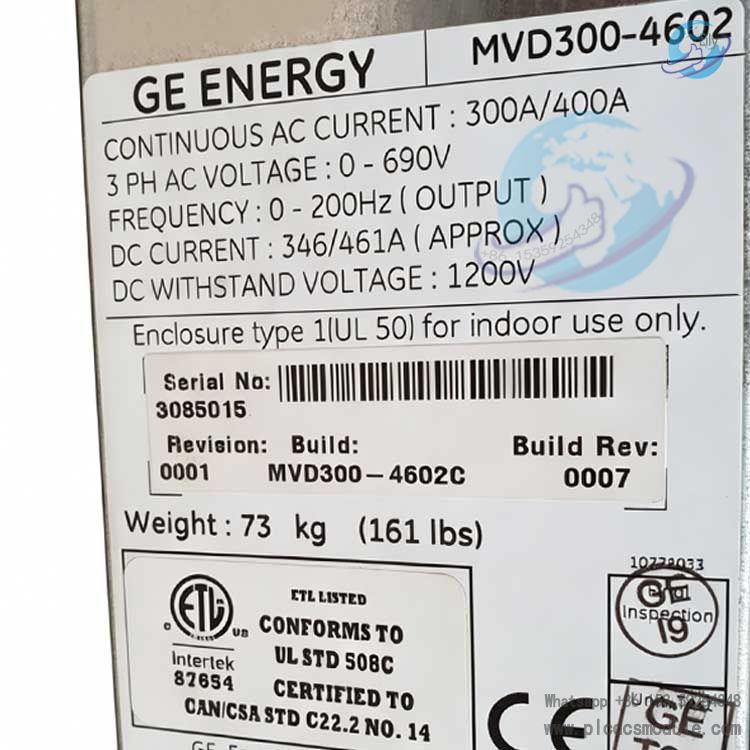
The GE ALSTOM ALSPA MVD300-4601 is a medium-voltage drive controller originally launched by Alstom (now under GE Power Conversion). As a core model of the ALSPA MVD300 series, it is specially designed for 3.3kV/4.16kV/6kV medium-voltage motors. It integrates vector control, IGBT power units, multi-level protection and industrial communication functions, and is widely used in heavy-duty and high-reliability scenarios such as petrochemical, metallurgy, cement and power industries.
Product Advantages
High Reliability DesignAdopts three-level IGBT topology to reduce component stress. Modular power units support hot swapping and on-site replacement, with an MTBF exceeding 100,000 hours.
Superior Control PerformanceEquipped with sensorless vector control (VC), featuring a speed regulation range of 1:200 and torque accuracy of ±5%. It can output 150% rated torque at 0.25Hz, perfectly suitable for heavy-duty startup.
Low Harmonics & High Energy EfficiencyBuilt-in AFE active front end on the input side achieves THDi<5% and power factor ≥0.95. The inverter efficiency reaches 97.5%, saving 15%-25% energy compared with traditional solutions.
Strong Environmental AdaptabilityAvailable in IP31/IP44 protection grades. It operates stably at ambient temperatures from -10℃ to +45℃ with an altitude rating up to 1000m (derated operation supports up to 3000m). Featuring vibration and dust resistance, it meets strict industrial working conditions.
Product Features
1. Core Technical Parameters
Rated Voltage: 3.3kV / 4.16kV / 6kV (compatible with 4601 specification)Power Range: 250kW~2MW (Model 4601 is the standard 4.16kV/630kW version)Control Modes: VVVF, sensorless vector control, flux vector control, torque controlOverload Capacity: 150% rated current for 1 minute, 120% for 5 minutes, 100% continuous operationOutput Frequency: 0~100Hz; 0~120Hz optional for fan and pump applicationsCooling Mode: Forced air cooling (standard); water cooling (optional)
2. Hardware Architecture
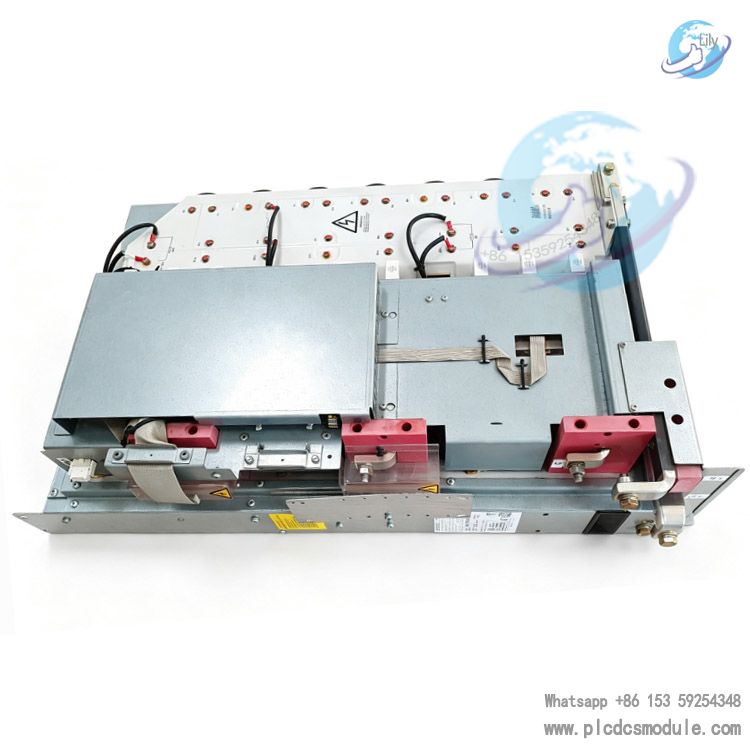
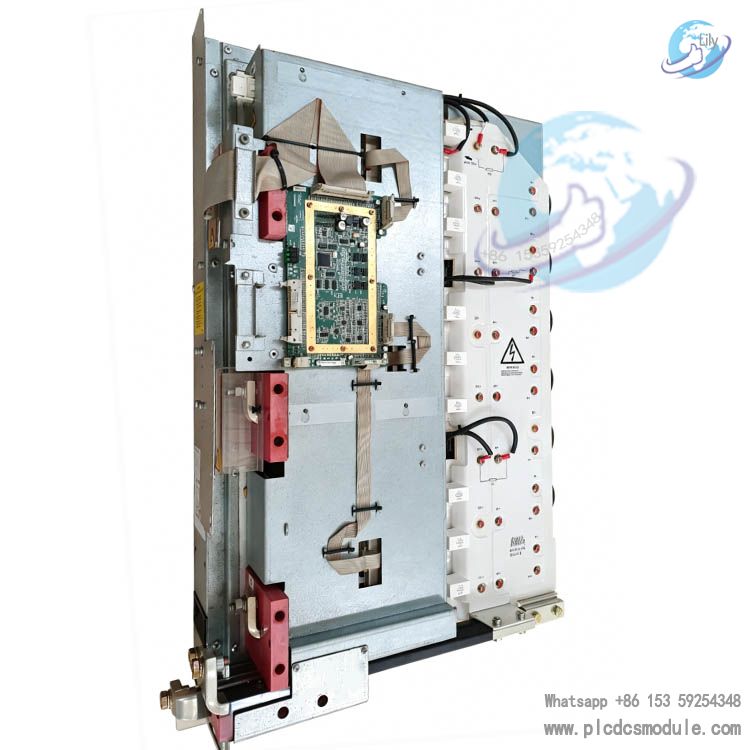
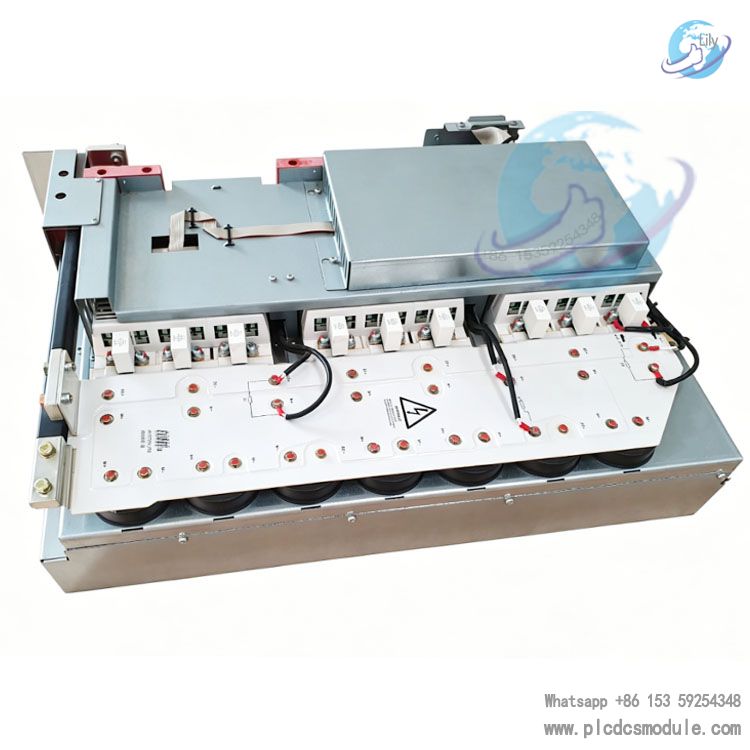
Controller: Dual-core design with 32-bit floating-point DSP + PLC, compliant with IEC 61131-3 programming standard, supporting function block diagram and ladder diagram programmingPower Unit: Three-level IGBT module with low dv/dt output, effectively extending motor insulation service lifeI/O Interfaces: 16DI/12DO (24VDC), 4AI/2AO (4-20mA), compatible with various sensors and actuatorsCommunication Buses: Standard equipped with Profibus-DP, Modbus-RTU; Ethernet/IP, Profinet, CANopen available as options
3. Protection & Diagnosis Functions
Electrical Protection: Overcurrent, overvoltage, undervoltage, overheating, earth fault, short circuit, motor stall and phase loss protectionIntelligent Diagnosis: Hierarchical fault code display, waveform recording (max. 10 minutes), trend analysis and service life predictionSafety Mechanism: STO Safe Torque Off (complying with EN 61508 SIL3), meeting standard safety shutdown requirements
Application Scenarios
Oil & Gas IndustryCrude oil transfer pumps, compressors, water injection pumps, gas delivery fans
Metallurgy IndustryRolling mills, roller tables, blast furnace blowers, dust removal fans, circulating water pumps
Cement & Building Materials IndustryKiln main motors, raw material mills, cement mills, fans, elevators, crushers
Power IndustryInduced draft fans, forced draft fans, circulating water pumps, condensate pumps, coal pulverizers
Water Treatment IndustryLarge sewage pumps, reverse osmosis high-pressure pumps, aeration fans, sludge dewatering machines
Comparison of Peer Medium-Voltage Controllers
| Comparison Items | GE ALSPA MVD300-4601 | ABB ACS6000 |
|---|---|---|
| Topology Structure | Three-level IGBT | Three-level IGBT |
| Control Performance | Vector control, torque accuracy ±5% | Direct Torque Control (DTC), torque accuracy ±2% |
| Harmonic Index | THDi<5% (AFE) | THDi<3% (AFE) |
| Energy Efficiency | 97.5% | 98.0% |
| Protection Grade | IP31/IP44 | IP42/IP54 |
| Communication Capacity | Standard: Profibus, Modbus | Standard: Profibus, Ethernet/IP |
| Maintainability | Modular design, hot-swap support, remote diagnosis | Modular design, hot-swap support, remote diagnosis |
| Price Range | Mid-range, cost-effective | High-end |
| Preferred Application Scenarios | Heavy-duty operation, high cost performance, global after-sales service | High precision, papermaking & metallurgy industries |
Frequently Asked Questions
Q1: No display after power-on, how to troubleshoot?Check if the 24VDC control power supply is normal and whether the fuse is blown.Confirm the main circuit circuit breaker is closed and input voltage is within the rated range (±10%).Inspect loose panel connecting wires, re-plug or replace the operation panel.
Q2: Overcurrent fault (OC) occurs during operation, causes and solutions?Overloaded load: Reduce load and extend acceleration time (e.g. from 10s to 20s).Motor short circuit/earth fault: Measure motor insulation after power off to eliminate motor failures.Incorrect parameter settings: Verify rated motor current and torque limit, redo motor parameter auto-tuning.
Q3: Excessive harmonics affecting power grid, how to solve?Confirm the AFE active front end is enabled (standard AFE ensures THDi<5%).Install input reactor or passive filter to suppress harmonics.Optimize PWM modulation mode and lower switching frequency (balance noise and harmonic performance).
Q4: Severe motor overheating with alarm over 85℃?Overload operation: Cut down load and avoid continuous operation above 120% load.Poor heat dissipation: Clean radiator dust, check cooling fan operation and improve ventilation conditions.Mismatched motor parameters: Re-enter rated motor parameters and complete auto-tuning.
Q5: Communication interruption, failed DCS remote control?Check loose or damaged communication cables and proper shielding grounding.Ensure consistent communication parameters (address, baud rate, protocol) with upper computer.Restart controller and upper system to resolve software conflicts; replace communication module if necessary.
Q6: Insufficient starting torque, failure of heavy-duty startup?Enable vector control mode (low torque under VVVF mode).Increase starting torque setting (up to 150%) and prolong acceleration time.Check motor rotor resistance to rule out motor aging issues.