

Complete Selection Guide for GE Mark VI Speedtronic Gas / Steam Turbine Control System Modules
This document covers the full range of hardware for classic Mark VI (VME rack-mounted) and upgraded Mark VIe (distributed split I/O) systems, divided into seven major categories: main processor, I/O acquisition module, servo control, safety protection, communication board, power supply, terminal base and supporting accessories. Targeted at power plant maintenance personnel, system integrators and spare parts purchasers, it clearly defines selection boundaries, model distinctions, applicable units and procurement judgment standards for three architecture types: Simplex, Dual Redundant and TMR Triple Modular Redundant. All hardware meets core operating requirements including gas turbine SIL3 overspeed protection, load regulation, combustion control and interlock trip.
I. General Selection Rules for System Architecture (Top Priority for Selection)
1.1 Applicable Scenarios of Three Redundancy Architectures
| Architecture Type | Configuration Description | Applicable Units | Mandatory Selection Requirements |
|---|---|---|---|
| Simplex | Single set of processor + single group of I/O without voting logic | Small distributed gas turbines, backup auxiliary boilers, non-critical auxiliary equipment control | No safety overspeed interlock; not involved in main fuel valve control; only single module required for spare parts |
| Dual Redundant (Dual) | Two sets of hot standby controllers with 1oo2 voting logic | Medium and small combined heat and power units, steam turbine auxiliary control systems | Dual-channel series connection for protection output, automatic switch to standby unit upon fault; I/O configured in pairs |
| TMR Triple Modular Redundant (Mainstream in Industry) | Three fully independent sets of R/S/T processors, power supplies, IONET networks and I/O channels with hardware 2oo3 voting | 9FA/9E/7HA heavy-duty gas turbines, combined cycle main units, large steam turbines equipped with mechanical overspeed backup | Three complete matched modules must be purchased for all protection, servo and speed acquisition modules; unit trip will not occur with single module fault; online hot-swap replacement supported; compliant with IEC61508 SIL3 and API670 standards |
1.2 Core Hardware Distinction Between Mark VI and Mark VIe (Avoid Wrong Model Procurement)
Classic Mark VI (VME Integrated Board Card)
Model prefix: IS200XXXXX integrated large board, signal acquisition and logic processing integrated on one VME board with terminals directly connected to backplane; representative models: IS200VAICH, IS200VTURH speed protection card.
Mark VIe Distributed Split Architecture (New Mainstream Model)
Two separated components which cannot be purchased individually:
- I/O Pack (acquisition & operation unit): Prefix IS220/IS420, plugged onto terminal board, easily worn parts with priority stocking for spares
Terminal Board Base: Prefix IS200, connected to field cables with extremely low failure rate; only replaced when damaged by lightning strike or short circuit
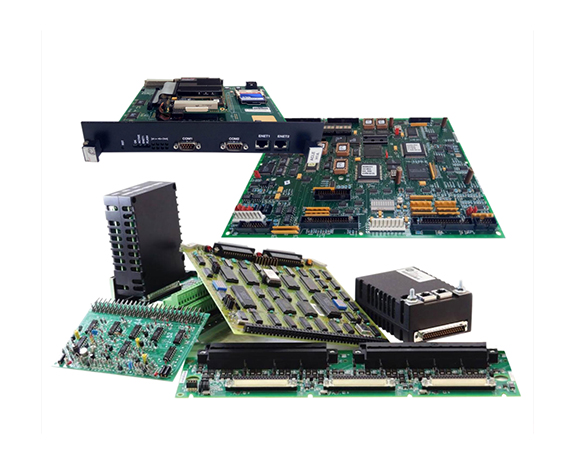
II. Core Hardware Classification, Models and Selection Standards
2.1 Main Processor Modules (System Operation Core)
1) Mark VI VME Integrated Main Controller
- IS200VCRCH: Basic control processor with 600MHz frequency, QNX real-time operating system, responsible for closed-loop regulation of speed, load and combustion; supports Simplex/TMR architecture
- IS200VCPBH: Enhanced main controller with extended Genius bus remote I/O interface, applicable to old power plants with multiple auxiliary equipment expansion
- IS200VTURH2B: Dedicated overspeed protection processor (VPRO safety card), independent of main controller to realize triple speed 2oo3 trip; three pieces standard for TMR architecture, mandatory for gas turbine protection
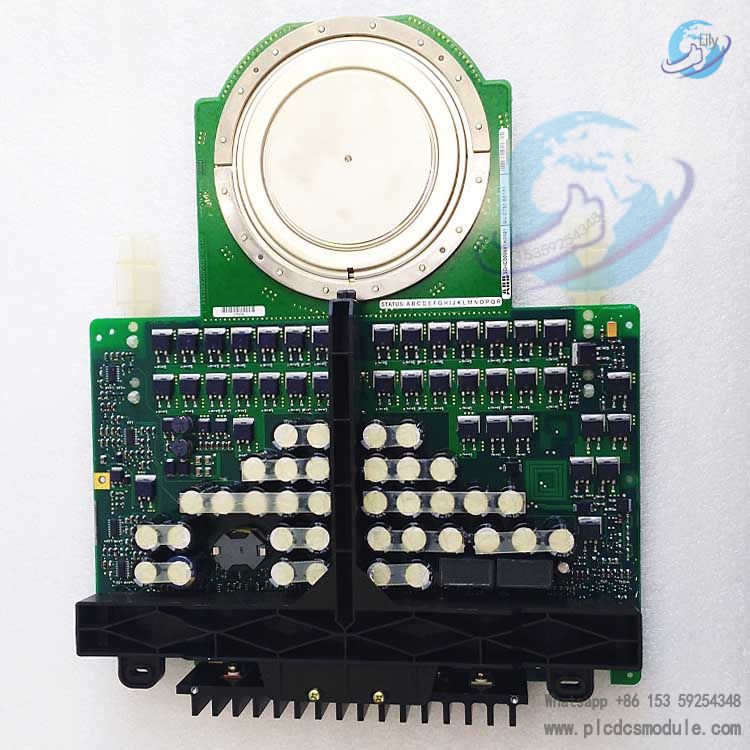
Model Reference: Mark VI VME Main Board IS200VCRCH
2) Mark VIe Distributed Controller (Generation-based Selection)
- Basic Model IS220UCSAH1A: 667MHz Freescale processor, 12W power consumption, fanless, wide temperature range 0~65℃; equipped with 5-channel Ethernet, RS485 and USB; selected for simplex/dual redundant control of small units and auxiliary systems
- High-performance Model IS420UCSCH1B / UCSBH3A: 1.2GHz quad-core AMD processor with redundant cooling fans; supports complex low-NOx combustion control and rapid load fluctuation; standard TMR configuration for 9F/7HA heavy-duty gas turbines; 5 independent Ethernet ports separated into subnets (IONET, HMI, remote diagnosis, excitation communication, plant-level DCS)
Key Selection Judgment Points
- Heavy-duty gas turbines ≥100MW: Mandatory three sets of high-performance IS420 series TMR controllers
- Small gas turbines / waste heat boilers: IS220 simplex or dual redundant configuration is sufficient
- Units equipped with EX2100e excitation system: Controllers shall reserve dual redundant Ethernet ports for connection to excitation cabinet
2.2 I/O Acquisition Modules (Analog / Digital / Thermocouple Dedicated)
(1) Analog Input AI (4-20mA / Voltage, pressure, flow, valve position collection)
Mark VI Integrated Type: IS200VAICH1C, 20-channel AI + 4-channel AO, supports 4-20mA/0-10V, built-in anti-surge algorithm; three parallel sets under TMR architecture to collect fuel pressure, exhaust temperature and lube oil parameters
Mark VIe Split Combination Type
- I/O Pack: IS220PAICH (universal 4-20mA analog input)
- Matching Terminal Board: IS200TBSAH (standard non-isolated) / IS200TBIAH (2500V channel isolation, mandatory for power plants with strong electromagnetic interference)
- Dedicated HART Version IS220AEADH: Supports HART protocol for intelligent valves, reads valve diagnosis and diaphragm loss; dedicated for NOx/CO signal collection of environmental CEMS systems
(2) Thermocouple Input TC (Exhaust Temperature, Furnace Temperature Measurement)
IS220PTCCH1A supports five thermocouple divisions K/E/J/S/T with automatic cold junction compensation and 14-bit high precision; core module for gas turbine exhaust temperature spread monitoring. Three pieces under TMR architecture collect three groups of thermocouple measuring points separately to prevent unit false trip caused by single-point temperature measurement fault.
(3) Digital Input DI (Switch Quantity, Dry Contact)
IS200TBCIH1B terminal base + IS220PDICH Pack, 24-channel passive dry contact, applicable to valve limit switches, circuit breaker status, local emergency stop and flame detectors; 125VDC isolation and surge protection, redundant collection for all interlock signals.
(4) Digital Output DO & Safety Trip Relay Module
- Ordinary DO: IS220PDOCH, drives indicator lights and small solenoid valves
- Dedicated SIL3 Safety Trip S739DVR-RST1: SIL3 safety DO with dual-channel 1oo2 redundancy and online loop BIT self-test; responsible for trip output of fuel shutoff valve, vent valve and trip oil solenoid valve; three-set voting output under TMR system, mandatory for main unit protection of power plants
(5) Servo Control Modules (Closed-loop Control of Fuel Valves & IGV Inlet Guide Vanes)
IS220PSVO Pack + IS200WSVO terminal base, outputs 0~200mA servo drive signal to directly control three-coil servo valves; core control module of gas turbine. Three complete matched sets required under TMR architecture. Valve position can be maintained stably by the other two channels if single module fails without flameout or shutdown.
2.3 Communication Interface Boards (Cross-system Connection)
- IONET Fiber Communication Card: Native internal network of Mark VI/VIe, realizing high-speed synchronization between controllers and I/O; three independent fiber networks for TMR system to eliminate single-point network fault
- Genius Bus Card IS200GENIH: Connects to old GE remote I/O stations and auxiliary PLCs
- Modbus/Profinet Gateway Module IS220COMMG: Connects to plant-level DCS, SCADA and environmental online monitoring systems
- HMI Human-machine Interface Communication: Controllers with built-in Ethernet, dual redundant network ports separately connected to local operation panel and remote monitoring terminal
2.4 Power Distribution & Power Supply Modules (Redundant Power Supply Selection)
- Simplex Power Supply IS200TCSAS1A: Single-channel 24VDC output for small auxiliary control cabinets
- TMR Triple Redundant Power Supply IS200TCSAS1ACB: Three independent 110/220VAC input channels, three isolated 24VDC output channels separately supplying R/S/T three sets of controllers; single power channel fault will not affect overall unit operation, standard configuration for heavy-duty gas turbines; supports hot swap, overcurrent/overvoltage/reverse connection protection, industrial wide temperature design -20~+60℃
- Auxiliary Power Distribution Terminal IS200TPOWH: Terminal base for shunt power supply of field sensors and solenoid valves
2.5 Terminal Bases & Supporting Accessories (Easily Overlooked Selection Items)
General Rule: All Mark VIe I/O Packs must match corresponding model terminal boards; mismatched models cannot be wired normally.
- Isolated Terminal Board: Prioritize 2500VAC isolated base plates for workshops equipped with frequency converters and high-power motors to avoid signal drift caused by interference
- Supporting Spare Parts List: Status LED indicators, fiber jumpers, VME backplanes, rack cooling fans, anti-dust coating spare parts, terminal wiring blocks, hot-swap guide rail assemblies
III. Standard Complete Selection Schemes by Scenario
Scheme 1: 9FA/9E Heavy-duty Gas Turbine (Standard TMR Triple Redundant Configuration)
- Controller: 3 pieces of IS420UCSCH1B high-performance processors
- Overspeed Protection: 3 pieces of IS200VTURH2B VPRO speed protection cards
- Servo Control: 3 sets of IS220PSVO + IS200WSVO (for fuel valves and IGV guide vanes)
- Analog Acquisition: 3 sets of AI/HART modules, 3 sets of thermocouple TC modules
- Safety Trip: 3 sets of S739DVR-RST1 safety relay outputs
- Power Supply: 1 set of IS200TCSAS1ACB TMR triple redundant power supply
- Communication: Three sets of IONET fiber cables, redundant Modbus gateway communication cards
Scheme 2: Medium & Small Combined Heat and Power Gas Turbine (Dual Redundant Configuration)
- Controller: 2 pieces of IS220UCSAH1A
- All I/O configured in pairs (2 sets of AI/DI/DO/servo modules)
- Power Supply: Two independent simplex power supplies in hot standby mode
- No independent triple overspeed card; overspeed protection realized by controller software
Scheme 3: Waste Heat Boiler / Auxiliary Control Cabinet (Simplest Simplex Configuration)
- Single IS220UCSAH main controller
- Single set of general AI/DI acquisition modules, no servo modules or SIL3 safety DO modules
- Single-channel standard 24V power supply module
IV. Spare Parts Procurement Selection Check List (Error Avoidance Key Points)
- System Generation Verification: Confirm whether the on-site system is old Mark VI (VME integrated board) or Mark VIe split type; hardware of the two generations is completely incompatible
- Redundancy Quantity Verification: Three complete matched modules must be purchased for protection, servo and speed measurement modules under TMR architecture; scattered single-module procurement is forbidden
- Split Dual-component Verification: Confirm both I/O Pack (IS220) and terminal board (IS200) models when purchasing Mark VIe spare parts
- Isolation Demand Verification: Select isolated TBIAH terminal boards for power plants with numerous frequency converters and strong electromagnetic interference
- Firmware Version Verification: New IS420 controllers are incompatible with Mark VIe firmware versions below V4.0; confirm firmware upgrade package synchronously during procurement
- Safety Level Verification: SIL3 certified S739DVR trip relays and VTURH protection cards must be selected for main unit trip and overspeed loops; ordinary DO modules cannot be used as substitutes
V. General Selection FAQ
A: The same sensor signal is collected by three independent channels with hardware 2oo3 voting logic. Abnormal data from single channel will trigger alarm mark, and the other two channels maintain control output. Faulty modules can be replaced online without unit shutdown.
A: Physical interfaces and IONET protocols are completely incompatible; racks, board cards and terminal bases cannot be interchanged. Complete cabinet replacement is required for renovation projects.
A: IS220 series I/O Packs, PSVO servo modules, S739DVR safety trip relays and cabinet cooling fans; IS200 series terminal bases rarely break down and do not require large-scale stock preparation.
A: Units equipped with intelligent regulating valves, environmental CEMS continuous emission monitoring systems, and units requiring remote valve diagnosis. Ordinary PAICH analog modules can be selected for regular 4-20mA signal collection to save procurement cost.