Note; All products on this site are special products, the market price has been fluctuating, the specific customer service offer shall prevail, because the product is a new product, the picture is not a real shot, please confirm with customer service before placing an order model and product, price and other details, the site used, new are for sale, please contact customer service communication. The
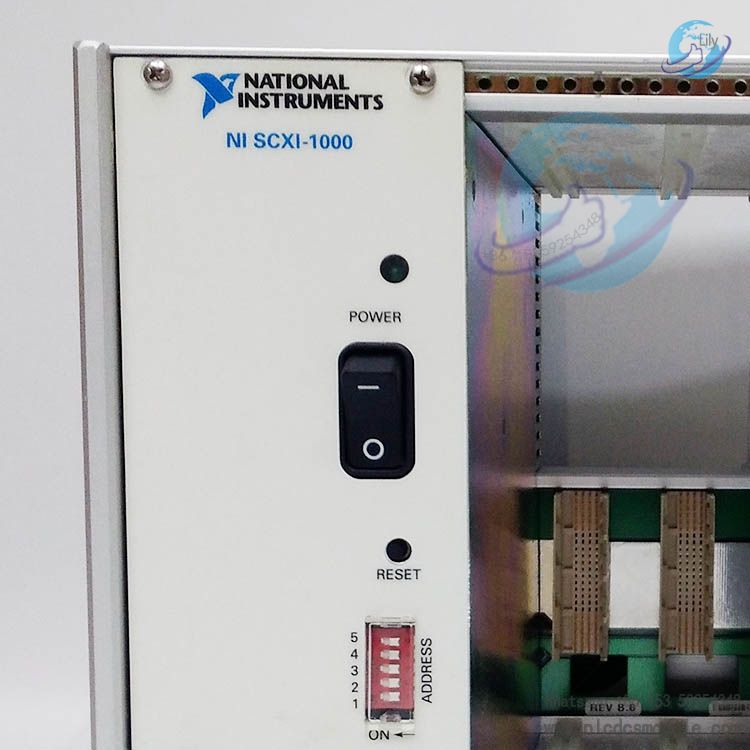
SCXI-1000 is a 4-slot chassis specifically designed for
SCXI series modules, launched by National Instruments (NI). Boasting a low-noise signal conditioning environment, compact and robust structural design, and flexible expandability, it is widely used in single-chassis or low-channel-count data acquisition and signal conditioning scenarios.
This chassis implements signal routing, data transmission, and timing synchronization between modules via the SCXIbus backplane architecture. It supports direct connection to E-Series or basic multifunction DAQ devices. When paired with driver software such as NI-DAQ, it can easily complete automatic module detection, configuration, and system self-testing, providing a stable and reliable hardware platform for the conditioning and acquisition of various sensor signals (e.g., thermocouples, strain gauges, voltage signals, etc.).Its AC power supply mode is compatible with multiple global voltage standards and supports multi-chassis cascading expansion, enabling flexible upgrades according to application requirements. It is an ideal solution for laboratory testing, industrial inspection, and other fields.
related documents
 NI SCXI-1001.pdf
NI SCXI1001 Chassis Manual.pdf
Core Features
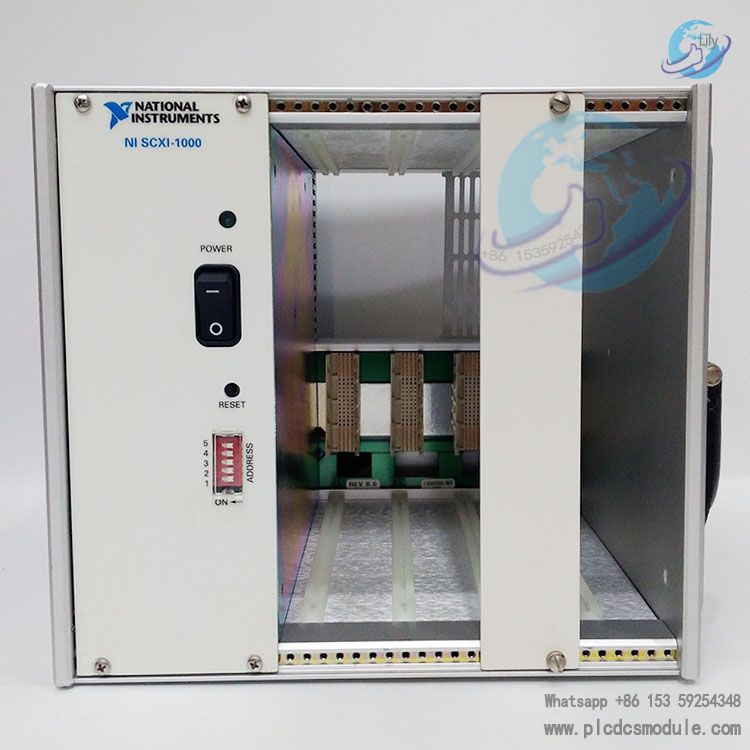
Hardware Structure and CompatibilitySlot Configuration: It provides 4 standard SCXI module slots (including Slot 0 for power and control circuits), which can accommodate SCXI series signal conditioning modules with functions such as amplification, filtering, isolation, and multiplexing, meeting the preprocessing requirements of different types of signals.
Low-noise Design: Adopting a shielded enclosure and optimized internal circuit layout, it creates a low-noise operating environment, effectively reducing the impact of external interference on weak signals and ensuring signal conditioning accuracy.
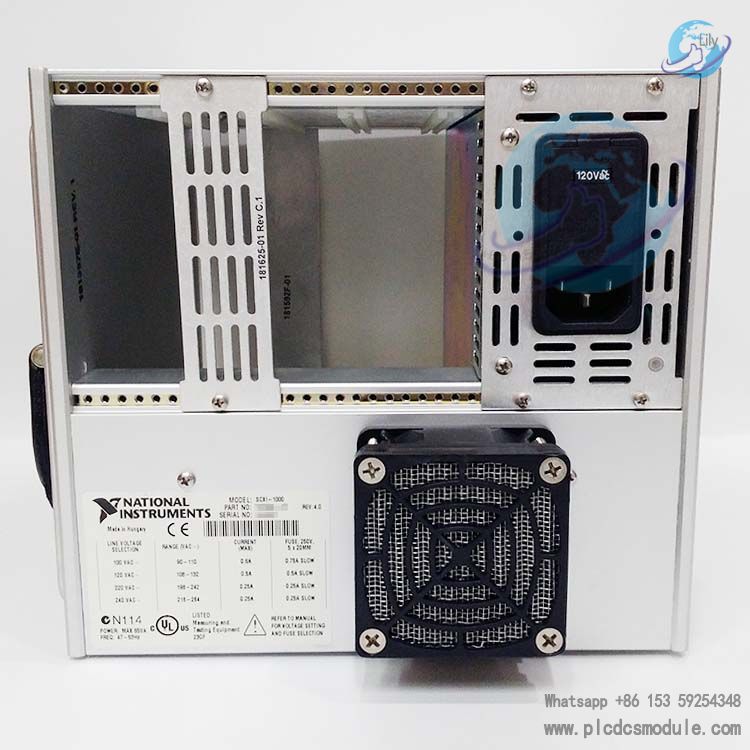
Heat Dissipation System: Equipped with a brushless fan and replaceable filter on the back, it cools the internal modules via forced air cooling, preventing performance degradation or hardware damage caused by overheating. The filter is detachable for easy cleaning and maintenance.
Mechanical Specifications: With dimensions of 24.8×19.5×17.7 cm (D × W × H, including the fan) and a weight of 3.9 kg (8 lb 10 oz), it features a compact and robust structure, supporting desktop placement or optional rack mounting to adapt to different application scenarios.
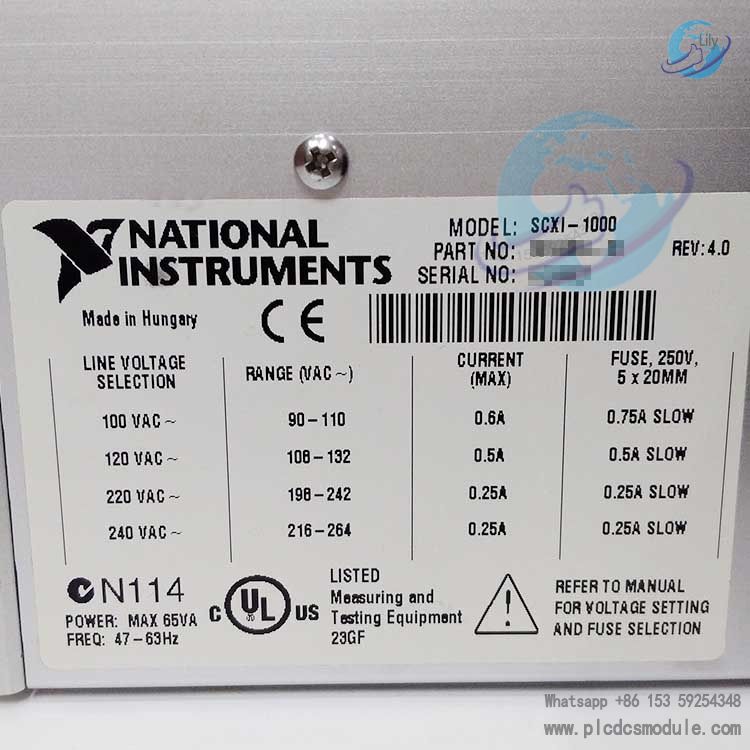
Power Supply and Electrical PerformancePower Supply Compatibility: It supports multiple voltage standards including 100 VAC (Japan), 120 VAC, 220 VAC (Switzerland), and 240 VAC (Australia/Europe/North America/UK), with a frequency range of 47–63 Hz. Flexible switching is achievable via the back-panel voltage selector wheel, making it compatible with power grid environments in different regions worldwide.
Power Supply Parameters:
The specifications of the main power fuse vary with voltage. For example, a 5mm×20mm time-delay fuse rated at 1/2 A 250 V is used for 120 VAC, and a 5mm×20mm time-delay fuse rated at 1/4 A 250 V is used for 240 VAC, providing overcurrent protection.
Backplane Power Output: +5 VDC (50 mA per slot), ±18.5 to ±25 VDC (170 mA each per slot). The total load capacity is 250 mA for +5 VDC and 680 mA for ± high voltage respectively, delivering stable power to modules.
Power Supply Ripple: The peak-to-peak ripple of +5 VDC is ≤ 50 mV, and that of ± high voltage is ≤ 1.5 V, ensuring the stable operation of modules.
Expansion and Operating ModesMulti-chassis Cascading: It supports cascading up to 8 SCXI chassis in a daisy-chain configuration via a DAQ device. Channel count can be expanded with a single DAQ device, meeting the requirements of large-scale testing applications.
Dual Operating Modes:
Multiplexed Mode: Analog input channels of multiple modules are multiplexed to a single module output. A single DAQ device can access the outputs of all multiplexed modules in the chassis, enabling efficient utilization of DAQ channel resources.
Parallel Mode: Each module requires a dedicated E-Series DAQ device. The module output channels are directly connected to the dedicated analog input channels of the DAQ device, suitable for high-bandwidth and low-latency signal acquisition scenarios.
Software and Configuration SupportCompatible Software: It supports a variety of NI development environments including LabVIEW, LabWindows/CVI, Measurement Studio, and VI Logger. Combined with NI-DAQ driver version 7 or later, it enables chassis and module configuration, data acquisition, and analysis through graphical or text-based programming, eliminating the need for low-level timing programming and reducing development complexity.
Address Configuration: The chassis address (0–31) can be set via the 5-position DIP switch on the front-panel Slot 0, with a default address of 0. In multi-chassis cascading systems, different addresses can be assigned to distinguish each chassis for centralized control.
Automatic Detection and Self-test: The NI-DAQ driver supports automatic module detection and configuration self-test, which can quickly verify system connection and operating status, simplifying the debugging process.
Installation and Maintenance Guidelines
Installation ProcedureSelect a sturdy and flat mounting surface, and reserve a minimum clearance of 10 cm (4 inches) at the rear of the chassis to ensure unobstructed air circulation.
Set the corresponding voltage via the back-panel voltage selector wheel according to the local grid voltage, and verify that the fuse specifications match (refer to the regional voltage-fuse compatibility table in the product manual).
Connect the power cord (insert the female connector into the chassis power input module and the male connector into the grid socket). Install SCXI modules and required cables (refer to the wiring specifications in the module manual), and finally attach the front and rear panels to prevent dust ingress.
Power on the chassis and the connected computer in sequence, and complete the final system configuration following the SCXI Quick Start Guide.
Maintenance PrecautionsFuse Replacement: When the power input module fuses or backplane fuses (2 units total, 1.5 A 125 V LittleFuse R251 01.5 TI) are damaged, replace them with fuses of the identical model and specifications. Always disconnect the power supply before replacement to avoid electric shock hazards.
Fan Filter Maintenance: Clean the fan filter regularly (recommended every 1–3 months depending on the operating environment). Disconnect the power supply before cleaning, remove the fan screws to take out the filter, rinse it with cold water, allow it to air dry completely, and then reinstall it. This prevents dust accumulation from impairing heat dissipation performance.
Electrostatic Discharge (ESD) Protection: Avoid touching the exposed pins of connectors when handling or installing modules, to prevent electrostatic damage to the chassis and module circuits.
Environmental Adaptability
Operating temperature: 0–50 °CStorage temperature: -20–70 °CRelative humidity: 10%–90% (non-condensing)Maximum operating altitude: 2000 meters
It is suitable for most indoor laboratory and industrial environments.
Application Scenarios
Laboratory Prototyping & ValidationIt provides precise conditioning for sensor signals, and completes data acquisition and analysis when paired with DAQ devices. It is suitable for experimental testing in disciplines such as physics, electronics, and mechanics.
Low-channel-count Industrial InspectionTargeting scenarios such as small-scale production lines and equipment monitoring, it enables real-time acquisition and monitoring of parameters including temperature, pressure, and strain.
Portable Test SystemsWhen integrated with a DC-AC inverter, it can be powered by a DC power supply, making it ideal for field and vehicle-mounted testing scenarios without access to a fixed AC power supply.
Customers who purchased this product are also browsing the following products:
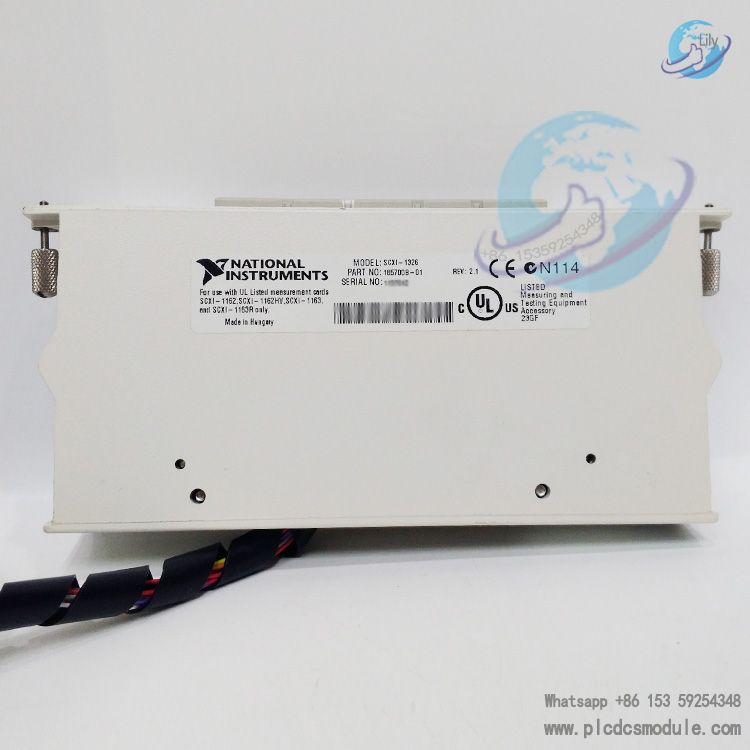
NI SCXI-1326 High-Voltage Terminal Block
NI SCXI-1325 HIGH-VOLTAGE TERMINAL BL0CK
NI SCXI-1100 Differential Multiplexer/Amplifier Module
NI SCXI-1001 SCXI chassis