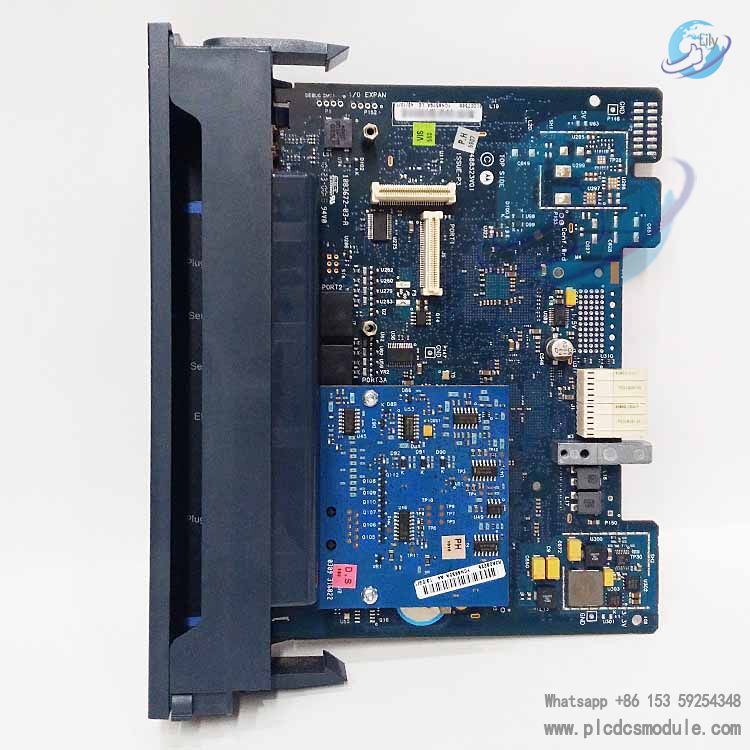
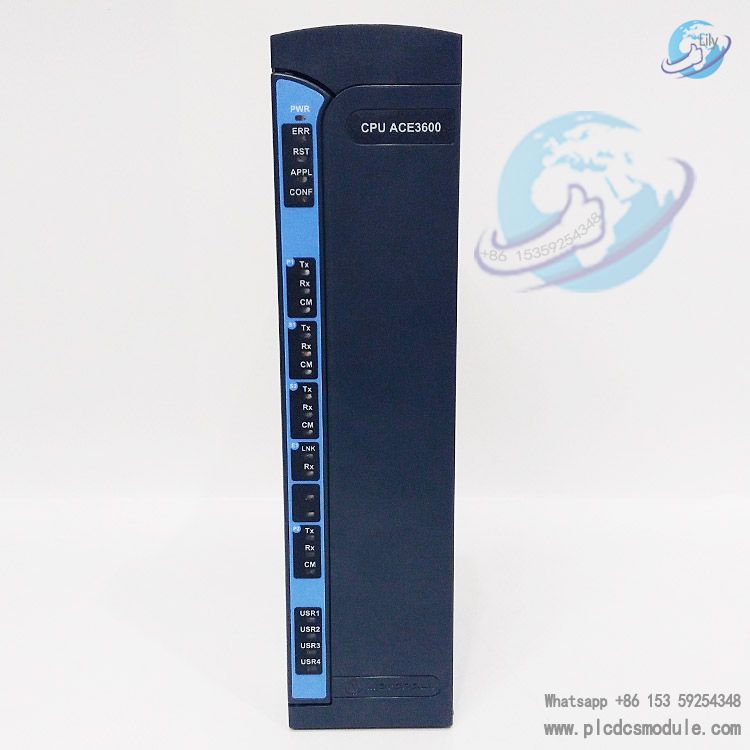
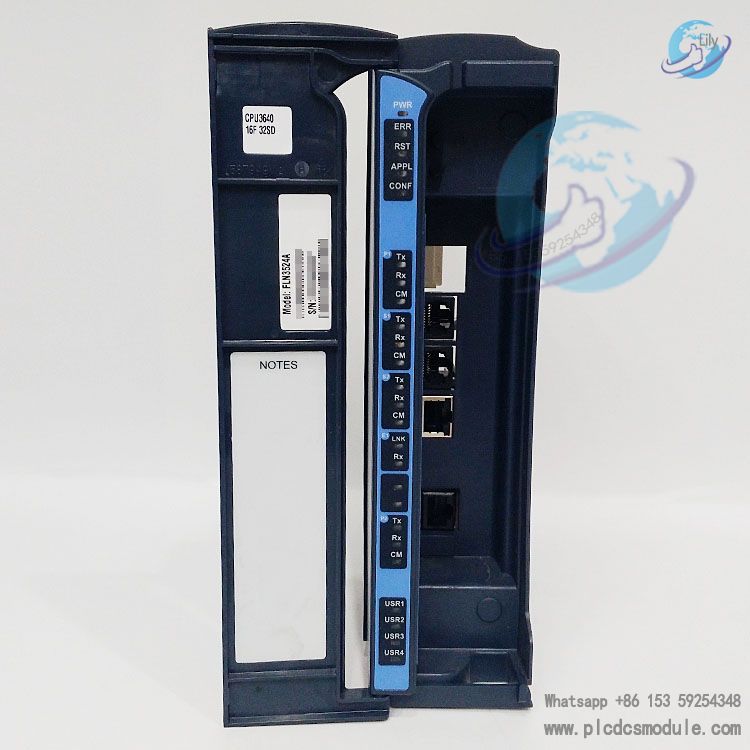
Note; All products on this site are special products, the market price has been fluctuating, the specific customer service offer shall prevail, because the product is a new product, the picture is not a real shot, please confirm with customer service before placing an order model and product, price and other details, the site used, new are for sale, please contact customer service communication. The Motorola FLN3524A CPU3640 Processor Module serves as the core control unit of the ACE3600 Remote Terminal Unit (RTU). It undertakes critical tasks such as I/O module management, data acquisition and processing, and communication with external devices.
Built on a high-performance hardware architecture and real-time operating system, it delivers stable and efficient computing and control capabilities for the ACE3600 system automation applications across diverse fields including water plant monitoring, substation automation, and distribution network management. Meanwhile, it supports flexible communication and I/O expansion, acting as a core component for achieving distributed intelligent control and remote data interaction.
related documents
 ACE3600 RTU..pdf
ACE3600 RTU.pdf
Hardware Architecture & Performance
Microprocessor & Clock Speed
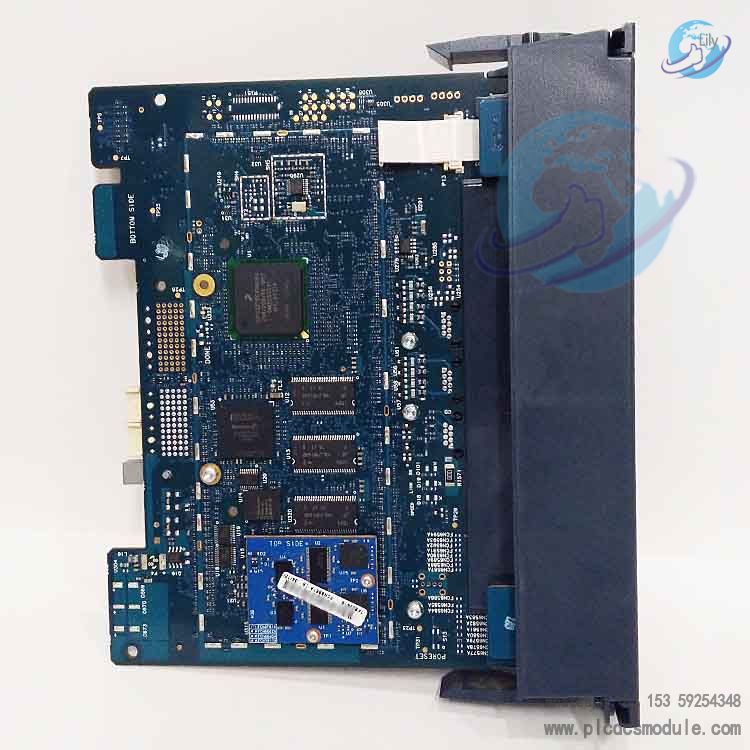
The CPU3640 module is equipped with the Freescale MPC8270 32-bit microprocessor, which features the following attributes:
Core Advantages: It supports extended communication capabilities, high-speed data processing, Direct Memory Access (DMA), and floating-point operations. This enables the module to efficiently handle multi-task concurrent scenarios, such as real-time data acquisition, logic control, and communication protocol processing.
Operating Clock Speed: 200 MHz. It provides sufficient computing power for data operations and inter-module interaction, ensuring the smooth operation of complex applications including SCADA system data processing and custom control logic.
Memory Configuration
The module has built-in multiple types of memory to meet the requirements of firmware storage, temporary data processing, and user data logging, with the specific parameters as follows:
FLASH Memory (16 Mb): Stores firmware based on the Wind River VxWorks operating system, user applications, and static user data, with data retention even after power-off.
SDRAM Memory (32 Mb): Stores temporary runtime data, such as real-time collected sensor data and intermediate operation results. It features fast read/write speed and supports high-frequency data interaction.
User-available FLASH (3 Mb): Reserved for storing user-defined programs and configuration files to meet personalized application needs.
User-available SDRAM (10 Mb): Temporarily called during user program runtime to ensure the efficient execution of custom logic.
Optional SRAM Module (4 Mb): Used for user data logging. It achieves data retention after power-off via the on-board rechargeable lithium battery, making it suitable for critical event recording.
Real-Time Clock (RTC) & Data Backup
RTC Features
It has low-drift characteristics and supports full calendar functions including year, month, day, hour, minute, and second, with automatic leap year adaptation. Time accuracy ensures the correctness of timestamps for system events, such as recording the time of sensor status changes and fault alarms.
Backup Mechanism
An on-board 3V rechargeable lithium battery provides power-off backup for SRAM and RTC:
If the optional SRAM module is used: It can maintain SRAM data and RTC operation for approximately 60 days after power-off.
If the optional SRAM module is not used: It only maintains RTC operation with a longer battery life, ensuring accurate time retrieval after system restart.
Communication Interfaces & Expansion Capabilities
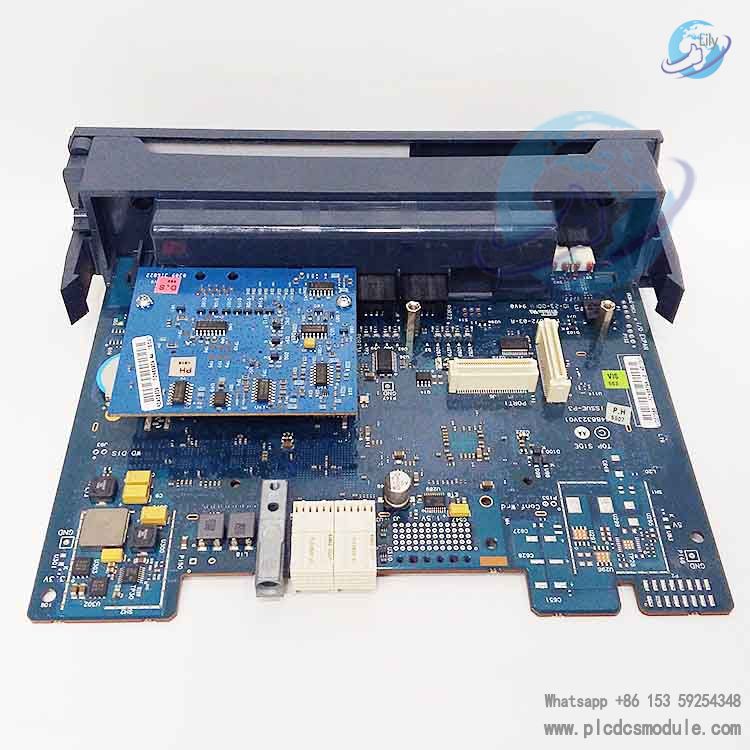
The CPU3640 module is equipped with a rich array of built-in and expandable communication interfaces, supporting multiple protocols and media types to meet the requirements for remote interaction and local configuration across diverse application scenarios.
On-board Fixed Interfaces
- Serial Interface SI1 (1 Port)Configurable for either RS232 or RS485 mode:
- RS232 Mode: Supports asynchronous communication with a maximum baud rate of 115.2 kbps, ideal for local PC connections (e.g., with STS configuration tools) and GPS receiver integration.
- RS485 Mode: Enables multi-node bus communication (supporting up to 32 devices) with a maximum baud rate of 460.8 kbps, suitable for short-distance interconnection between multiple RTUs.
- Serial Interface SI2 (1 Port)Fixed in RS232 mode, supporting asynchronous communication with a maximum baud rate of 115.2 kbps. It is compatible with external modems (e.g., dial-up modems, cellular data modems) and third-party PLC connections.
- Ethernet Interface Eth1 (1 Port)A 10/100BaseT auto-sensing Ethernet port (exclusive to the CPU3640; not available on the CPU3610). It supports the MDLC over IP protocol, and is designed for high-speed local area network (LAN) communication and I/O expansion frame connections.
Expandable Plug-in Ports
The module is provided with 2 plug-in ports (PI1, PI2), allowing flexible selection of different communication modules to expand interface functions. The available plug-in types are as follows:
- RS232 Plug-in: Adds an additional RS232 interface to enable parallel connections with multiple devices (e.g., simultaneous connection to a GPS receiver and a local debugging PC).
- RS485 Plug-in: Adds an extra RS485 interface to expand the number of nodes on the multi-device bus, suitable for large-scale site networking with multiple devices.
- Ethernet Plug-in: Supports 10 Mb or 10/100 Mb Ethernet ports, enabling connection to LANs of different speeds to meet high-bandwidth data transmission requirements (e.g., real-time uploading of large volumes of sensor data).
- Wireless Modem Plug-in: Compatible with conventional radio stations (e.g., VHF/UHF radios) and digital trunked radios (e.g., ASTRO IV&D, TETRA) to realize wireless remote communication, suitable for wide-area coverage scenarios of SCADA systems.
Protocol Support
- Core Protocol: MDLC (Motorola SCADA Protocol). Based on the OSI seven-layer model, it supports store-and-forward, point-to-point and point-to-multipoint communication, and is adaptable to various media including wireless (radio), wired (RS232/RS485) and Ethernet.
- Extended Protocols: Through plug-ins or configuration, it supports PPP (for dial-up/cellular data connections), NTP (network time synchronization) and DHCP (dynamic IP assignment). It is also compatible with third-party protocols (e.g., ModBus RTU, DNP3.0), facilitating interoperability with non-Motorola devices.
Specifications
- Operating Voltage: 10.8–16V DC (supplied by the system backplane bus)
- Power Consumption: Typical value of 4.2W (approx. 304 mA at 13.8V DC); approx. 4.0W (290 mA) at full load (including communication and SRAM usage)
- Operating Temperature: -40°C ~ +70°C (wide-temperature design, suitable for harsh industrial field environments)
- Dimensions (W×H×D): 56 mm × 225 mm × 180 mm (2.2" × 8.7" × 7.1"), compatible with ACE3600 standard rack slots
- Weight: Approx. 0.38 kg (0.84 lb)
Application Scenarios
Core Application Scenarios
As the core of the ACE3600 RTU, the CPU3640 is mainly suitable for the following automation scenarios:
- Industrial Monitoring: Such as status acquisition of substation equipment (voltage, current, switch status) and distribution network automation (load monitoring, remote closing/opening of switches).
- Infrastructure: Pump unit control of water pumping stations/sewage lifting stations, data processing of liquid level sensors; environmental monitoring of communication base stations (temperature, humidity, power supply status).
- Public Services: Control of public notification systems (e.g., road warning lights, emergency broadcast triggering), linkage of security systems (infrared sensors and access control).
Compatible System Requirements
- I/O Expansion Dependence: If the ACE3600 system requires I/O module expansion (e.g., adding analog input/output modules, relay output modules), the CPU3640 must be used (the CPU3610 does not support I/O expansion). It can connect expansion frames via Ethernet, enabling management of up to 13 expansion frames and 110 I/O modules.
- Power Supply Compatibility: It must be paired with a power module compatible with the ACE3600 system (e.g., 10.8–16V DC power supply, 18–72V DC power supply with charger) to ensure stable input voltage and avoid module failure caused by abnormal power supply.
- Tool Support: Configuration, diagnosis, and firmware upgrading must be performed via the Motorola ACE3600 STS (System Tools Suite). The tool supports Windows operating systems and provides a visual interface (e.g., module status monitoring, real-time I/O data viewing, log export).
Customers who purchased this product are also browsing the following products:
MOTOROLA FLN4234A CPU3680 controller (PLC) module
Motorola Emerson MVME5100-0161 VMEbus Single-Board
Motorola/Emerson MVME6100 VME Single-Board Computer
Motorola MVME162-010A double-high VME module