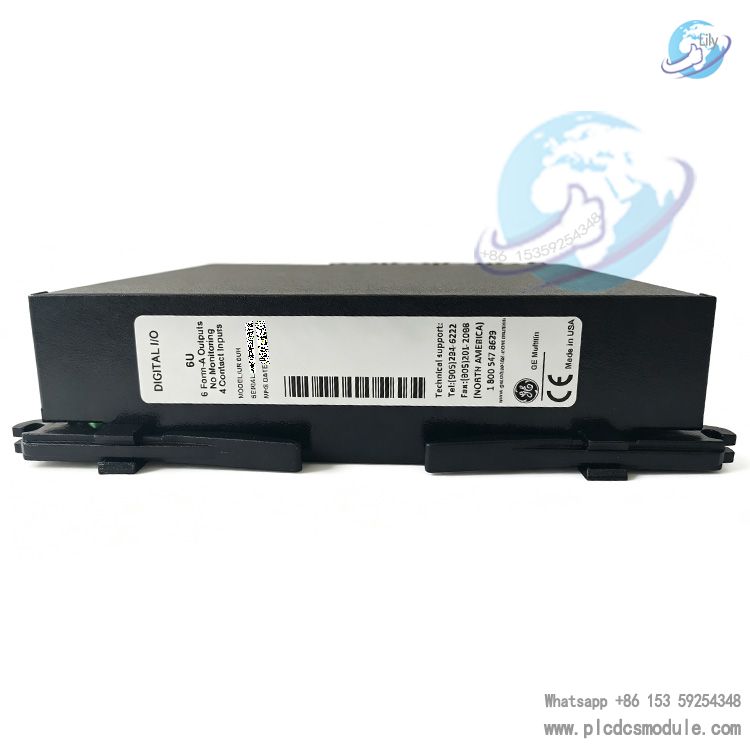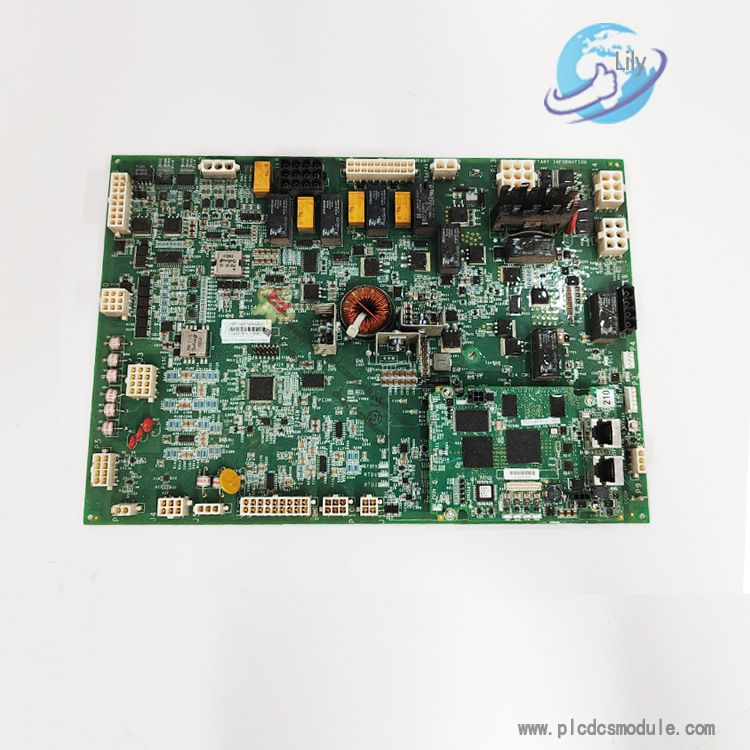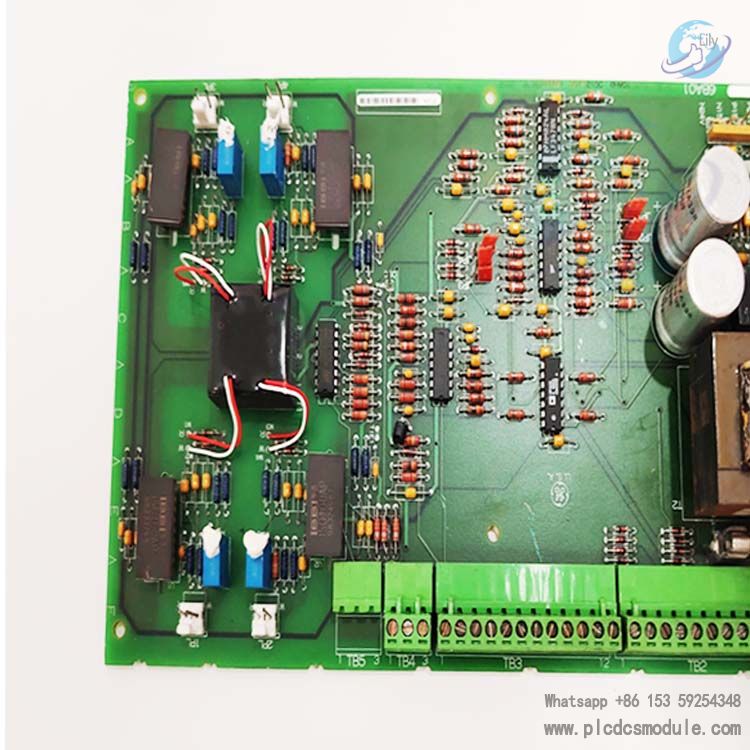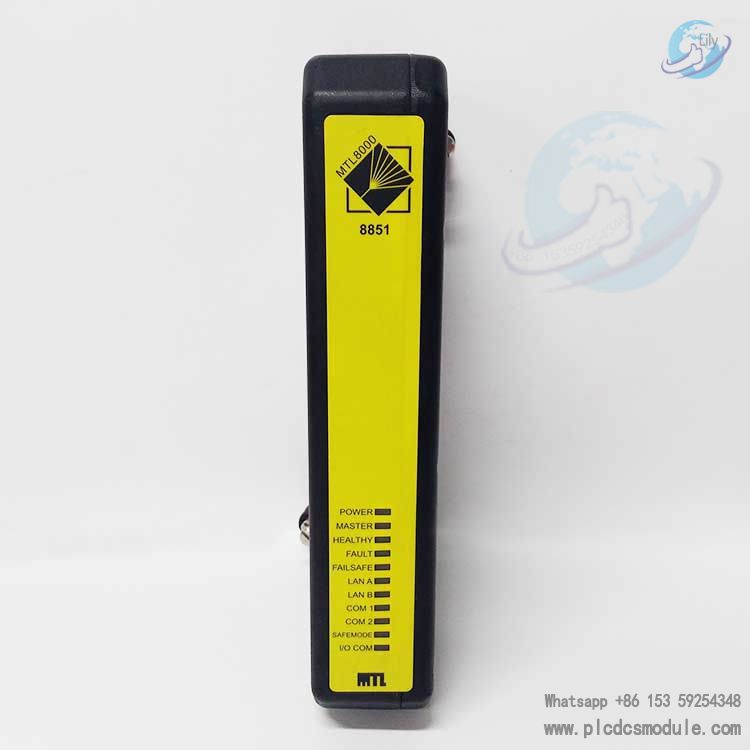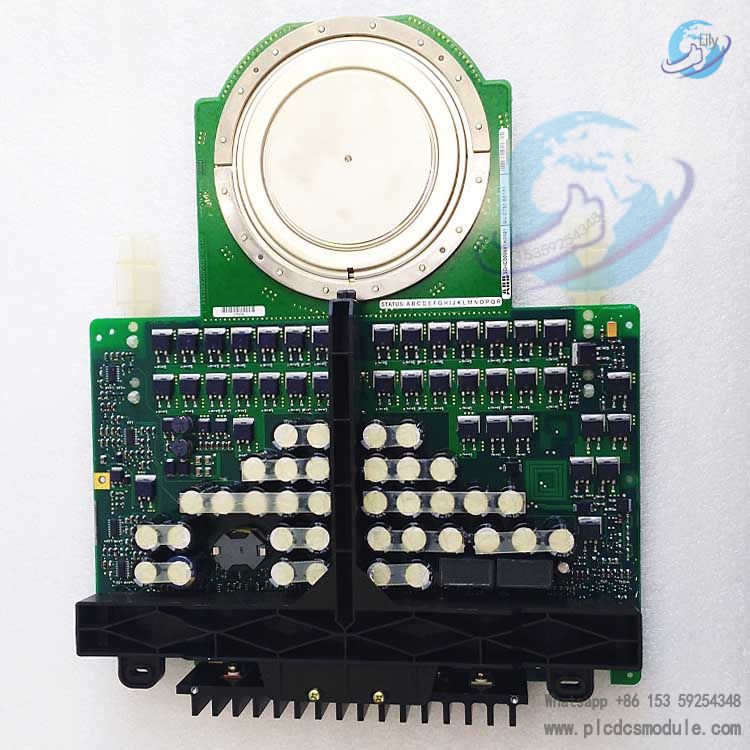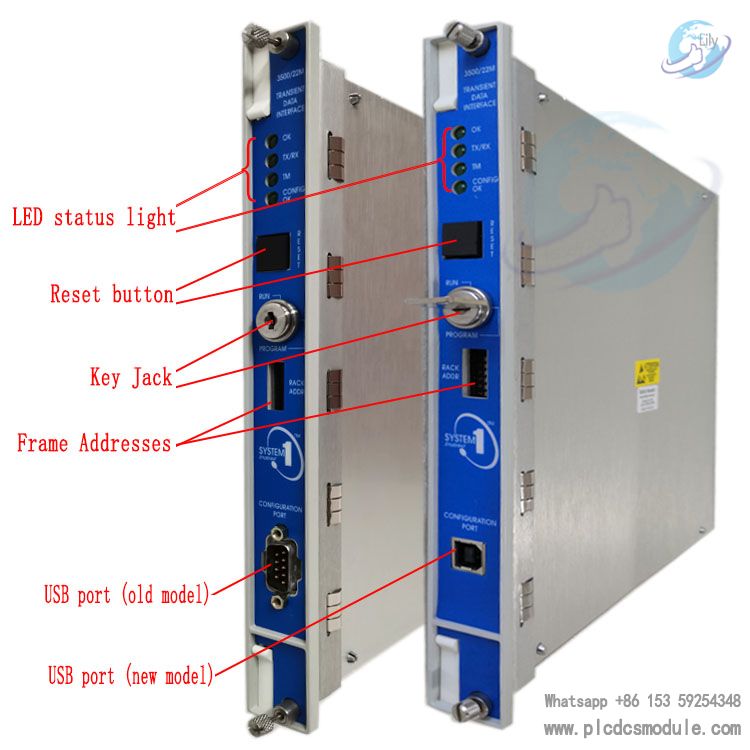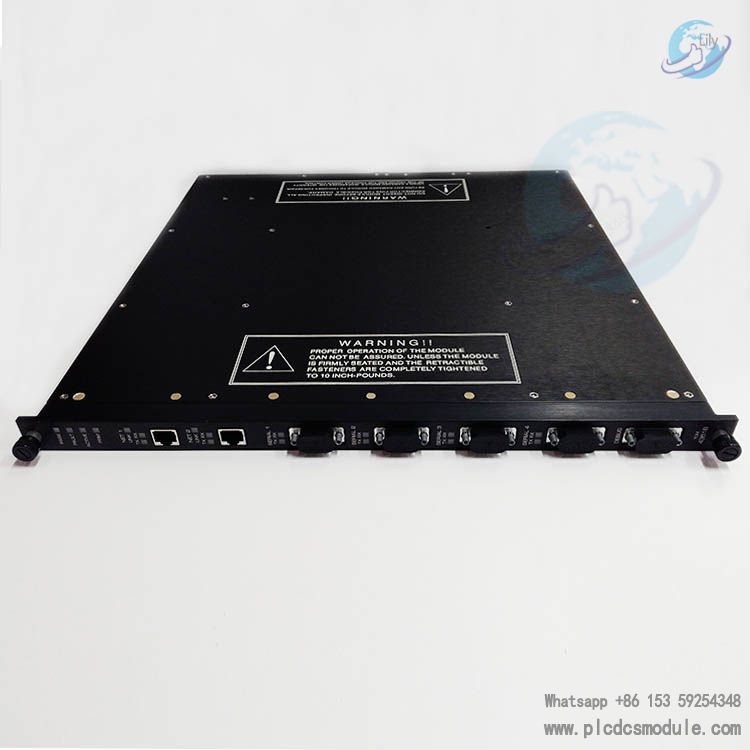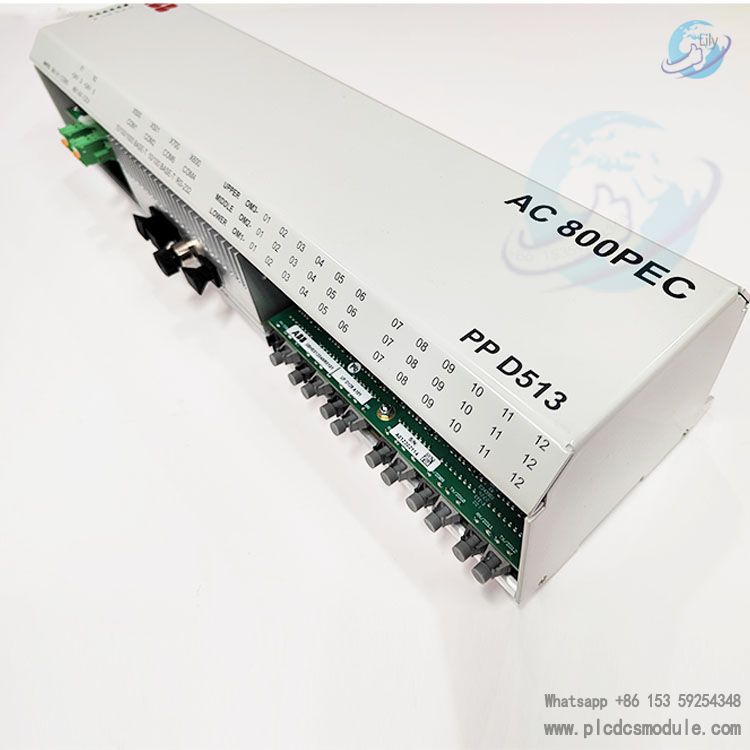


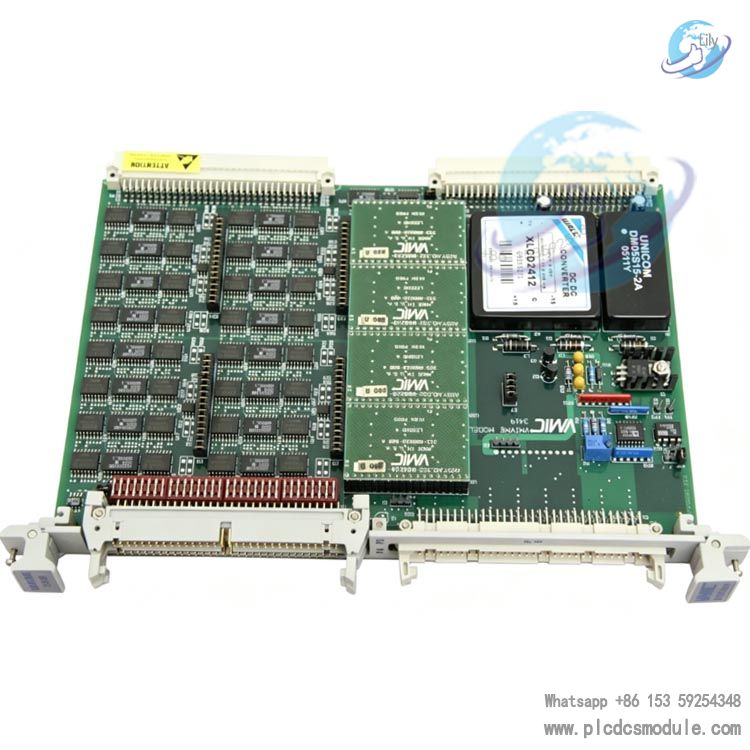
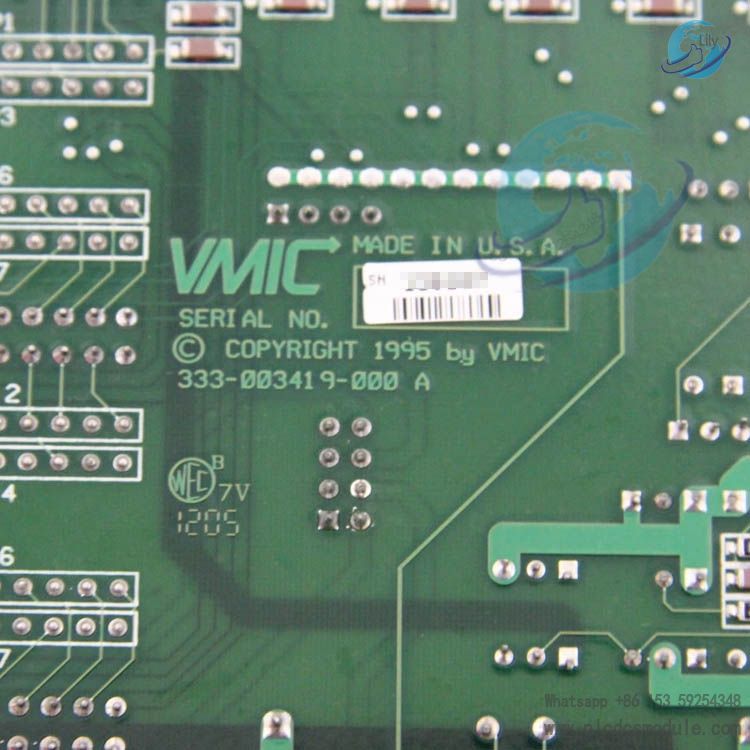
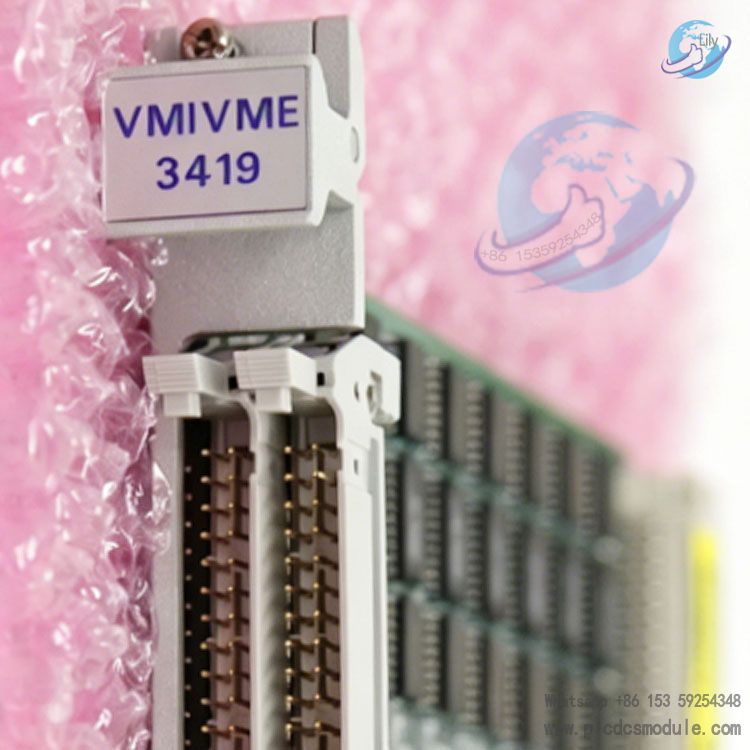
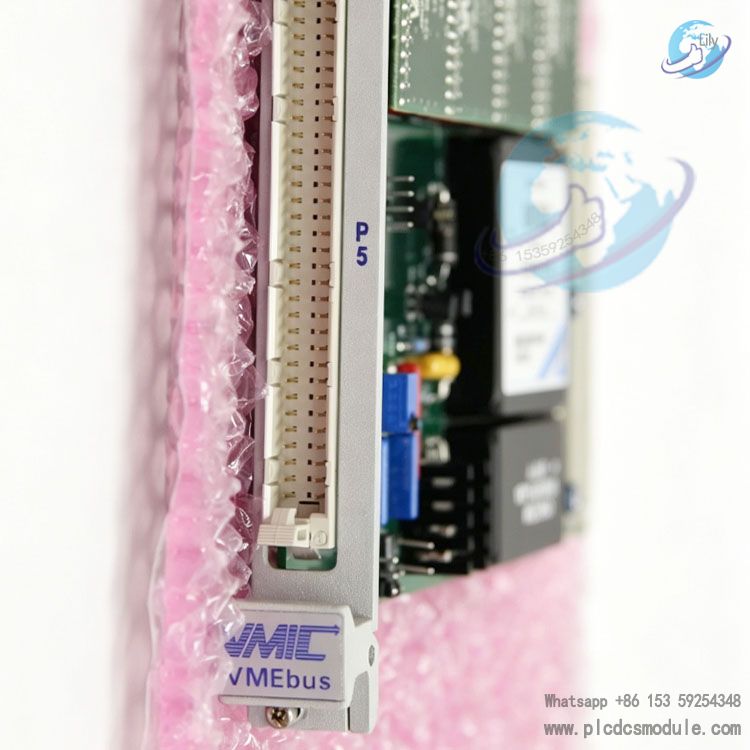
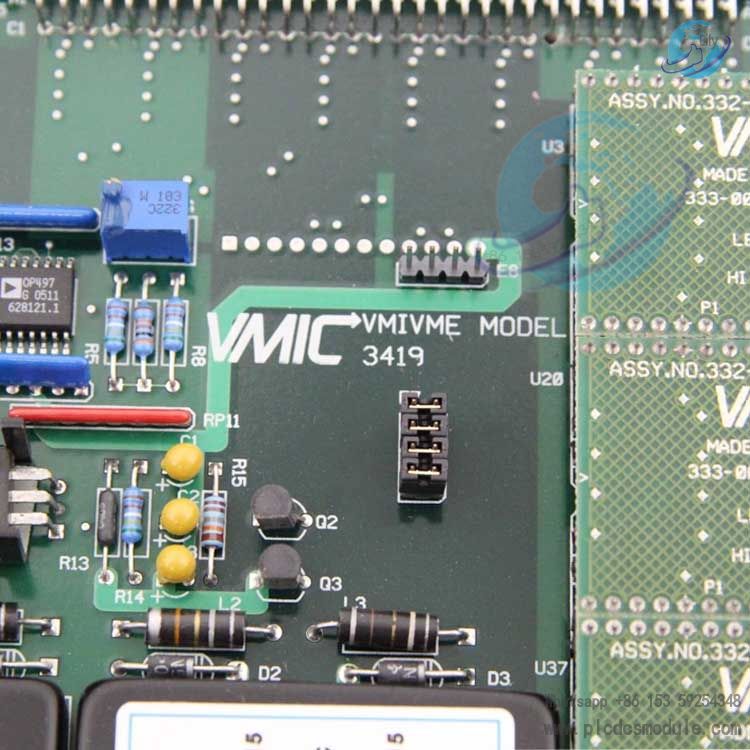
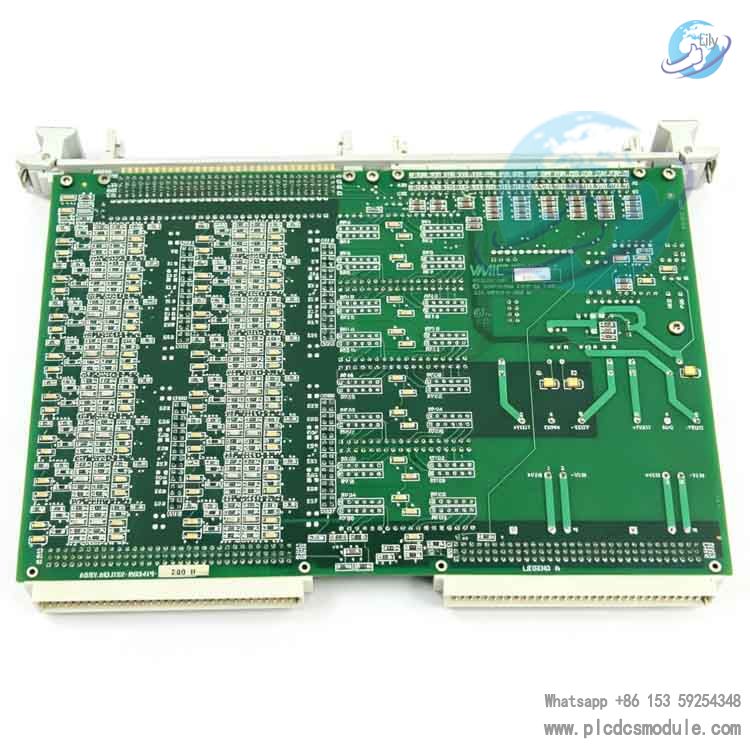
The GE VMIVME‑3419‑200 belongs to the VMEbus industrial board portfolio originally developed by VMIC, which was later acquired by GE Fanuc and is now part of Emerson. It is a 6U VME dedicated programmable industrial signal conditioning board with 32 input channels, engineered primarily for front‑end analog signal preprocessing.
The module receives raw low‑level signals from field thermocouples, RTDs and millivolt sensors, and implements filtering, amplification, impedance matching, galvanic isolation and range normalization before outputting standardized industrial-level analog signals compatible with subsequent AD acquisition boards of the VMIVME‑31xx / 41xx series. Designed per ANSI/VMEbus Rev.C.1 specification, it features standard single-slot 6U VME form factor and VME slave architecture with onboard Built-In Test (BIT) self-test circuitry. This board is purpose-built for multi-channel low-level signal acquisition systems deployed under harsh operating conditions across military, aerospace, thermal power and petrochemical industries.
Core Advantages
Integrated 32‑Channel Design for Optimized Cabinet Footprint
A single board integrates 32 independent signal conditioning circuits to replace multiple discrete terminal conditioning boards, drastically cutting VME chassis slot consumption while lowering field wiring junctions and potential failure points.
Full Channel Galvanic Isolation for Superior Noise Immunity
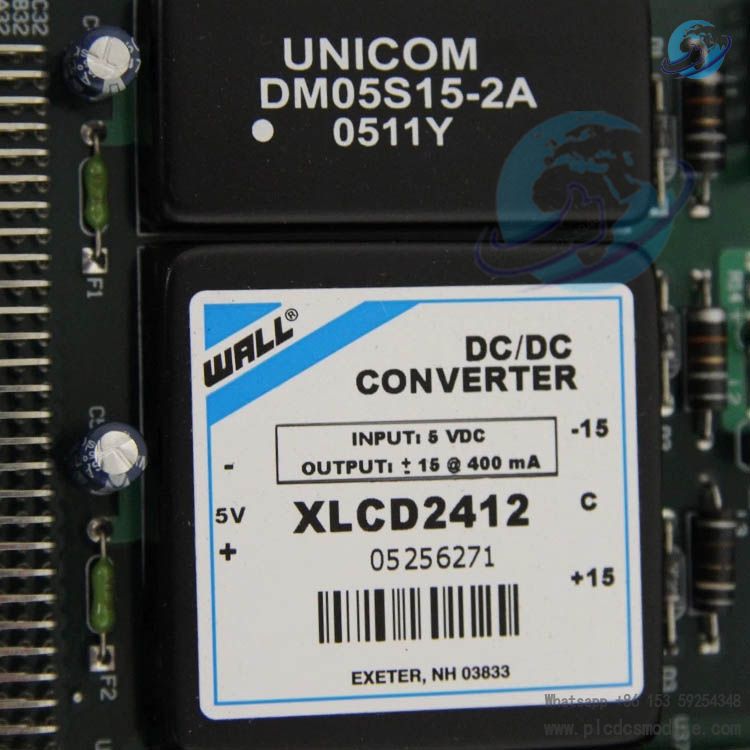
Each channel adopts independent isolated DC‑DC power plus optocoupler isolation design, providing three‑way isolation among individual channels and between field input and VME bus side. With a dielectric withstand rating of 2500 VAC for 1 minute, it effectively rejects industrial common‑mode noise, power‑line harmonics and transient surges from motor startup, ideal for high EMI environments.
Software‑programmable for Outstanding Versatility
Every channel supports four input types configurable via upper computer VME register settings without hardware jumper modification: all standard thermocouple grades (K/J/T/E/R/S/B/N), Pt100/Pt1000 RTD, millivolt low‑level signal and 4–20 mA analog input; measurement ranges can be switched digitally.
Onboard BIT Self‑Test Simplifies Maintenance
Factory‑integrated Built‑In Test (BIT) circuitry executes automatic power‑on self‑diagnosis and on‑demand manual single‑channel fault scanning. Fault codes for open circuit, short circuit, overrange and broken sensor leads are transmitted back via the VME bus to accelerate faulty channel troubleshooting.
Military‑Grade Wide Temperature & Ruggedized Construction
Designed in compliance with MIL‑STD‑810F environmental specification with wide operating temperature, vibration and shock resistance, suited for unconditioned field deployments including airborne, vehicle‑mounted and outdoor power station control cabinets.
Native Compatibility with Full GE VME Acquisition Ecosystem
Seamlessly mates with GE AD converter boards such as VMIVME‑3114/3115/3128/4150 with no intermediate adapter required; directly pairs with VME CPU modules (VMIVME‑7750/7807) to form complete data acquisition systems.
Product Specifications
(1) Channel & Signal Specifications
Channel Configuration: 32 independent programmable conditioning channels arranged in a modular 4-group × 8-channel layout. Each 8-channel bank features an isolated power domain, so a fault within one group will not affect all channels on the entire board.
Supported Input Signal Types① Thermocouple (TC): Full-scale types K/J/T/E/N/R/S/B with integrated on-board cold-junction compensation for automatic ambient temperature correction.② RTD: Auto-adaptive for 2-wire / 3-wire Pt100 and Pt1000; lead-wire compensation configurable via software.③ Millivolt low-level signals: Programmable gain from ×1 to ×100 for ±10 mV ~ ±500 mV weak input amplification.④ Industrial loop current: 4–20 mA loop signals converted to standard voltage via precision onboard shunt resistors.
Standardized Output: All conditioned signals are scaled to 0–5 V / 0–10 V analog levels to match input ranges of original GE AD acquisition boards.
(2) Bus & Electrical Parameters
Bus Standard: Compliant with VMEbus Rev.C.1; 32-bit address / 16-bit data slave interface, supporting A16/A24 addressing and IRQ1~IRQ7 interrupt assertion (triggered by overrange or open-sensor faults).Power Supply: Main +5VDC (±5%) fed from VME backplane; total board power consumption ≤17 W. Optional external 24 VDC auxiliary supply available for field loop excitation.Accuracy: Voltage conditioning accuracy ±0.08% FS; RTD measurement accuracy ±0.1°C; TC accuracy ±0.3°C; full-temperature drift ≤25 ppm/°C.Filtering: Second-order programmable RC low-pass filter per channel; software-selectable cutoff frequencies of 10 Hz / 50 Hz / 100 Hz to suppress 50/60 Hz mains noise.
(3) Environmental & Mechanical Specifications
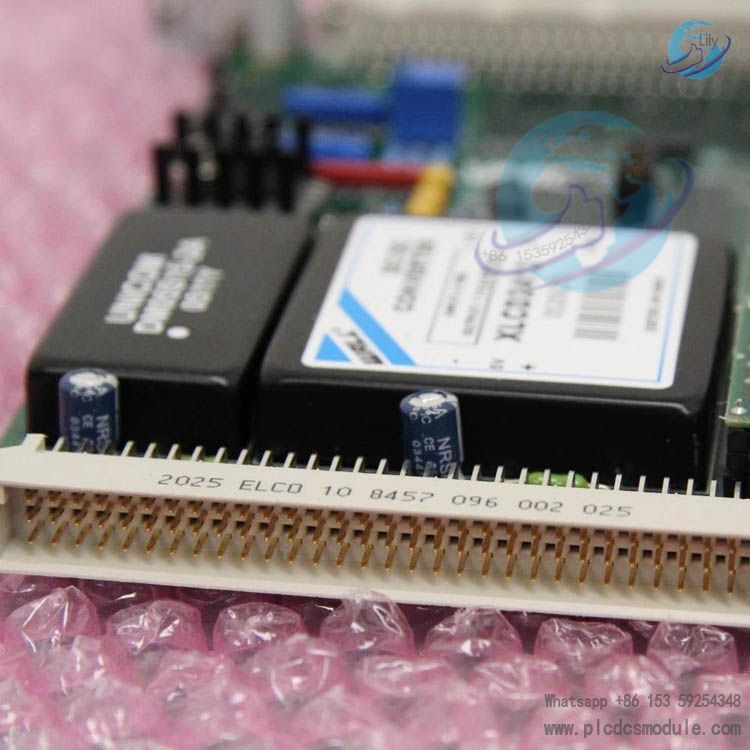
Operating Temperature: −40℃ ~ +70℃ (industrial grade); storage temperature: −55℃ ~ +85℃.Humidity: 5%~95% RH non-condensing.Shock & Vibration: Compliant with MIL-STD-810F; vibration: 10~2000 Hz, 10 g; shock: 30 g peak, 11 ms pulse duration.Mechanical Form: Standard 6U VME card (233.35 mm × 160 mm). Front panel fitted with dual DB68 connectors; rear edge connector plugs directly into VME backplane.
(4) Fault Diagnosis Features
Onboard status LEDs: PWR (Power), FAULT (Global Fault), BIT self-test indicator. Individual faulty channel numbers are flagged via bus registers with dedicated fault codes for open circuit, short circuit and overrange conditions.
Application Scenarios
- Military & Aerospace IndustriesFront-end preprocessing for airborne flight parameter acquisition, rocket ground test systems, radar front-end temperature and transducer signals, and multi-point temperature measurement inside naval engine compartments. Its military-grade wide-temperature tolerance, vibration resistance and galvanic isolation enable stable operation under extreme temperature swings and bumpy airborne & shipboard working conditions.
- Thermal Power & Gas Turbine Control SystemsMulti-point thermocouple temperature monitoring for boiler walls and turbine casings, plus pre-conditioning of low-level vibration signals for turbine TSI systems. Matched with GE VME-based DEH control platforms to replace legacy discrete terminal conditioning cabinets.
- Petrochemical Refining PlantsSignal conditioning for RTD temperature sensors mounted on reactors and distillation columns as well as 4–20 mA pressure & flow transmitters. Centralized signal preprocessing is realized inside control cabinets outside hazardous classified areas to isolate electrical interference from field explosion-proof instrumentation.
- Industrial Automation & Laboratory Test EquipmentBench testing for automotive powertrains, new-energy battery accelerated aging tests, multi-zone temperature acquisition for environmental chambers, and multi-point thermal monitoring on robotic equipment.
- Rail Transit & Marine Propulsion SystemsTemperature acquisition for locomotive traction converters, marine diesel engine cylinder temperature monitoring, and multi-channel sensor signal processing for onboard railway vehicle control units.
FAQ
Q: How to select among VMIVME-3419-200, 3419-100 and 3419-300?A: Model -200 is the standard mass-production general-purpose variant with fully programmable signal types and the top pick for most projects. Model -100 is fixed for Type-K thermocouple only and selected for cost reduction on dedicated single-type temperature measurement. Model -300 is ruggedized military custom version with shock resistance upgraded to 50g for airborne and shipborne applications.
Q: Purchase new modules or used pull spare parts? Has OEM production been discontinued?A: GE VMIC VME product line is fully discontinued with no brand-new factory production stock available. Valid procurement options include high-quality 90% original used units with factory burn-in test and professionally refurbished tested boards. For new projects, equivalent Abaco VME signal conditioning cards are recommended as drop-in replacements.
Q: What is the maximum quantity of Pt100 sensors supported per single VMIVME-3419-200?A: Fully populated 32 channels support up to 32 pieces of 3-wire Pt100. Each channel is driven by an independent constant-current source without shared power supply to eliminate crosstalk between channels.
Q: Preferred matching AD board models?A: Optimal pairing: VMIVME-3128 / VMIVME-4150; secondary option: VMIVME-3115. Low-precision VMIVME-3114 is not recommended due to poor input range matching.
Q: Red FAULT LED stays lit after power-up with BIT self-test failureA:① Power off and inspect DB68 wiring for short circuit or grounded damaged sensor cables.② Remove all external sensors and power on under no-load condition; persistent fault indicates internal channel circuit damage requiring factory repair.③ Normal no-load operation points to faulty field instrumentation on site.
Q: Severe reading drift and fluctuation on thermocouple measurementA:① Prevent abrupt ambient temperature swing around cold-junction compensation area; mount the board away from heat sources such as inverters and contactors.② Switch digital filter to 50Hz cutoff via software to suppress mains interference.③ Separate sensor cabling from high-power power cables in wiring ducts.
Q: Fixed unchanged readings with overrange alarm on certain RTD channelsA: Most commonly caused by broken wire on one lead of 3-wire RTD. The 3419 features open-wire detection, and faulty channel number can be pinpointed via register reading; fix by replacing sensor wiring.
Q: Host PC fails to access board registers over VME busA:① Confirm VME base address configuration to avoid address conflict with other cards in chassis.② Reseat the board and clean oxidized edge connector gold fingers.③ Verify VME IRQ interrupt jumper setting.
Q: Abnormal sampling on partial channels under low ambient temperature (-35℃)A: Deploy genuine industrial-grade -200 model instead of refurbished units with aged capacitors. Install cabinet heating unit to maintain internal chassis temperature above -35℃.
Q: No conditioned voltage output after 4~20mA signal inputA: Verify loop power supply is intact. 2-wire 4–20mA transmitters require external 24VDC loop excitation; the 3419 only performs signal sampling and conversion without providing field loop power.