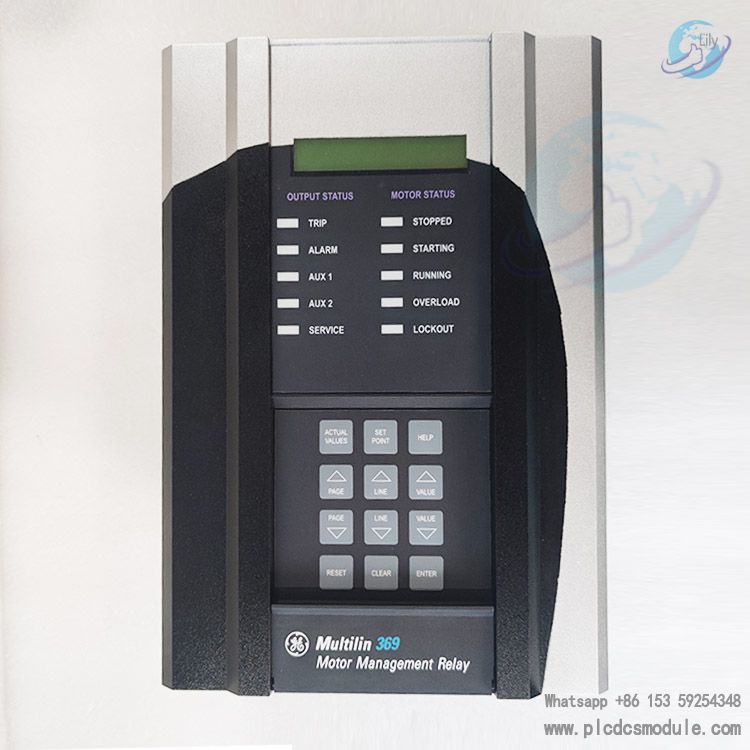


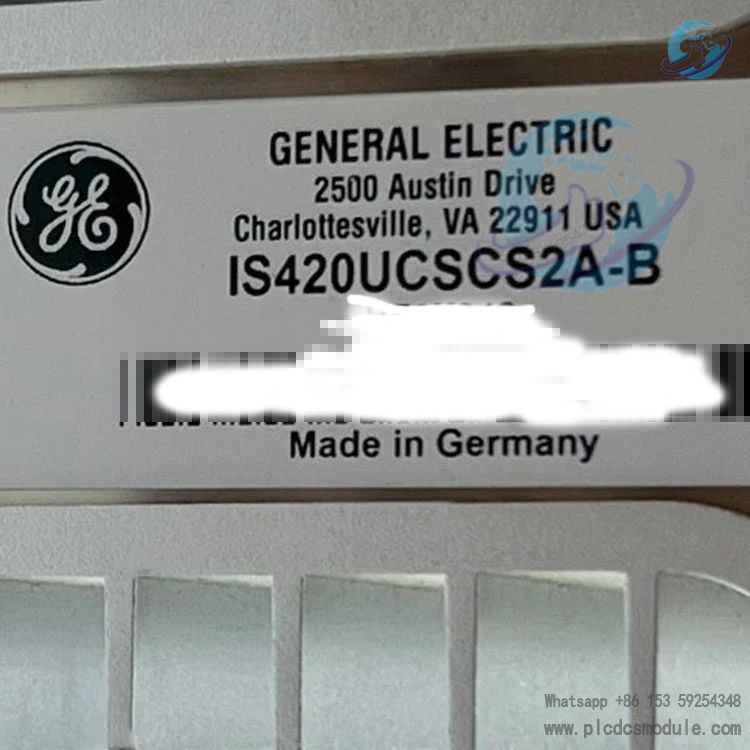
IS420UCSCS2A-B is the safety dual-core controller for GE Speedtronic Mark VIeS, belonging to GE turbine safety control product portfolio. Developed as a standalone master logic controller tailored for SIS safety instrumented systems, suffix B denotes finalized revised industrial hardware revision compatible with ControlST V07.02 and newer configuration software.
As core hardware for safety interlock on gas turbines, steam turbines and large centrifugal compressors, this controller runs QNX Neutrino real-time embedded OS and is built on over 30 years of GE turbine control expertise. It supports simplex, dual redundant and TMR triple modular redundant architectures, complies with IEC61508 functional safety and enables SIL2/SIL3 safety loop configuration. It fulfills full functions including field I/O processing, overspeed protection logic calculation, cross-controller black-channel communication and data forwarding to upper-level HMI/SCADA, serving as the central processing hub of Mark VIeS safety control system. Manufactured in the US with rugged all-aluminum heat-dissipating enclosure for industrial use.
Basic Hardware Specifications
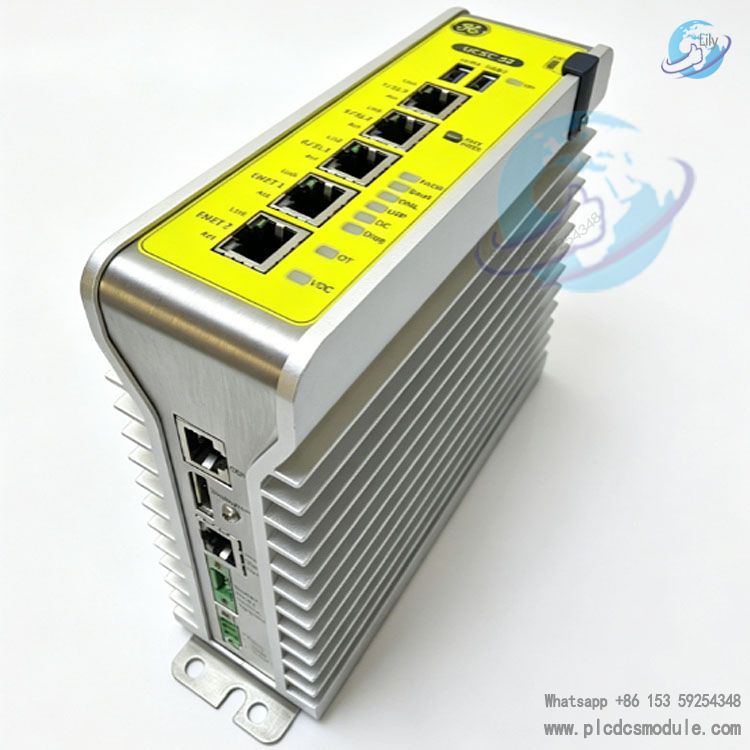
Power supply: 18~32VDC (nominal 28VDC)CPU: AMD G-Series 1.6GHz dual-core processorMemory & Storage: 2GB DDR3 RAM + 128GB SSDDimensions: 168×150×55mm; Net weight:1.327kgOperating temperature: -40℃~+70℃; pre-alarm at 85℃, automatic power-off protection at 95℃, auto-restart once cooled down to 75℃
Specifications
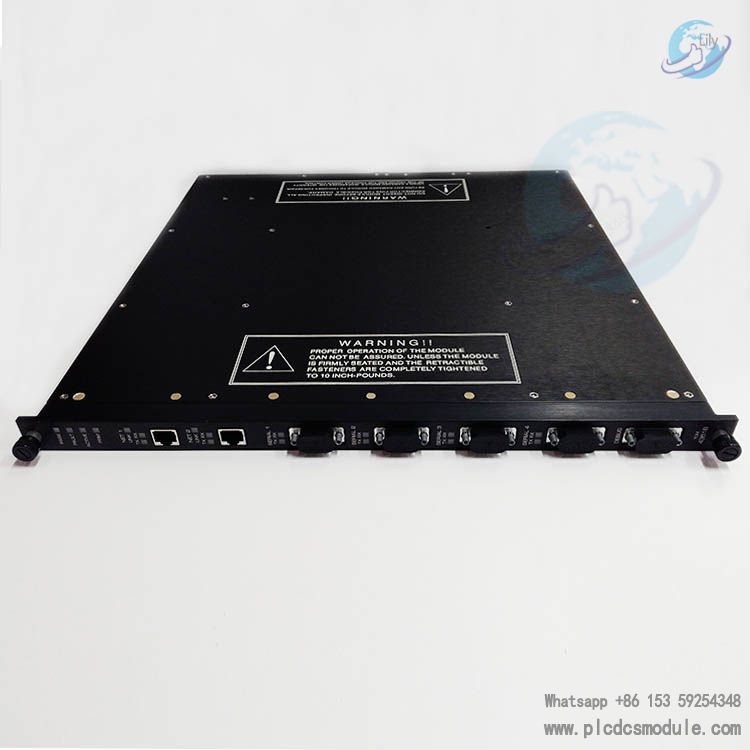
(1) Hardware Interface Features
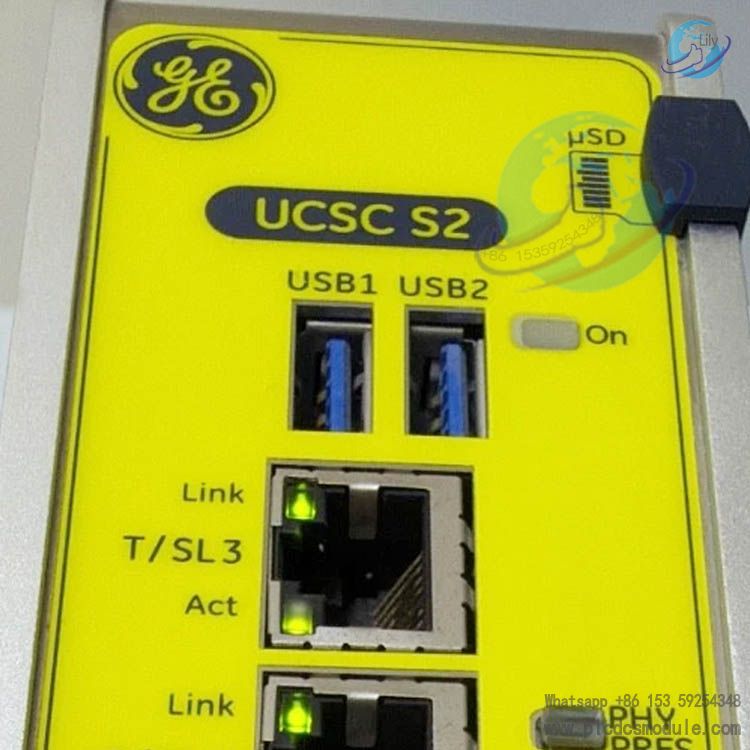
- 3×IONet ports (R/S/T): Dedicated Mark VIe IO bus for full-range Mark VIe analog/digital IO modules to acquire field points and drive field actuators.
- ENET1 Ethernet: EGD/UDH protocol for connection with ToolboxST engineering PC, HMI touchscreen and third-party gateways.
- Auxiliary serial port: Reserved for local firmware flashing and fault log retrieval.
- 4 built-in auxiliary relay drive terminals for direct wiring to trip solenoids, lube oil reset solenoids and other safety actuators.
(2) Software Features
- OS: QNX Neutrino hard real-time OS with isolated process architecture; communication process faults exert no impact on safety control logic.
- Programming: Compliant with IEC standards via FBD & LD programming; supports legacy Mark VI program migration.
- Full-link self-diagnosis: Real-time monitoring of power supply, CPU, memory, communication links and IO bus. Fault codes saved locally and uploaded to host with full-lifecycle event logging.
- Encoder interface: Compatible with 23-bit absolute/incremental encoders at max 3.2kHz sampling for precise turbine speed acquisition and overspeed trip calculation.
(3) Safety Control Features
Embedded OEM pre-developed protection algorithms including electrical overspeed test, cross-tripping TMR interlock, low lube oil pressure trip and furnace overpressure ESD; pre-defined function blocks avoid full custom safety programming. Dual independent hardware watchdog enables dual hardware & software supervision to initiate automatic safety trip upon CPU lockup.
Core Advantages
High-grade Functional Safety ComplianceFactory-certified for both SIL2 and SIL3 to meet safety codes for high-risk petrochemical and thermal power applications. It builds compliant SIS emergency trip protection loops with TMR triple modular redundancy for fault tolerance; single-point hardware failure will not cause unit shutdown.
High-performance Dual-core Parallel ComputingSplit-core design: one core executes safety interlock logic while the other handles communication data forwarding. It delivers millisecond-level response for overspeed, overpressure and overtemperature protection with a minimum 10ms control cycle, supporting multi-cycle synchronization (10/40/80/160ms) for complex algorithms on large turbomachinery.
Flexible Full-redundancy ConfigurationNo hardware DIP switches or jumper wiring required; all redundancy modes are configured via ControlST software. Freely switch among Simplex standalone, Dual redundant and TMR triple redundant architectures. Retrofit of legacy Mark VI systems needs no cabinet base replacement and is compatible with existing series I/O terminal bases.
Native Multi-protocol IntegrationOnboard 3 dedicated IONet I/O buses plus independent EGD/UDH industrial Ethernet ports. Natively supports Modbus TCP (slave read-only) and Black Channel inter-controller safety communication; connection to DCS and supervisory systems needs no extra communication expansion cards.
Fanless Rugged Industrial ConstructionIntegrated finned aluminum passive cooling without cooling fan or internal backup battery. Dust, oil mist and heavy EMI resistant, certified for direct installation in Class 2 hazardous explosive areas to cut long-term failure and maintenance costs.
Online Maintenance & Upgrade Without ShutdownOnline logic download and firmware upgrade available. Hot-swap of individual modules under redundant setup keeps equipment running and drastically shortens overhaul downtime.
Application Scenarios
1. Thermal Power Industry
SIS safety control for combined-cycle gas turbines and coal-fired steam turbine generators; covers turbine/gas turbine overspeed protection, shaft vibration interlock and boiler Master Fuel Trip (MFT) logic. Standard main controller for Mark VIeS retrofit projects at domestic power plants.
2. Petrochemical Industry
Safety interlock for FCC units, large ethylene cracker compressors and long-distance natural gas pipeline compressors in refineries; emergency shutdown for high-risk tank farm processes and core controller for local control cabinets in hazardous explosive areas.
3. Upstream Oil & Gas / LNG Sector
Control for offshore platform turbogenerators and LNG refrigerant compressors plus wellhead booster unit safety protection, tolerant to harsh offshore conditions with high humidity and salt spray.
4. New Energy & Heavy Industry
SIS deployment for large gas engine distributed power stations, blast-furnace gas generators and mining air compressors; widely used for retrofits replacing legacy Mark V control hardware.
FAQ
Q1: Difference between IS420UCSCS2A and IS420UCSCS2A-B?A: Version A is the original initial production release; suffix B is revised finalized hardware with optimized power circuit and IONet driver IC to improve cold-start reliability at -40℃. Firmware is backward compatible and application programs are interchangeable. Model B is preferred for new projects; faulty A boards can be directly replaced with B units for existing equipment.
Q2: Is original GE IO module mandatory?A: IONet is proprietary GE bus exclusively for genuine Mark VIe series IO cards; third-party IO cannot connect directly. The Modbus TCP port allows connection to third-party transmitters and variable frequency drives.
Q3: Is three UCSCS2 controllers required in TMR for SIL3? Can dual redundancy achieve SIL3?A: Per GE specification, triple-module TMR configuration fully meets SIL3; dual redundant topology only reaches maximum SIL2 rating. TMR is mandatory for SIL3-rated SIS in high-risk petrochemical projects.
Q4: No LED and no power-on after energization?A: 1. Input supply below 18VDC; adjust to 24~28VDC.2. Reverse polarity power wiring; swap terminal connections.3. Internal power circuit damage; return to OEM for repair, no field disassembly service available.
Q5: Can ControlST below V07.02 configure this controller?A: No. IS420UCSCS2A-B is supported starting from V07.02 firmware; older ControlST revisions fail hardware recognition, requiring software upgrade.
Q6: Direct installation in IIC Zone 2 hazardous location allowed?A: Certified per UL & ATEX for Class I Div.2 / IIC hazardous area. The enclosure complies with explosion-proof requirements; install locally in cabinet with certified explosion-proof terminal wiring only.
Q7: Will unit trip if one redundant controller drops offline?A: Under dual or TMR redundancy, remaining controllers take over bumplessly to keep unit running. After maintenance, the repaired unit auto-syncs logic and rejoins the redundant cluster once powered up.
Q8: Data recoverable after SSD failure?A: Source project files are preserved on ToolboxST host PC. Replace with new UCSCS2 and download project online; runtime historical logs stored on faulty SSD cannot be recovered.