

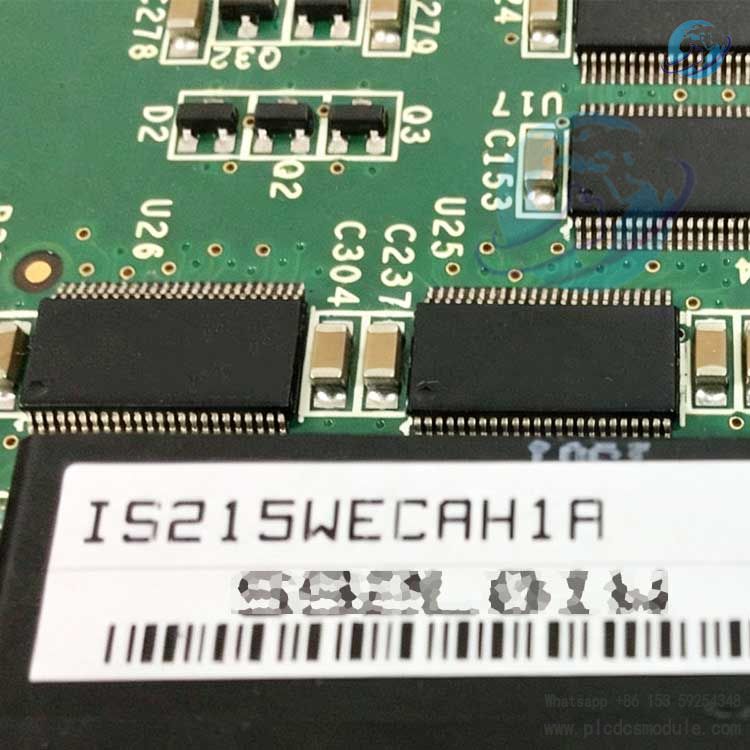
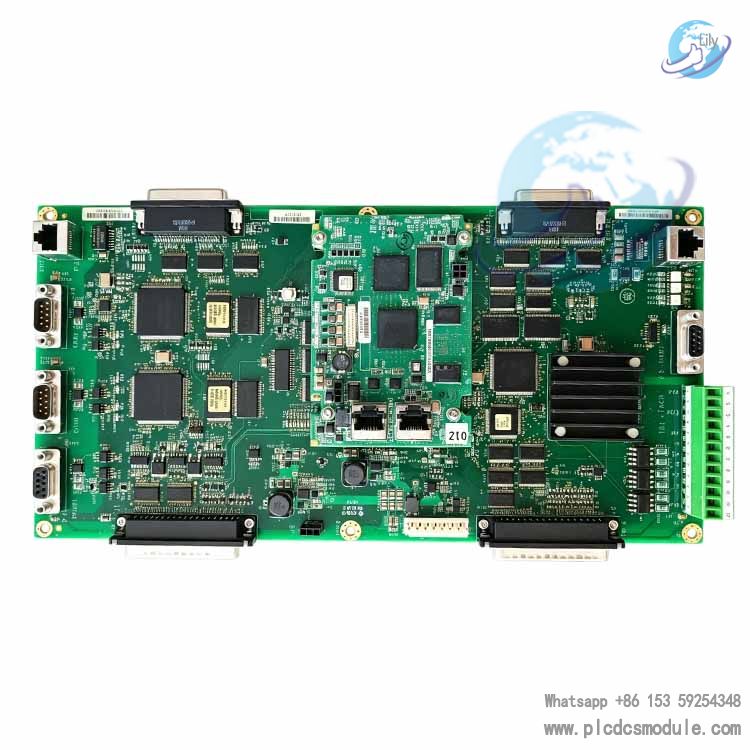
IS215WECAH1A GE Mark VIe Wind‑Specific Communication Adapter Control Card
1. Product Positioning
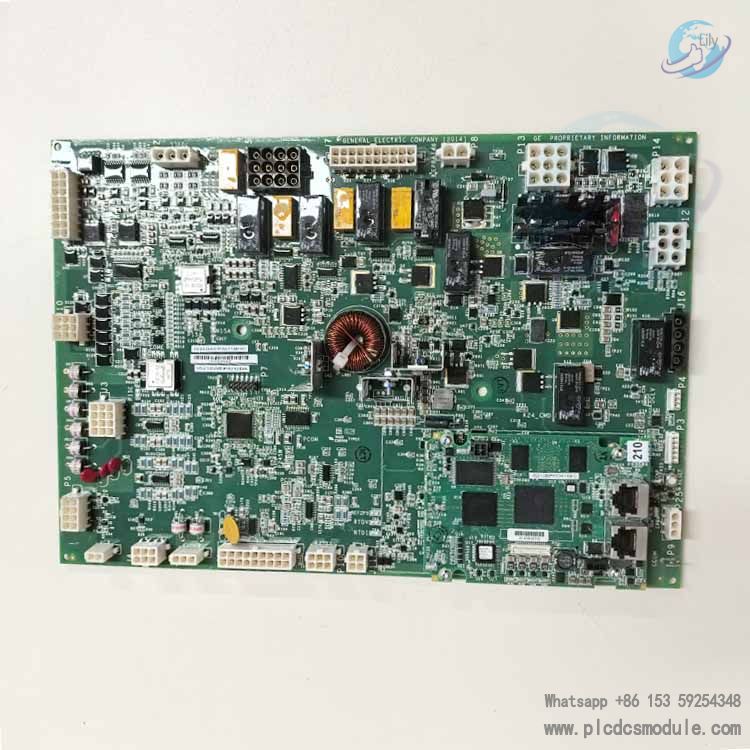
IS215WECAH1A is a custom‑built communication gateway board dedicated to the GE Mark VIe system for 1.5 MW wind turbines. Unlike general‑purpose control boards for gas and steam turbines, it serves as a core network transit unit optimized for complex wind‑farm operating conditions. Precisely adapted to wind‑turbine main‑control system architecture, it performs bidirectional data bridging, protocol conversion and packet forwarding between the VME backplane bus, field IONet I/O network and upper‑level monitoring systems.
Benefiting from hard real‑time capabilities of the QNX real‑time operating system, this board resolves compatibility and interworking challenges between legacy wind‑farm hardware and the new‑generation Mark VIe Ethernet network. It enables stable real‑time data exchange between local rack main‑control units and remote field I/O components. As a key hub hardware for main‑control system networking, equipment expansion and retrofitting in onshore and offshore wind farms, it does not participate in closed‑loop control computation and focuses purely on wind‑power communication transmission, delivering far higher targeting and professionalism than general‑purpose boards.
2. Core Technical Specifications
2.1 Core Computing & System Configuration
- Processor: Industrial‑grade Intel XScale processor
- Operating System: QNX Neutrino hard real‑time OS, ensuring jitter‑free and low‑latency data transmission under transient wind‑turbine operating conditions
- Memory: 64 MB SDRAM for runtime, 8 MB boot Flash
- Firmware and configuration parameters are stored persistently; data remains intact after power loss for high operational stability
2.2 Multi‑Port Communication Configuration
Fully onboard interfaces without additional daughter‑board expansion; three integrated communication ports:
- 1 × 10Base2 BNC IONet dedicated wind‑power interface
- 1 × 10/100 Base‑TX RJ45 general‑purpose Ethernet port
- 1 × RS‑232 D‑Sub local debug serial port
Supported mainstream wind‑power protocols: IONet, Modbus TCP, EGD, SRTPTransmission rates: IONet 10 Mbps, Ethernet 100 Mbps, Serial 115.2 kbps
2.3 Electrical & Environmental Specifications
- 1500 V AC port‑to‑backplane high‑voltage galvanic isolation to suppress wind‑farm surge and electrostatic interference
- Wide industrial temperature range: ‑30 ℃ ~ +65 ℃ for harsh outdoor environments with large day‑night temperature swings
- Powered via VME backplane: 5 V@2.5 A, 12 V@0.5 A; no external power supply required
2.4 Physical Specifications
- Form factor: Standard 6U VME board
- Dimension: 160 mm × 100 mm
- Net weight: 0.4 kg
- Compatible with full series of Mark VIe standard racks; direct hot‑swap‑capable mounting (note: hot‑swap operation is forbidden, see FAQ) without adapters to reduce field replacement and retrofitting man‑hours
3. Key Advantages
- Heterogeneous Network Interoperability for Legacy‑New CompatibilitySeamlessly bridges VME backplane bus and dedicated IONet wind‑field network while supporting Ethernet connection to third‑party upper monitoring systems. Enables legacy Mark VI hardware to integrate into new‑generation Mark VIe platforms, ideal for wind‑turbine retrofits and avoiding high full‑equipment replacement costs.
- Hard Real‑Time Transmission for Dynamic Wind‑Turbine ConditionsBuilt on QNX real‑time architecture with firmware optimised for high‑frequency data exchange of pitch and main‑control signals. Delivers low‑jitter, deterministic data transfer that meets high‑precision generator‑set control requirements and prevents data delay or packet loss caused by fluctuating wind‑farm conditions.
- High‑Voltage Isolation Protection to Reduce On‑Site FailuresGalvanic isolation between ports and rack backplane blocks lightning‑induced surges and electromagnetic interference from wind‑farm sites. Protects main‑control, protection and signal‑acquisition boards inside the rack and lowers unplanned downtime risk of the whole control system.
- Intelligent Fault Diagnostics for Higher O&M EfficiencyEmbedded independent fault‑diagnostic log system. Operation status, communication errors and link‑fault records can be retrieved in real time via ControlST / ToolboxST software, allowing field technicians to rapidly locate network faults and shorten troubleshooting downtime.
- Simplified Installation & Broad CompatibilityStandard 6U VME industrial form factor for plug‑and‑play deployment in all Mark VIe standard racks. Supports simplex single‑redundancy and dual‑redundancy architectures to fit wind‑power control schemes of different power ratings and safety levels.
- Industrial Anti‑Corrosion Coating for Outdoor DurabilityConformal protective coating covers the whole board to cope with high humidity, extreme temperature variation and heavy dust in onshore and offshore wind‑farm environments, extending service life and increasing spare‑part replacement intervals.
4. Product Features
IS215WECAH1A is a custom‑purpose board for wind‑power applications. All hardware and firmware are optimised for 1.5 MW wind‑turbine main‑control systems with strong application‑specificity.
- Fully‑integrated onboard interfaces; completes gateway communication without daughter‑board expansion
- Firmware stored in onboard Flash; configuration parameters persist after power‑off
- Fully compliant with Mark VIe bus specifications for seamless coordination with other wind‑power boards in the series
Important Application Note: Hardware and firmware are tuned for wind‑turbine pitch and main‑control data interaction. Deployment in gas‑turbine or steam‑turbine control systems is not recommended; protocol incompatibility and abnormal data transmission may occur in non‑wind‑power scenarios.
5. Working Principle
Adopts a “bidirectional data transit + isolation protection” automatic closed‑loop operating logic. After insertion into the Mark VIe VME rack, the board is powered by the backplane and connected to the internal bus. The Intel XScale processor running QNX establishes dual‑directional data‑processing links:
- Downstream Control Link: Receives wind‑turbine control commands from rack main‑control units, performs protocol encapsulation and format conversion, and delivers commands to remote field I/O modules via the IONet interface for precise wind‑turbine actuation.
- Upstream Data Link: Collects real‑time wind‑turbine operational and status data returned from field I/O assemblies. After parsing and processing, data is forwarded to the VME backplane and synchronously uploaded to plant‑site HMI and DCS monitoring systems for visual unit‑status supervision.
- Debug & Protection Link: RS‑232 serial port is dedicated to local on‑site debugging, firmware upgrade and parameter calibration. The galvanic‑isolation layer blocks interference signals from the field side and prevents fault propagation to critical rack‑internal hardware to guarantee overall system stability.
6. Product Comparison
| Model | Description |
|---|---|
| IS215WECAH1A (This Unit) | Wind‑specific communication gateway board. Focuses on network bridging, protocol conversion and data forwarding; no control computation function. Core hardware for inter‑network communication in wind‑power systems. |
| IS215UCVEH2A | System main‑control computing board. Executes overall logic control and algorithm computation as the system core brain. Mainly deployed for gas / steam turbines; serves only as main controller in wind‑power setups without network‑transit capability. |
| IS215WEMAH1A | Wind‑power signal‑acquisition board. Specialises in acquisition and pre‑processing of field analogue and digital signals with limited communication‑forwarding capacity. Must work together with IS215WECAH1A to build a complete “acquisition + transmission” wind‑power hardware chain. |
| IS215VPROH1B | System safety‑protection board. Dedicated to unit overspeed, emergency trip and safety‑protection logic. Handles fault‑trip protection only and carries no high‑volume data‑forwarding function. |
7. Application Scenarios
- Original main‑control system matching and spare‑part replacement for 1.5 MW wind‑turbine units based on Mark VIe
- Retrofitting, system expansion and hardware‑upgrade projects for onshore and offshore wind farms
- Renovation projects connecting legacy wind‑power control platforms to new‑generation Mark VIe Ethernet networks
- Gateway data transit between wind‑power auxiliary‑control I/O modules and central HMI / DCS systems
- Energy‑automation retrofits enabling data inter‑communication and forwarding across heterogeneous multi‑protocol industrial networks
8. Complete Supporting Product List
- Rack Chassis: IS200CHS001A Mark VIe VME Standard Rack
- Main‑Control Core: IS215UCVEH2A Controller Board
- Signal Acquisition: IS215WEMAH1A Wind‑Power Signal Board
- Safety Protection: IS215VPROH1B Protection Board
- Field I/O Modules: IS200AEPAH1A, IS200BECAH1A
- Terminal Accessories: IS200TREGH1A Terminal Board
9. FAQ
Q1: Can IS215WECAH1A be used for gas‑turbine Mark VIe systems?A1: Direct deployment is not advised. Firmware, communication logic and data algorithms are custom‑tuned for 1.5 MW wind‑turbine operating conditions and mismatched with gas‑turbine control logic. Use GE general‑purpose communication boards for gas‑turbine projects to avoid communication anomalies and system alarms.
Q2: What critical information shall be verified before purchasing this board?A2: Confirm four key points to prevent incompatibility:① Hardware revision level of the board;② Configuration parameters of on‑site Mark VIe rack;③ IONet network topology of the wind‑farm site;④ Full hardware part‑number list of the wind‑power control system.
Q3: IONet communication loss: root‑cause analysis and troubleshooting sequenceA3: Common triggers: loose or poorly‑contacted BNC connectors, missing network terminating resistor, degraded board‑port hardware, poor VME backplane‑slot contact.Troubleshooting priority:
- Inspect wiring and terminating resistor (most frequent cause)
- Verify backplane power supply and slot contact
- Check physical port hardware status
- Validate communication configuration via software
Q4: Does this board support hot‑swap?A4: No. The Mark VIe VME rack architecture does not support hot‑swap. Board insertion or removal must be performed only after unit shutdown and full power‑off. Live‑plug operations will cause board burnout and system failure.
Q5: What are the core differences between IS215WECAH1A and IS215WEMAH1A?A5: They perform distinct and complementary functions. IS215WECAH1A is a communication gateway responsible for cross‑network data forwarding and protocol conversion. IS215WEMAH1A is a signal‑acquisition board that captures raw field signals with limited communication capacity. The two boards must work together in a complete wind‑power control system.
Q6: Is full technical documentation available?A6: Public‑release official PDF datasheets can be provided free‑of‑charge. Confidential internal manufacturer documents are not available for external distribution.
Q7: System fails to recognise the board after installation. Quick troubleshooting steps?A7: Three‑step diagnosis:① Hardware: Confirm proper seating in slot and normal VME backplane power supply;② Revision check: Match board hardware revision with system configuration revision;③ Software: Restart ControlST software and reload hardware‑configuration parameters.
10. Recommended Related Mark VIe Wind‑Power Part Numbers
- Main‑Control Series: IS215UCVEH2A
- Wind‑Power Signal Series: IS215WEMAH1A, IS215WEPAH1AB
- Protection Series: IS215VPROH1B
- I/O Acquisition Series: IS200AEPAH1A, IS200BECAH1A
- Rack Accessories: IS200CHS001A, IS200TREGH1A
- Power Distribution / Interface Series: IS200JPDDG1AAA, IS200HSLAH1ADE, IS200BCAAH1ABA, IS200EPMCH1A, IS220UCSBH1A, IS200VCRCH1BBB