

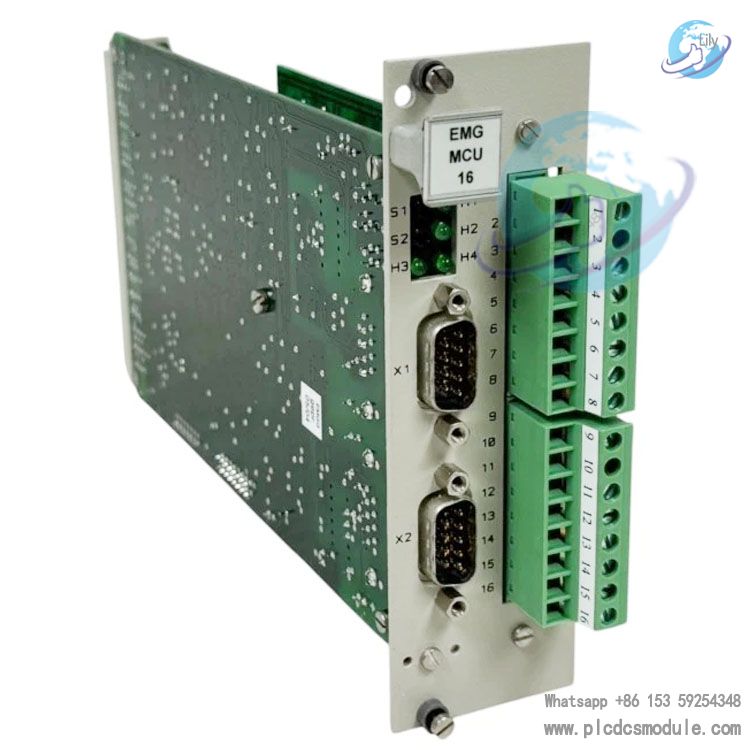
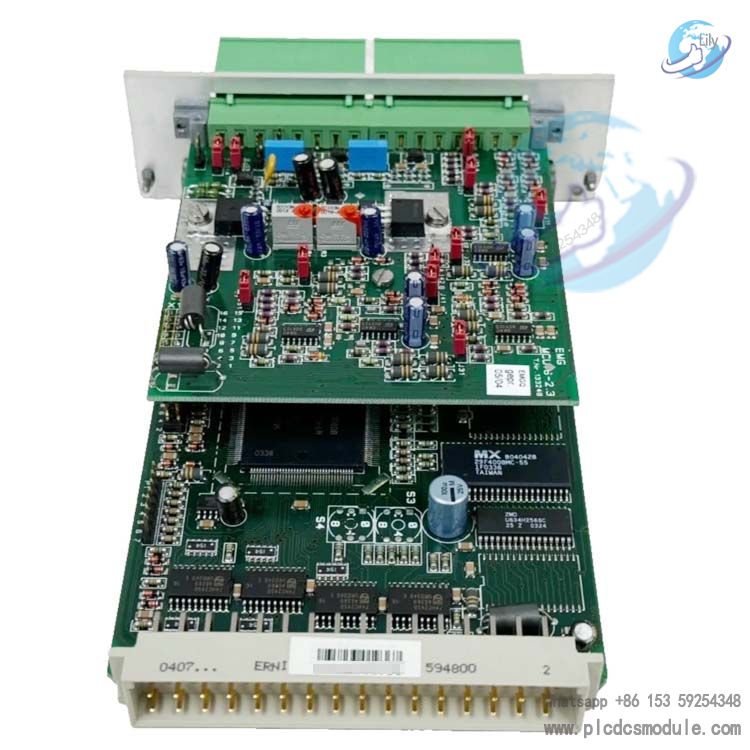
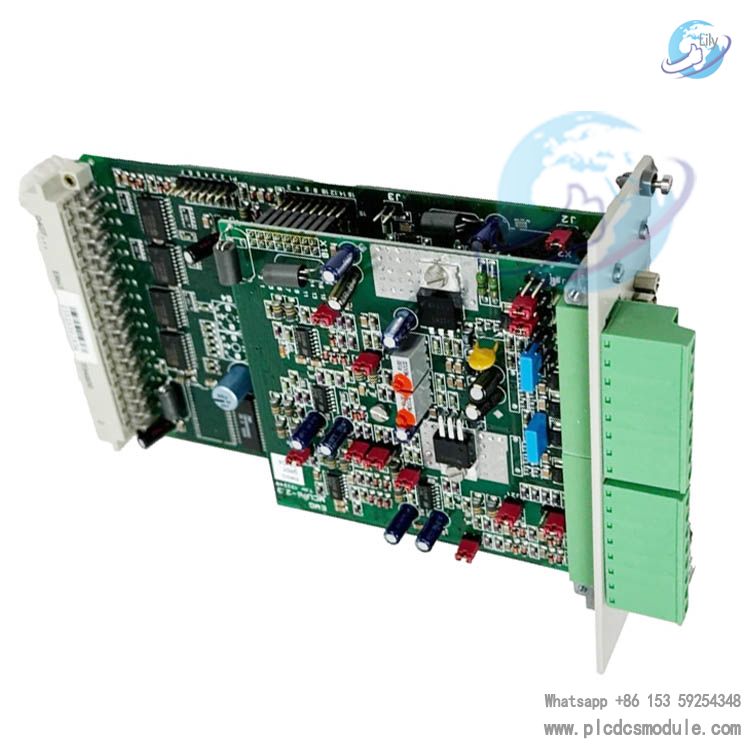
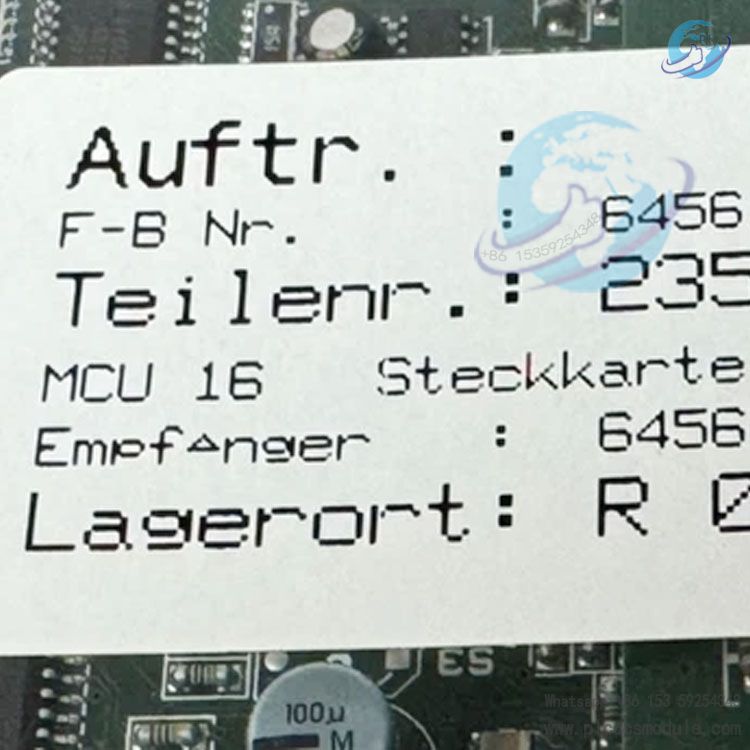
The EMG MCU16 is a 16-bit high-performance CPU control card developed by Germany-based EMG. Serving as the core module of EMG automation control systems such as the SPC16 web guide controller, it undertakes signal acquisition, closed-loop control operation, logic processing and communication scheduling. Widely applied in web edge correction, tension control and positioning control systems across industries including iron and steel, papermaking, film and tire manufacturing, it features high precision, outstanding stability and flexible configuration.
Hardware Architecture & Core Parameters
Processor: Equipped with a 16-bit microprocessor, compatible with Real-Time Operating System (RTOS) and built-in Floating Point Unit (FPU). It efficiently executes complex control algorithms such as PID to ensure high dynamic response accuracy.
Input Interfaces: Standard with 5 analog input channels (supporting ±10V and 4-20mA signals), compatible with displacement, tension, laser and other sensors. It integrates 8 channels of 24V DC digital input for connection to switches, limit switches and photoelectric signals.
Output Interfaces: Matched with the SEV16 power amplification module, it provides programmable analog outputs (0…±300mA, 0…±10V, 0…±22V) to drive EMG servo valves. Six non-voltage relay contact outputs are available for interlocking external equipment.
Communication Interfaces: Integrated with RS232 serial port for PC program downloading and debugging, and CANbus bus for connection with the TEA16 operating unit and peripheral devices, enabling data interaction with upper computers such as PLCs.
Mechanical and Electrical Specifications: Adopting a standard 19-inch plug-in card design (C/54TE), it is compatible with EMG standard cabinets. The operating voltage is 24V DC with a power consumption of approximately 15W and a weight of about 3.0kg. It supports operation in industrial environments ranging from -10℃ to +55℃.
Sampling and Accuracy: Features 16-bit ADC sampling with a full-scale accuracy of ±0.003%. The sampling rate is adjustable from 100Hz to 10kHz, meeting diverse requirements for high-speed edge correction and low-speed tension control.
Core Functions
Closed-loop Control Operation:Built-in PID/PI/P control algorithms with graphically configurable parameters via EMG logiCAD software. It realizes high-precision closed-loop regulation of web position and tension, with position deviation control up to the 0.01 mm level.
Signal Preprocessing:Integrated with anti-aliasing filtering, programmable gain amplification (PGA, adjustable from 1 to 1000 times) and optocoupler isolation protection. It suppresses high-frequency noise in industrial sites and ensures stable acquisition of weak signals.
Programmable Logic Control:Customize control logic through logiCAD software. It supports sequence control, interlock protection, fault alarm and other functions. The program is retained after power failure once downloaded, eliminating repeated programming.
System Monitoring and Diagnosis:Real-time monitoring of power supply, communication and sensor status. In the event of a fault, fault codes are displayed on the LCD and relay alarms are triggered to facilitate rapid troubleshooting.
Multi-module Coordination:Seamlessly compatible with the TEA16 operating unit (4-line LCD + numeric keypad), SEV16 power amplifier module and NET16 communication module, forming a complete web guiding and tension control system.
Application Scenarios
Web Edge Correction System: Applied to uncoiling, coiling and slitter stations in steel, papermaking and film production lines. It controls the edge or center position of strip materials to prevent web deviation.
Tension Control System: Used in tire, textile and coating production lines to adjust web tension in real time and avoid material stretching or wrinkling.
Positioning Control System: Enables high-precision positioning for processing equipment and conveyor lines, suitable for application scenarios driven by servo valves and servo motors.
Frequently Asked Questions
1. The MCU16 control card fails to power on and no indicator lights up
Check whether the 24V DC power supply is normal with the voltage within the range of 22–26V, and verify correct positive and negative polarity connection without reverse wiring.Inspect the cabinet power module for faults by replacement testing; ensure secure contact between the control card and cabinet slot, then reinsert the control card.Check if the fuse on the control card is blown. If blown, troubleshoot external short circuits before replacing with a fuse of the same specification.
2. The sensor signal is normal, but the control card has no output and the servo valve does not operate
Confirm correct analog output wiring and that the output range (e.g., ±10V, ±300mA) matches the servo valve specifications.Verify the correctness of control logic and rationality of PID parameters in the logiCAD program; restore default parameters for testing.Diagnose faults of the SEV16 power amplifier module by module replacement or voltage/current measurement at the output terminal.
3. Communication failure between the control card and TEA16 operating unit, with no display or garbled data
Check correct CANbus wiring and matched terminal resistors (120 Ω at both ends), and ensure the bus length does not exceed 500 meters.Confirm correct communication address settings; the addresses of MCU16 and TEA16 must correspond one-to-one without conflicts.Eliminate electromagnetic interference on the bus. Shielded twisted-pair cable is recommended with single-end grounding for the shielding layer, and keep the cable away from high-interference equipment such as inverters and motors.
4. Poor web guiding accuracy with frequent strip jitter or excessive deviation
Optimize PID parameters: reduce proportional gain (P) and increase integral time (I) to suppress jitter; appropriately increase P and decrease derivative time (D) to improve response speed.Ensure firm sensor installation and clean measuring surfaces free of foreign matter; prevent laser or ultrasonic sensors from being affected by light and vibration interference.Check mechanical actuators (such as the guiding frame) for jamming and looseness, and ensure flexible movement of the servo valve spool without oil contamination blockage.
5. Program download failure with prompts of communication error or checksum error
Check the integrity of the RS232 serial cable and correct wiring of TX/RX/GND; keep baud rate, data bits and parity bits consistent with PC settings.Ensure compatible logiCAD software versions and error-free program syntax; recompile the program before downloading.Avoid strong electromagnetic interference during downloading, turn off nearby high-power equipment, and use an isolated serial module if necessary.