

Product Advantages
Integrated design of bus and network communication. A single module handles three types of communication tasks simultaneously: VME backplane scheduling, IONet industrial networking, and RS232 local commissioning. It reduces the number of boards in the rack and cuts wiring failure points.
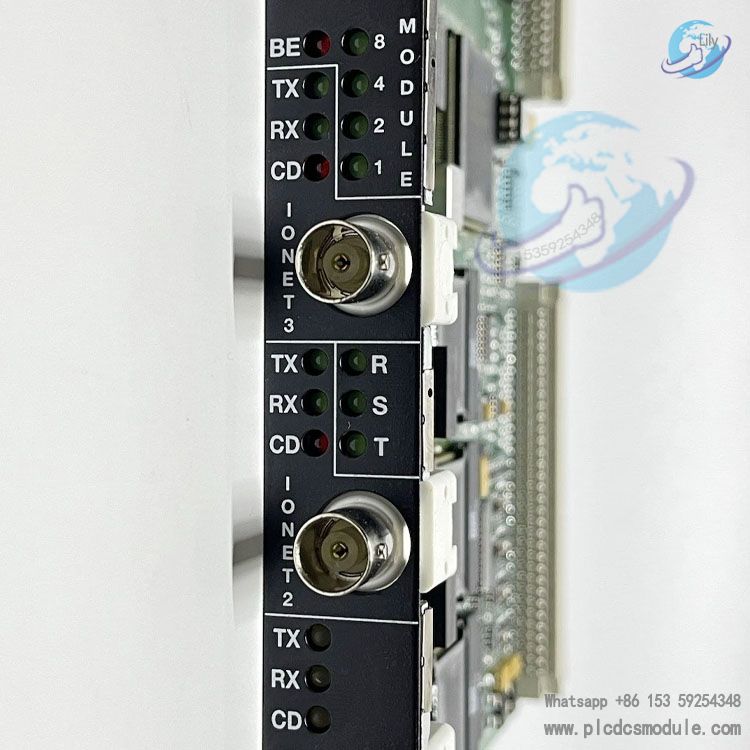
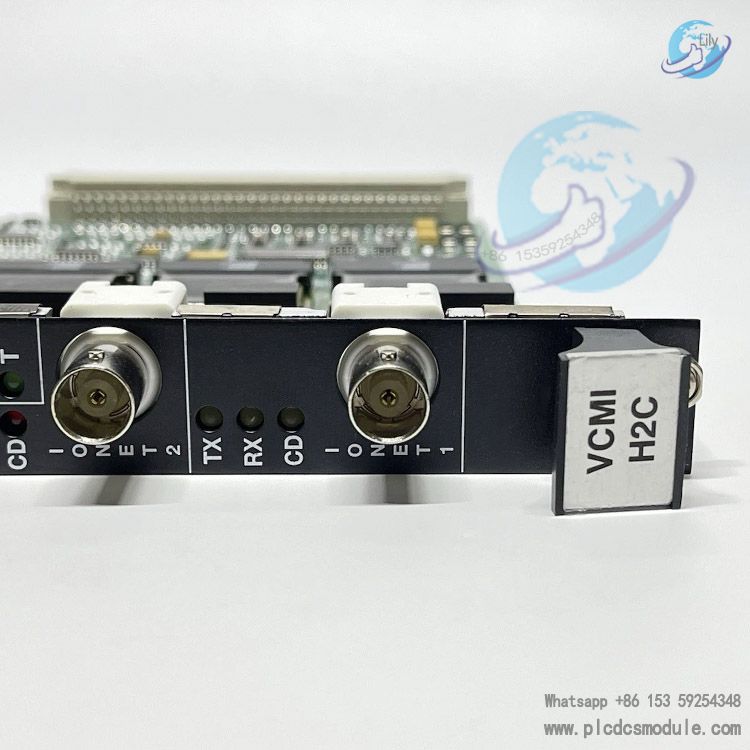
Three independent IONet 10Base2 coaxial Ethernet ports supporting long-distance transmission over RG58 thin coaxial cables. Each channel features hardware isolation; disconnection of one channel will not interfere with data transmission of the other two. Ideal for long-distance I/O expansion across multiple plant workshops.
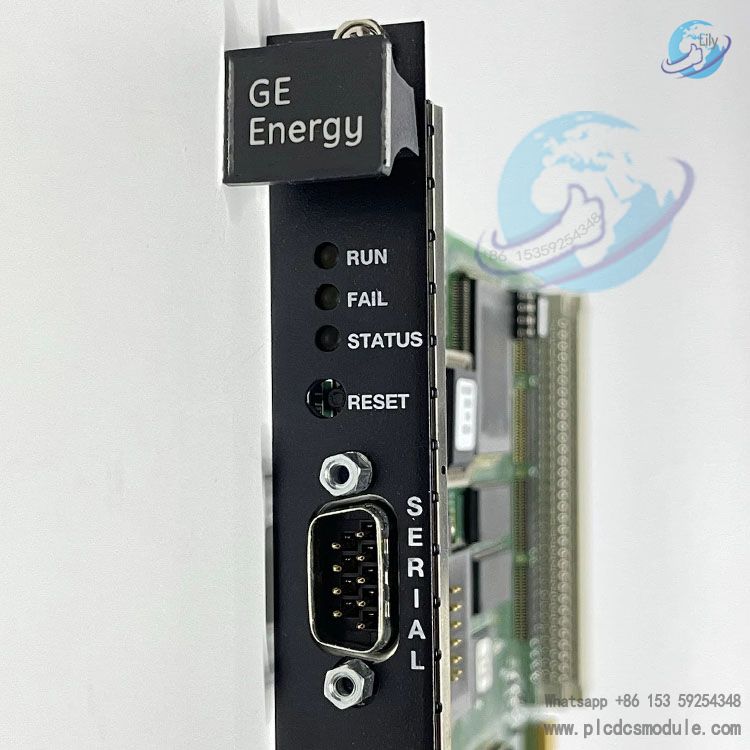
Hierarchical on-board LED diagnostic indicators, including general run, fault and status lamps, plus separate transmit/receive collision indicators for each network port. Maintenance technicians can quickly locate communication breaks, hardware failures and network ID conflicts without host software, shortening equipment outage maintenance time.
Native support for TMR triple modular redundancy fault-tolerant architecture. Three identical modules perform parallel data verification. The system switches to backup units bumplessly upon single-module failure, meeting safety standards for uninterrupted operation of generator units.
Industrial-grade wide-temperature hardware design with an operating temperature range of 0℃ to 60℃. Vibration resistance complies with 10g per IEC 60068 standard, enabling long-term stable operation in harsh plant and petrochemical environments featuring strong electromagnetic interference, high temperature and heavy dust.
Firmware backward compatible with legacy VCMIH1 boards. Direct drop-in replacement and upgrade are available for older Mark VI units without extensive modification of underlying control programs, lowering retrofit costs.
Standard 2-slot VME C-size form factor compatible with all Mark VI standard cabinet backplanes. Standardized mounting latches allow easy installation and removal without special tools, simplifying on-site spare part replacement procedures.
Model Breakdown
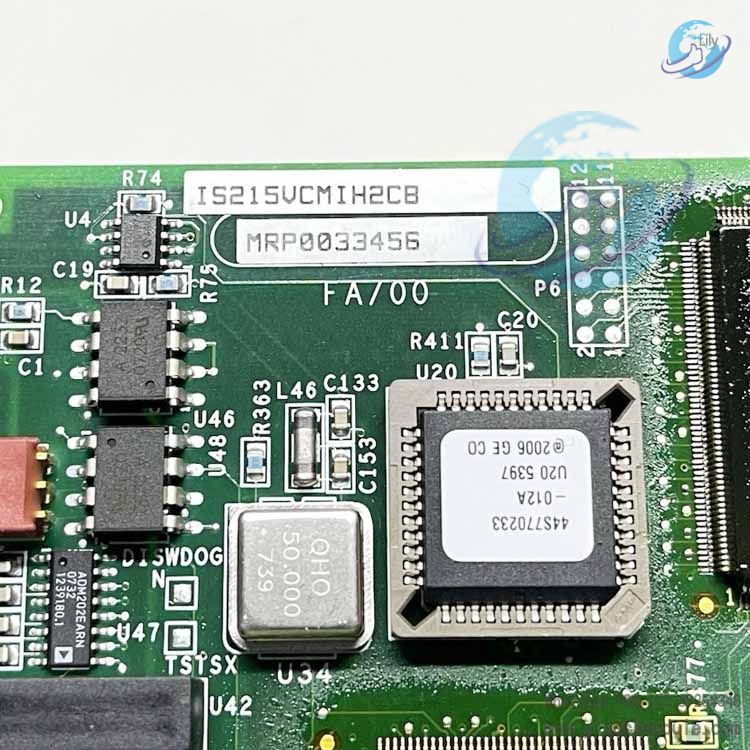
Full model IS215VCMIH2CB is segmented and defined as follows:
IS215: Unified prefix code for GE Mark VI VME rack-mounted boards, differentiated from DIN rail-mounted IS220 series modules.
VCMI: Functional abbreviation for VME Communications Interface, denoting the VME bus master communication interface board.
H2: Second hardware revision. Compared with the first-generation H1 version, it adds a third IONet communication channel and upgraded processing chip performance.
C: Base hardware form code, representing the standard TMR redundancy-compatible variant.
B: Sub-variant suffix corresponding to factory firmware customized for Frame5/7/9 gas turbine series, distinguishing unit-specific programs of suffix CA and CC.
Product Features
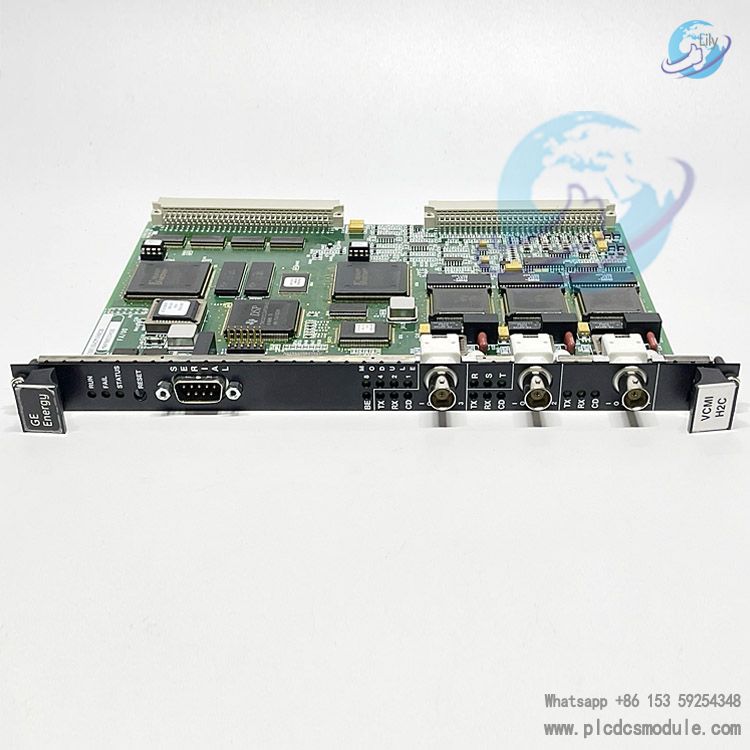
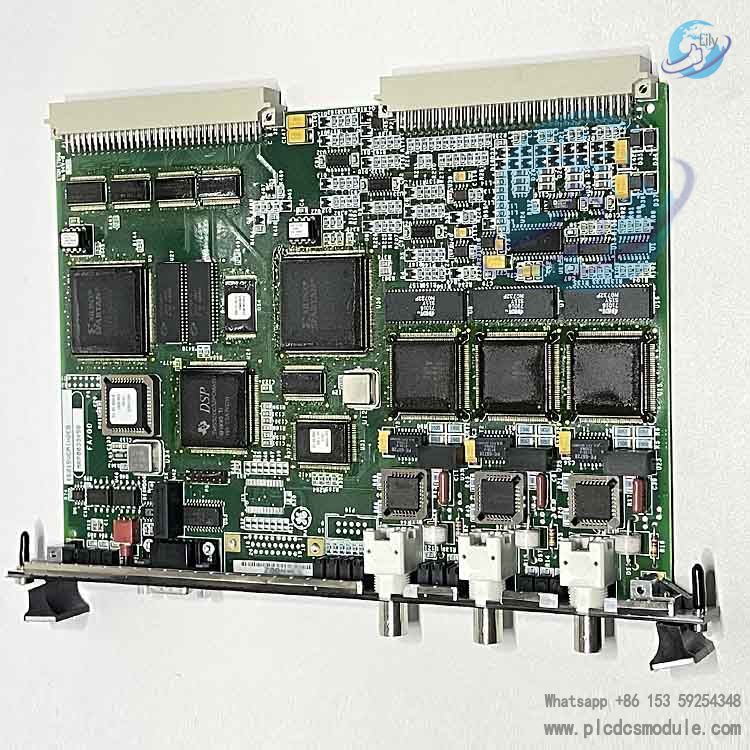
Communication Port Configuration: The front panel is equipped with 3 BNC ports for IONet 10Base2 Ethernet and 1 RS232C D-sub commissioning serial port. All ports are fitted with independent signal indicators and support simultaneous online operation of all channels.
Bus Management Performance: Acting as the exclusive master controller of the rack’s VME bus, it automatically identifies and assigns hardware addresses to all I/O terminal boards, protection boards and servo boards within the rack, and uniformly schedules bidirectional data transmission over the backplane.
Network Frame Synchronization Mechanism: It serves as the master frame counter for the entire IONet network, unifying the timing sequence of network-wide data transmission. The synchronization error for multi-rack signal acquisition and command distribution is controlled at the microsecond level, preventing timing disorder of turbine control logic.
Electrical Hardware Specifications: Powered by 5 VDC via the backplane with a rated power consumption of 25 W; ingress protection rating IP20 for indoor cabinet installation only. A physical reset button is integrated on the panel, supporting two restart modes: online soft reset and power-off hard reset.
Signal Isolation Design: Three sets of circuits (network ports, serial port and VME backplane) feature independent transformer isolation, blocking backflow of high-voltage field interference to the main processing unit and reducing packet loss and false alarms caused by electromagnetic disturbance.
Storage & Computing Performance: Equipped with a 32-bit TI digital signal processor (DSP). Local cache stores network node IDs and channel configuration parameters; settings are retained after power loss and automatically loaded upon power-on for network initialization.
Hardware Diagnostic Logic: Real-time monitoring of internal supply voltage, network port signal levels and chip operating status. Persistent LED alarms are triggered upon faults, and full fault code logs can be retrieved via the upper-level ToolboxST software.
Application Industries
Thermal Power Industry
Main control systems for combined-cycle gas turbine units and steam turbine generator sets, covering communication management of control racks for full-series gas turbines including Frame5, Frame7, Frame9 and 9HA.
Petrochemical Industry
Safety interlock and process control for self-generation turbines in refineries, oil & gas pipeline booster turbine units, and hydrogenation plant turbomachinery.
Metallurgy & Steel Industry
Closed-loop control systems for rotating speed and load of steam turbines at steel mill captive power plants and blast furnace top gas recovery turbine units.
Oil & Gas Production Industry
Automatic control of gas turbine generator sets on offshore platforms and booster turbines at onshore oil & gas stations.
Heavy Industry
Full-process monitoring and load regulation systems for combined heat and power (CHP) turbine units in factories.
Product Comparison
Comparison Object 1: IS215VCMIH1CB (1st Generation VCMI Communication Board)
Channel quantity: Only 2 IONet ports without a third backup channel;
Computing performance: Original low-speed DSP chip leading to higher synchronization delay in multi-rack networking;
Compatibility: Incompatible with new analog I/O boards, limiting retrofitting of legacy units;Applicable scenarios: Only single-rack compact simple turbine units with no redundant expansion requirements.
Comparison Object 2: IS215VCMIH2CA (CA suffix variant of the same series)
Firmware adaptation: Designed for medium & small steam turbine units, incompatible with heavy-duty Frame9 gas turbines;
Matching terminal boards: Fails to recognize addresses of some new servo terminal boards;
Advantages: Identical physical dimension, differing only in underlying unit firmware; slightly lower procurement cost for small steam turbine projects.
Comparison Object 3: IS200VCMIH2CAA (Compact VCMI Daughter Card for Mark VIe)
Hardware architecture: No standalone VME slot, built as a daughter card plugged onto main CPU board;
Communication mode: Eliminates independent dedicated IONet hardware channels, integrated into CPU motherboard;
Applicable system: Exclusively for Mark VIe DIN-rail I/O Pack system, cannot be deployed on traditional VME rack-based Mark VI equipment.
Supporting Products
Main Processor Modules
IS215VPROH1B, IS215VPROH2B — Mark VI protection & calculation main control boards
I/O Terminal Base Boards
IS200TBAIH1B analog input terminal boardIS200TBCIH1B digital input terminal boardIS200TBAOH1C analog output terminal board
Servo Control Board
IS200VSVOH1B VME servo drive control card
Power Distribution Modules
IS200JPDDG1AAA DC power distribution boardIS220PPDAH1A rack power supply module
Network Transmission Accessories
RG58 coaxial BNC communication cables, IONet network terminating resistors
Configuration & Commissioning Software
GE ToolboxST — configuration and diagnostic software for turbine control systems
TMR Redundancy Supporting Configuration
Three identical IS215VCMIH2CB modules form a TMR redundant communication array
FAQ
Q1 How to distinguish models with suffixes IS215VCMIH2CB, CA and CC during procurement, and are they interchangeable?
A1 The three variants share identical hardware structures and differ only in the pre-installed unit-adapted firmware. CB is for heavy-duty Frame-series gas turbines; CA is for medium and small steam turbines; CC is a universal compatible firmware version. Cross-suffix replacement requires re-flashing the matching unit firmware via ToolboxST. Direct installation without firmware update will most likely trigger network identification failures. Confirm the on-site turbine model to select the correct suffix when placing orders.
Q2 The Fail indicator stays solid after installation. Which hardware and wiring issues should be checked first?
A2 1. Check loose wiring for VME backplane power supply and verify whether the cabinet DC output voltage meets specifications.
2. Inspect three IONet coaxial BNC cables for broken cores and short-circuited shielding layers.3. Confirm there are no duplicate ID conflicts among other I/O boards in the rack.4. Press the physical reset button on the panel to reboot the module for a new self-test cycle.
Q3 Is unit shutdown mandatory for replacement when one VCMI module fails in a TMR triple modular redundant system?
A3 With two intact modules online, the system can continue bumpless operation without immediate shutdown. Replace the faulty module during a scheduled low-load maintenance window after power cut. Re-synchronize network parameters of all three modules post replacement to restore full redundant protection capacity.
Q4 What causes failure of RS232 serial port connection to upper commissioning software?
A4 Verify if the pin assignment of the serial cable complies with GE standards and check the PC serial port driver status. Ensure the module has completed full power-up self-test and is not locked by hardware faults. Reboot the module via panel reset and re-establish communication.
Q5 Are original factory test reports and batch certificates required for spare part procurement?
A5 Power plant and petrochemical project acceptance mandates suppliers to provide original factory test reports and serial number traceability documents. Specify delivery of complete paper and electronic qualification documents in purchase contracts to avoid acceptance rejection on site.
Q6 What VCMI module-related problems lead to frequent IONet data packet loss?
A6 1.Aged single-channel BNC coaxial cable with out-of-spec impedance.2. Damaged transformer isolation circuit on VCMI network ports.3. Timing conflict of master frame counters across multiple VCMI modules on the network.Test with new coaxial cables first. If the fault persists, the module’s network port hardware is defective and spare replacement is needed.
Q7 Can first-generation H1 VCMI and second-generation H2 IS215VCMIH2CB coexist in one rack?
A7 Mixed installation is allowed only for short-term temporary commissioning. Long-term parallel operation will cause network frame synchronization drift and abnormal reading of I/O board parameters. Original equipment specifications require uniform deployment of second-generation H2 modules with identical suffixes within a full rack to guarantee stable control system timing
Recommended Mark VI Series Models
IS200TBAOH1C – Analog Output Terminal Board
IS200VCRCH1A – Serial Port Communication Board
IS200EPSMG1A – Exciter Power Supply Module
IS200JPDDG1AAA – DC Power Distribution Board
IS200SRLYH2A – Simplex Relay Output Terminal Board
IS200TTURH1B – Turbine Signal Termination Board
IS200ERGTH1A – Exciter Regulator Ground Detection Board
IS200VAICH1C – Multi-channel Analog I/O Card
IS200SSCAH2A – Auxiliary Communication Terminal Board