

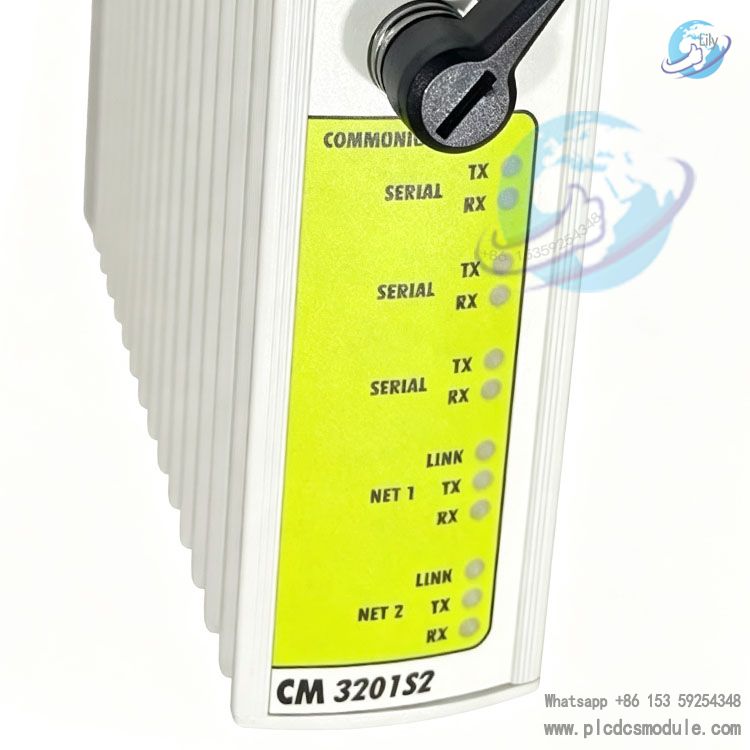
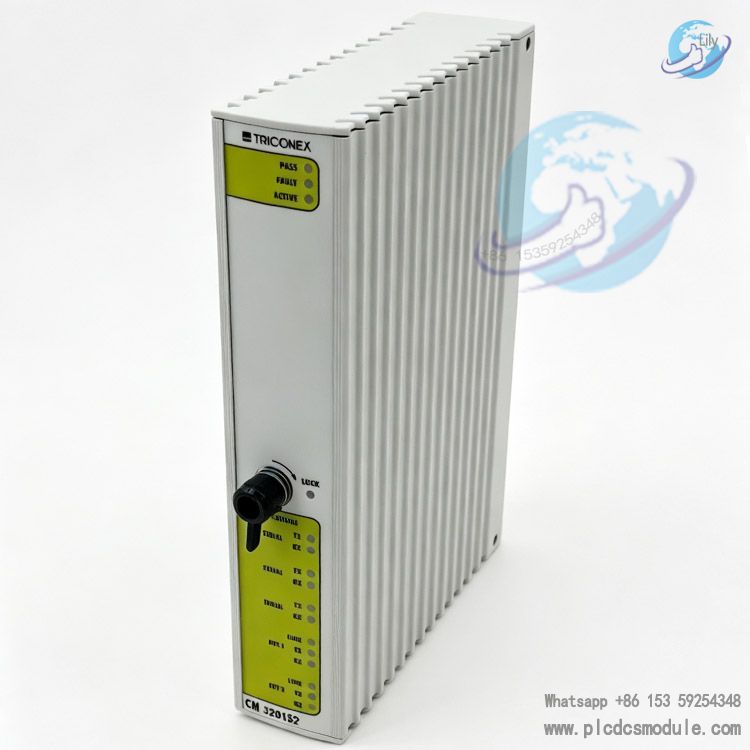
Triconex 3201S2 Communication Module|TRI‑GP CM 3201S2
Product Introduction
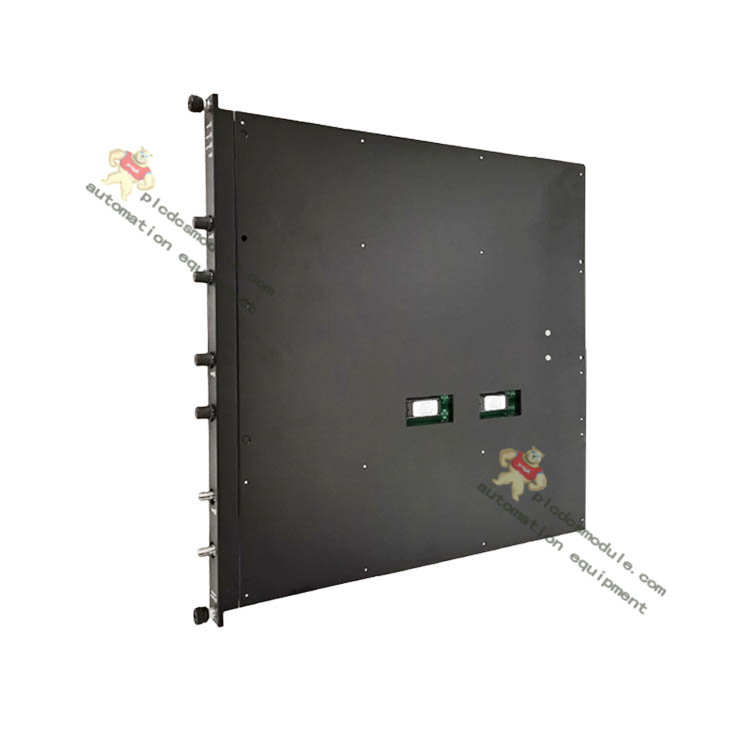
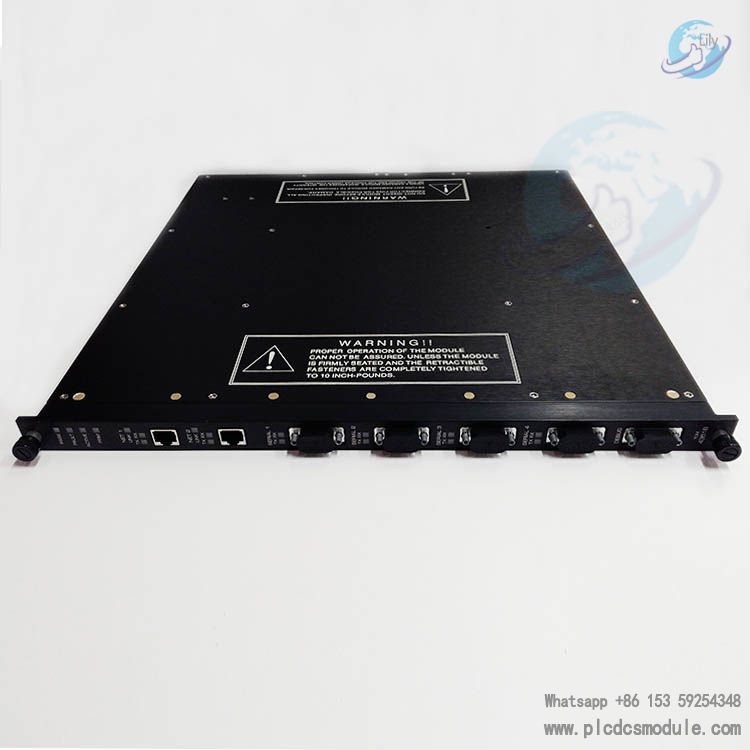
The Triconex 3201S2 (TRI‑GP CM 3201S2) is an optional communication module for the Tri‑GP v2 system. Serving as the communication interface between Triconex controllers and external devices, it enables data exchange between the controller and DCS, third‑party hosts, other Triconex‑series controllers, and network‑capable printing devices.
A single Tri‑GP controller can accommodate up to two pieces of 3201S2 modules on the 2201S2 communication backplane. The two 3201S2 modules can either form a redundant communication link or operate independently to expand the number of communication ports.
The Triconex 3201S2 does not participate in TMR triple‑modular redundant computation and only performs communication forwarding tasks. Built on the Tri‑GP v2 system hardware architecture, it is suitable for safety instrumented system (SIS) applications in process industries. The module supports hot‑swap, allowing on‑line maintenance without interrupting controlled process operation.
Technical Specifications
| Power Supply Parameters | Logic power is supplied by the MP backplane, rated 24VDC; operating voltage: 19.2‑30VDC; maximum power consumption: 8W. When an external AUI MAU accessory is connected, additional maximum power consumption per unit is 6W; when an external MII MAU accessory is connected, additional maximum power consumption per unit is 3.75W. Short‑term input power‑failure withstand: max. 1ms; reverse input withstand voltage: ‑0.6VDC; protective functional ground isolation: 500VDC. |
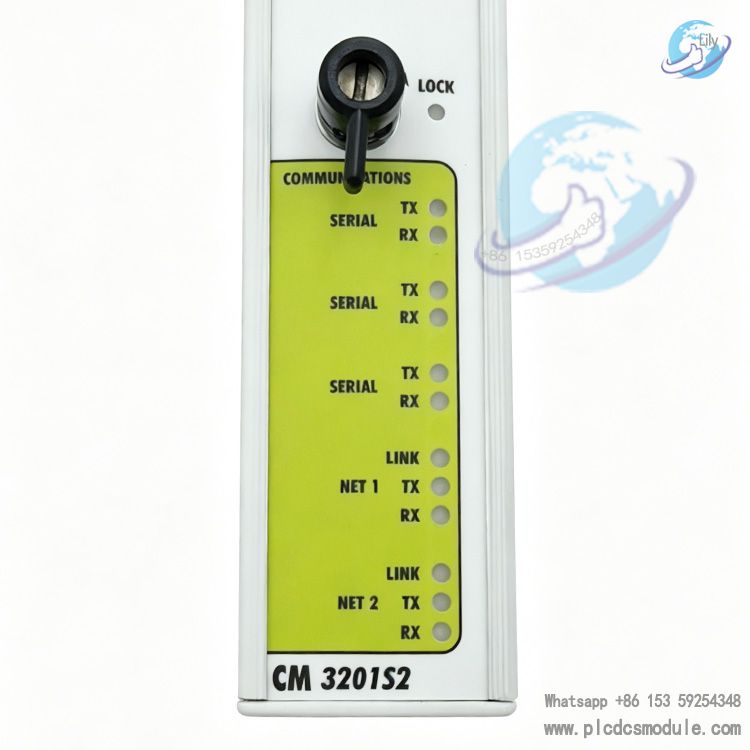
| Hardware Interfaces | Each Triconex 3201S2 is equipped with 3 optically isolated RS‑232/RS‑485 serial ports; 2 Ethernet ports (one 10Base‑T, one adaptive 10/100Base‑TX); AUI and MII MAU expansion interfaces; 1 RJ‑12 debug port. All serial and Ethernet ports feature 500VDC isolation voltage. |
| Serial port baud rate | 1200‑115200bps |
| Maximum cable length | RS‑232: 15 m; RS‑485: 1200 m. Maximum Ethernet cable length: 10Base‑T: 100 m; 100Base‑TX: 30 m. |
| Supported Communication Protocols | Modbus RTU Master / Slave, Modbus TCP Master / Slave, TriStation1131, TSAA (UDP/IP), TSAA Multicast, Triconex Peer‑to‑Peer, SNTP time synchronization, DLC, JetDirect network‑printing protocol. |
| Environmental Conditions | Operating temperature: ‑20℃ ~ +70℃; storage temperature: ‑40℃ ~ +85℃; relative humidity: 5‑95% non‑condensing. Complies with IEC61131‑2 EMC. Install inside an IP20 cabinet; not for direct exposure to on‑site dust or moisture. |
| Hardware Status Indicators | Front‑panel LED indicators report power status, communication link status and fault conditions for fast troubleshooting of link dropout, protocol errors and hardware failures. |
Core Advantages
- Rich port resources: each Triconex 3201S2 integrates serial ports, Ethernet ports and media expansion interfaces, eliminating the need for extra protocol gateways and lowering system‑integration costs.
- Dual‑module redundant deployment is supported. Automatic switch‑over upon communication‑link failure avoids single‑point communication failure and ensures continuous data upload for safety systems.
- Galvanic isolation on all communication interfaces enhances immunity to industrial‑site interference and reduces communication drop‑outs caused by surges and common‑mode noise.
- Hot‑swap design enables module replacement without system shutdown, satisfying maintenance requirements for continuous‑production plants.
- Comprehensive protocol stack compatible with mainstream DCS platforms and legacy Tricon / Trident controllers, facilitating retrofit and upgrade of existing‑facility systems.
- Built‑in comprehensive communication diagnostics report link time‑outs and protocol errors in real time to assist maintenance personnel in resolving communication anomalies.
Product Features
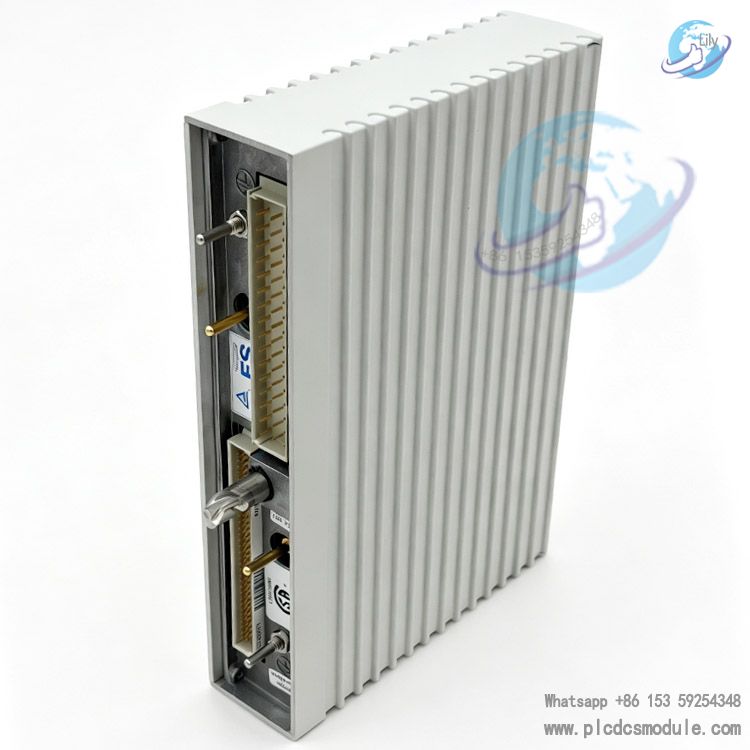
The Triconex 3201S2 communication module works with the Tri‑GP v2 system 2201S2 communication backplane. The backplane provides two module slots allowing two 3201S2 units to operate simultaneously. The module exchanges data with the main processor (MP) via the system communication bus and does not participate in logic computation. A communication fault will not directly trigger safety‑logic trip.
All serial‑port and Ethernet parameters can be configured within TriStation1131 software; no hardware DIP‑switch settings are required. The Triconex 3201S2 supports SNTP time synchronization to align timestamps across the complete safety system and upstream / downstream DCS for SOE (Sequence‑of‑Events) traceability. MAU expansion interfaces accept external fiber‑optic media accessories to realize long‑distance fiber‑optic communication.
Application Fields
Oil & gas ESD emergency shutdown systems; chemical reactor safety instrumented SIS; thermal‑power and gas‑turbine protection & control; pipeline compressor‑station interlocks; pharmaceutical process safety control; plant F&G fire‑and‑gas systems; legacy‑plant control‑system retrofits; cross‑controller peer‑to‑peer interlocking; bidirectional data exchange between SIS and DCS.
Product Comparison
| Model | Product Type | Key Differences |
| Triconex 3201S2 | Tri‑GP v2 Communication Module | Designed for Tri‑GP v2; up to two units per backplane; multi‑protocol support for RS‑485 / Ethernet; MAU/MII expansion; non‑TMR module |
| 3101S2 | Tri‑GP v2 Main Processor (MP) | Triple‑modular redundant logic‑processing core; on‑board Ethernet ports plus one serial port; limited port count; focused on logic execution |
| Tricon‑series EICM Communication Card | Tricon v9‑v10 Communication Module | For legacy Tricon platform; hardware interface definition, backplane and firmware are incompatible with 3201S2; no firmware interoperability |
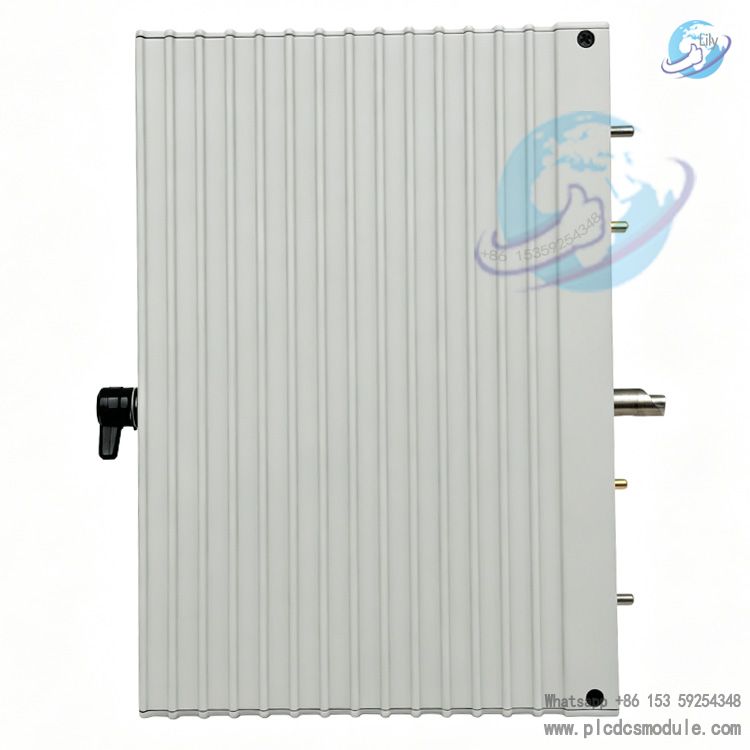
Related Matching Products
- 2201S2 CM Baseplate: Dedicated communication backplane for Triconex 3201S2; maximum two 3201S2 modules per backplane.
- 3101S2 Main Processor Module: Tri‑GP v2 main processor; 3201S2 exchanges data with the MP over the system communication bus.
- 2101S2 MP Baseplate: Main‑processor backplane supplying logic power and system bus for the whole system.
- TriStation 1131 Software: Used for full communication‑parameter configuration and configuration download for Triconex 3201S2.
- MAU Media Accessories: For fiber‑optic communication extension via AUI/MII interfaces.
- Shielded RS‑485 cables & CAT5e industrial shielded Ethernet cables: For field‑wiring requirements.
Recommended Related‑brand Models
- 3101S2 Main Processor Module
- 2101S2 Main Processor Baseplate
- 2201S2 Communication Baseplate
- 3351S2 Analog Input Module
- 2351S2 AI Baseplate
- 3481S2 Analog Output Module
- 3301S2 Digital Input Module
- 3401S2 Digital Output Module
- 3361S2 Mixed AI/DI Input Module
- 3382S2 Pulse Input Module
- 3451S2 Solid‑state Relay Output Module
- 2301S2 DI Baseplate
- 2481S2 AO Baseplate
- 2281 I/O Bus Expansion Kit
Notes
- The Triconex 3201S2 must be installed inside a metal cabinet complying with CE EMC installation requirements to preserve system‑certification validity.
- Use shielded cables for all serial and Ethernet connections. Implement single‑point grounding for cable shields to mitigate communication packet loss caused by industrial‑site electromagnetic interference.
- The 24VDC logic power supply must stay within the 19.2‑30VDC range with AC ripple no higher than 5 % to avoid repeated module restarts.
- Perform hot‑swap operations preferably outside periods of high SOE event bursts to prevent temporary communication‑packet loss.
- Power consumption of external MAU accessories adds to module load; total power draw must not exceed the module maximum rating.
- For troubleshooting, first check front‑panel LED status indicators, then retrieve communication diagnostic data in TriStation1131.
- Firmware version of Triconex 3201S2 must match the firmware revision of the Tri‑GP v2 controller MP. Mismatched firmware versions will result in communication anomalies.
FAQ
Q: Can the Triconex 3201S2 directly replace the EICM communication module for the Tricon platform?
A: No. The Triconex 3201S2 belongs to the Tri‑GP v2 series. Its hardware backplane, firmware and bus protocols are incompatible with Tricon EICM, so direct interchange is not possible. Full platform matching is required.
Q: What is the maximum number of Triconex 3201S2 modules that can be installed on one 2201S2 backplane?
A: Up to two 3201S2 modules. The two modules can be configured for communication redundancy or run independently to expand port capacity.
Q: Will a Triconex 3201S2 fault cause safety‑logic trip of the Tri‑GP controller?
A: No. The Triconex 3201S2 only performs communication forwarding and does not participate in safety‑logic computation. A module fault only affects external data exchange; internal controller interlock logic continues normal operation and the system raises a corresponding communication‑fault alarm.
Q: Does Triconex 3201S2 support hot‑swap? Is system shutdown required?
A: Hot‑swap is supported. Replacing the Triconex 3201S2 does not require Tri‑GP controller shutdown. It is recommended to back‑up communication configuration before operation and verify link recovery after replacement.
Q: How many slave devices can Modbus on Triconex 3201S2 support?
A: Maximum 32 slaves on one RS‑485 physical link. Practical quantity is affected by baud rate, poll cycle and field‑cable quality; 20 or fewer slaves is recommended.
Q: Is the 2201S2 backplane required when purchasing Triconex 3201S2?
A: Yes. The Triconex 3201S2 cannot work standalone and must be mounted on the 2201S2 CM Baseplate.
Q: What are the AUI/MII interfaces on Triconex 3201S2 used for?
A: They connect external MAU media accessories to extend fiber‑optic communication for long‑distance fiber networking. These interfaces are generally unnecessary for ordinary copper‑based Ethernet applications.
Q: What TriStation1131 software version is required to configure Triconex 3201S2?
A: Use the TriStation1131 version specified in the Tri‑GP v2 system release notes. Older software versions cannot recognize the 3201S2 hardware.