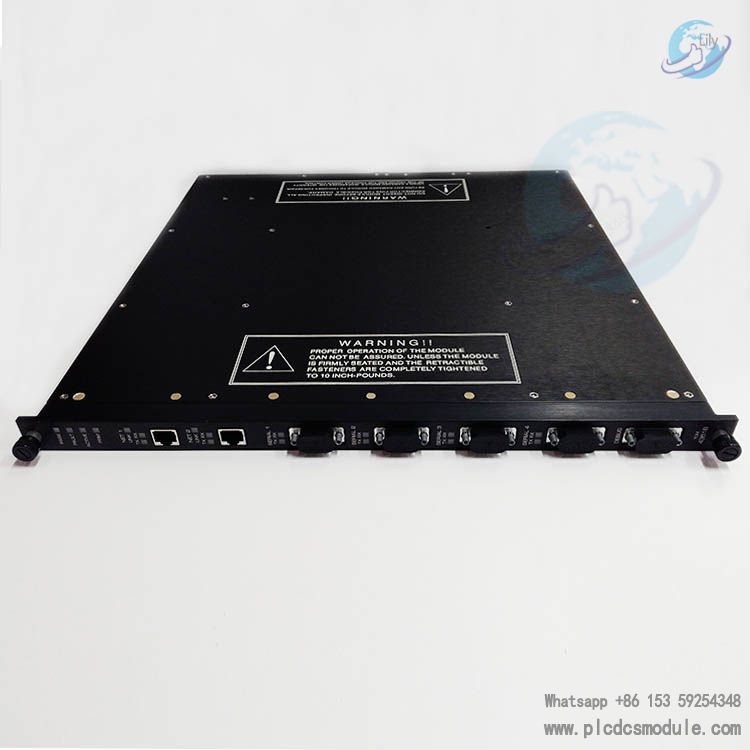


Triconex 3381S2 Pulse Input Module (PI3381S2)
Product Overview
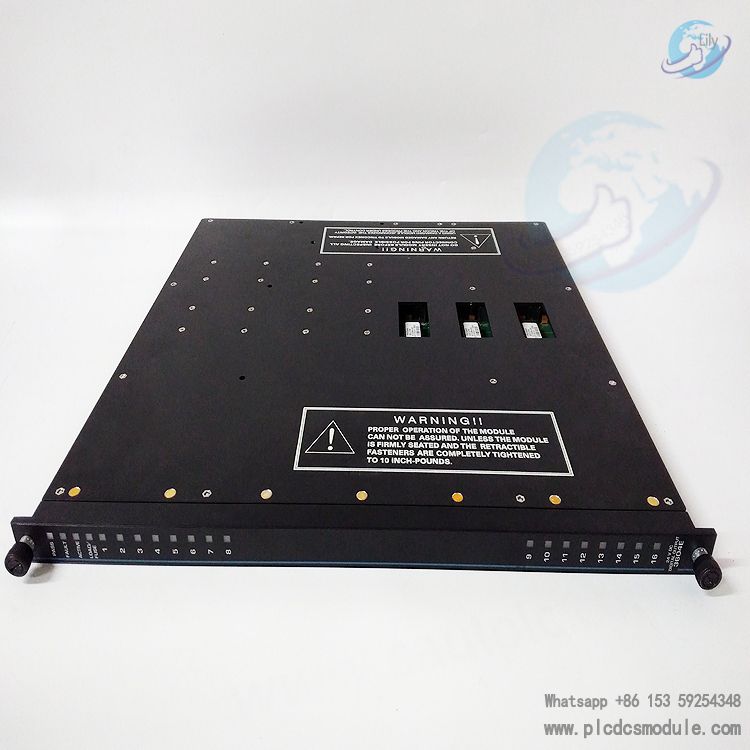
Triconex 3381S2 (also named PI3381S2) is a pulse input module for Tri‑GP v2 safety instrumented systems, designed for high‑speed pulse signal acquisition in safety‑critical conditions. It supports rotational speed, angular acceleration and jerk calculation output, compatible with multiple pulse sensors including magnetoelectric, active and open‑collector types. Adopting TMR triple‑modular redundancy bus architecture, each channel is equipped with isolated filter circuits, suitable for SIS safety interlock scenarios in oil & gas, chemical and power industries.
Triconex 3381S2 can directly output RPM speed, RPM/s acceleration and RPM/s² jerk to control logic without extra background calculation, greatly reducing controller CPU load. Pull‑up and termination resistors are configured on field terminal baseplates, no hardware modification required on the module itself. The 3381S2 shares similar hardware framework with 3382S2 while differing in channel quantity; confirm channel count requirements during project selection.

Technical Specifications
| General Parameters | |
| Channel Count | 8 channels, channel‑isolated differential input, common‑ground single‑ended mode supported |
| Supported Sensors | Magnetoelectric sensors, active pulse sensors, open‑collector output sensors |
| Maximum Working Voltage | ±33 VDC |
| Differential Input Amplitude | 500 mV peak‑to‑peak (2‑32000 Hz); 1 V peak‑to‑peak (0.5‑2 Hz) |
| Single‑ended Input Amplitude | 1 V peak‑to‑peak (2‑32000 Hz); 2 V peak‑to‑peak (0.5‑2 Hz) |
| Frequency Measurement Range | 0.5 Hz‑32 kHz |
| Duty Cycle Range | 20%‑80%, minimum pulse width 10 μs (positive & negative pulses) |
| Frequency Absolute Error | ±0.01% (2000‑32000 Hz); ±0.1% (0.5‑2000 Hz) |
| Max Acceleration Change Rate | 4000 Hz/sec |
| Maximum Jerk | 500000 Hz/sec² |
| Gear Tooth Count | Software configurable: 1‑255 |
| Resistor Configuration | Termination resistor, pull‑up resistor set via terminal baseplate |
| Measurement Algorithm | Gear frequency‑multiplication tracking algorithm |
| Diagnostics | Precision frequency reference self‑test |
| Isolation Rating | Min. 500 VDC functional‑to‑protective ground; Min. 800 VDC functional‑to‑logic ground |
| Operating Ambient Temperature | ‑40℃~+70℃, humidity 0‑95% non‑condensing |
| System Compatibility | Tri‑GP v2.1 and above |
| Power‑up Startup Time | Up to 3 minutes to Pass ready status; steady green LED indicates normal operation |
Core Advantages
- On‑board hardware calculation for RPM, acceleration and jerk, reducing main CPU load and stabilizing safety logic scan cycle.
- Differential channel isolated filter design, lower risk of pulse signal loss under heavy electromagnetic interference in industrial sites.
- Wide frequency coverage from 0.5 Hz slow barring speed up to 32 kHz high‑speed acquisition, covering both low‑speed and high‑speed measuring points in one module.
- Complete on‑board hardware self‑diagnostics, real‑time channel anomaly feedback and safety loop fault alarm support.
- Resistors configured on baseplate without module jumpers; sensor type modification achieved by baseplate setup for easy field maintenance.
- Fully compliant with SIS safety architecture, compatible with Tri‑GP v2 triple‑redundant I/O bus for seamless integration with Triconex safety systems.
Product Features
Each channel of PI3381S2 is equipped with independent isolation‑filter circuitry. Field pulse signals are conditioned and sent to ASIC chip for processing, then transmitted to triple‑redundant I/O Bus A/B/C via isolated bus transceivers to realize 2‑out‑of‑3 voting mechanism.
Adopts gear frequency‑multiplication tracking algorithm with software‑configurable gear tooth count G. To achieve nominal acceleration & jerk accuracy, formula 240 ≤ n×G < 255 (n is integer) shall be satisfied; otherwise acceleration and jerk errors will exceed specification range.
Front‑panel LED directly indicates module status; steady green Pass LED means normal operation. All parameters including gear teeth and signal mode are configured via TriStation software, no local hardware modification supported.
Application Fields
- Oil & Gas: turbine and compressor speed monitoring, turbine flowmeter pulse acquisition, ESD overspeed interlock protection
- Chemical Industry: agitator rotational speed, process flowmeter pulse acquisition, safety interlock shutdown protection
- Thermal / Gas Power Generation: turbine barring and speed monitoring, feed‑water pump speed measurement
- Coal‑to‑Chemicals: overspeed protection for large rotating equipment, pulse‑type flow instrument signal acquisition
- Other SIS Projects: safety‑instrumented scenarios requiring high‑speed pulse acquisition for speed & acceleration protection
Product Comparison
| Model | Channel Quantity | Key Differences | Compatible System |
| 3381S2(PI3381S2) | 8‑channel pulse input | 8 points, supports speed, acceleration & jerk calculation; resistors configured via baseplate | Tri‑GP v2.1+ |
| 3382S2 | 6‑channel pulse input | 6 points, electrical specifications mostly same as 3381S2, fewer channels | Tri‑GP v2.1+ |
| 3511 | 8‑channel pulse input | Legacy Trident platform pulse card, no acceleration / jerk output support | Old Trident system |
| 3515 | Pulse totalizer module | Focuses on pulse counting accumulation, no dynamic speed calculation | Old Trident system |
Matching Accessories
- EPI3382S2 Main Processor Module: core CPU for Tri‑GP v2 platform
- 3301 System Power Supply Module: rack power‑supply unit
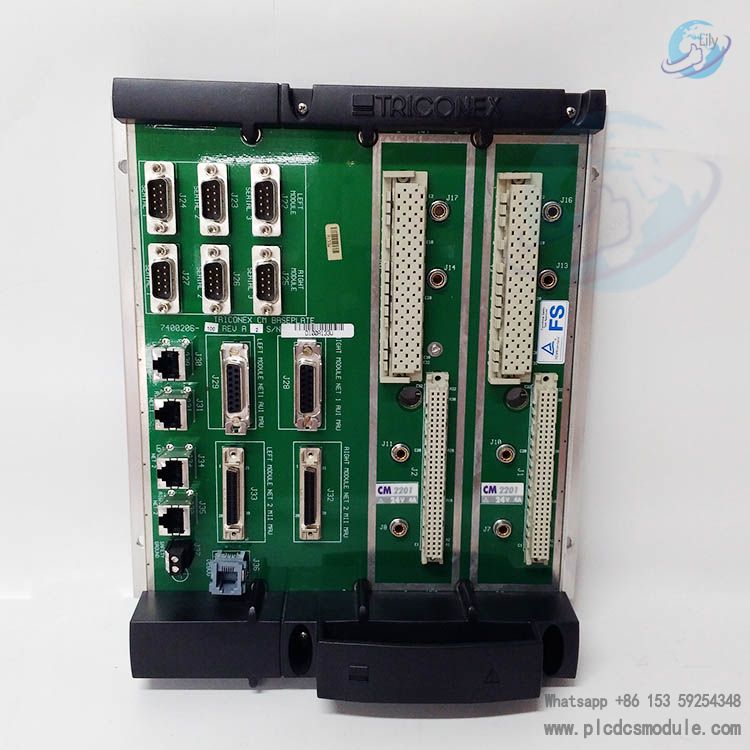
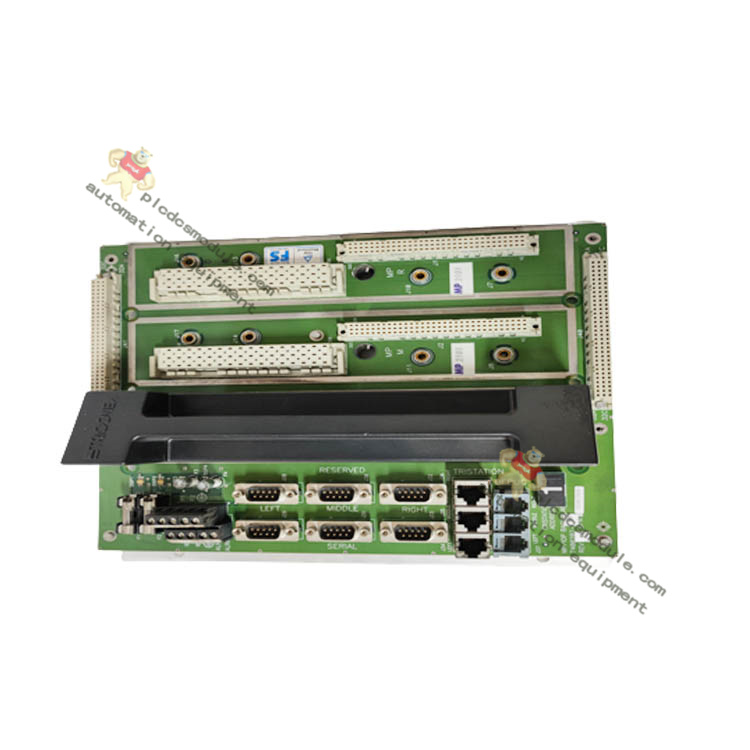
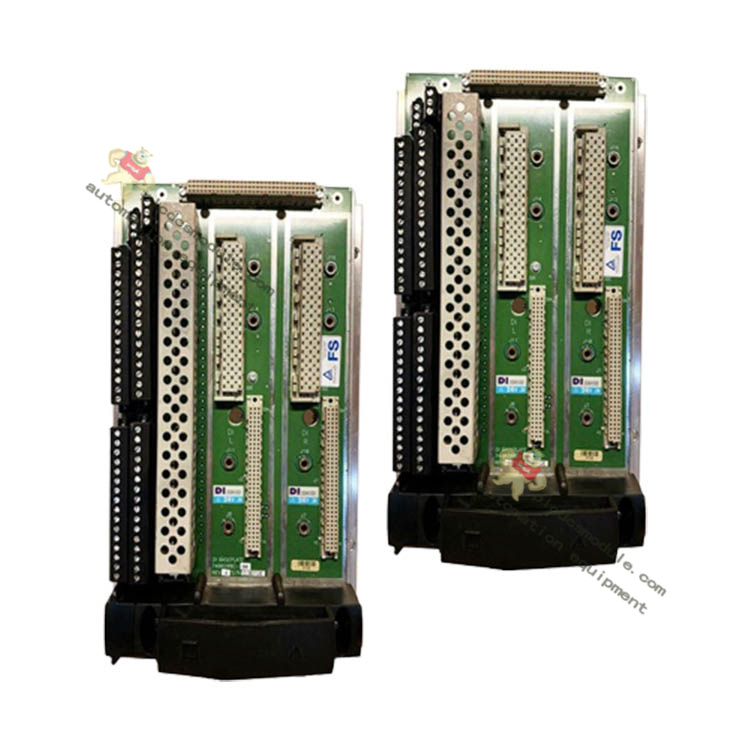
- 3381S2‑TB Pulse Input Terminal Baseplate: dedicated baseplate for PI3381S2
- 3382S2‑TB Pulse Terminal Baseplate: physically compatible but channel mismatch for 3381S2
- Triconex TriStation 1131 Configuration Software
- 8312 Communication Module: host‑system interface
- 3351S2 Digital Input Module: mixed I/O collocation within same rack
Recommended Models of Same Series
- 3381S2, 3382S2, EPI3382S2, 3301, 3351S2, 3361S2, 8312, 3511, 3515, 3604E, 3703E, 3721, 3806E
Notes
- Follow Tri‑GP installation manual strictly during module installation. Use shielded twisted‑pair cables for pulse wiring with single‑end shield grounding to mitigate pulse‑loss caused by EMI.
- Acceleration and jerk specifications are valid only when gear‑tooth formula requirement is satisfied. Calculate gear tooth count G in early project selection phase.
- Module and baseplate model must match exactly. Mismatched baseplates cause incorrect resistor settings and sensor signal recognition failure.
- System firmware shall be Tri‑GP v2.1 or newer; older firmware cannot recognize 3381S2 hardware.
- Never exceed ±33VDC maximum input voltage; overvoltage will permanently damage module channel circuits.
- Module is designed for rack slot installation only. Do not perform unauthorized modification. Faulty units shall be fully replaced; on‑site disassembly and repair are not supported.
FAQ
Q: Why does green Pass LED keep off long time after Triconex 3381S2 power‑on?
A: PI3381S2 may take up to 3 minutes to finish internal self‑test and reach Pass status, which is normal behaviour. If Pass LED remains off after 3 minutes, check rack backplane power supply, baseplate contact condition, firmware version and Tri‑GP system compatibility.
Q: Measured acceleration error of PI3381S2 is larger than datasheet specification, how to troubleshoot?
A: First verify configured gear tooth count G satisfies formula 240 ≤ n×G<255 (n = integer). Acceleration and jerk specs will not be met without this condition. Also check gear tooth‑pitch machining deviation and external electromagnetic noise interference.
Q: What field sensors are supported by Triconex 3381S2?
A: Magnetoelectric pulse sensors, active pulse output sensors, open‑collector NPN/PNP sensors. Pull‑up & termination resistors shall be set on terminal baseplate to match sensor type.
Q: What is the minimum detectable pulse frequency for 3381S2? Can it be used for turbine slow barring acquisition?
A: Minimum recognizable input frequency is 0.5Hz, applicable for turbine barring low‑speed measurement. Ensure input peak‑to‑peak amplitude meets voltage threshold under low‑speed conditions.
Q: Is terminal baseplate mandatory when purchasing PI3381S2?
A: Yes. Triconex 3381S2 cannot connect field cables directly. Corresponding terminal baseplate is required to implement pull‑up and termination resistor hardware configuration.
Q: Can 3381S2 directly replace legacy 3511 pulse module?
A: Direct hardware swap is not supported. 3381S2 belongs to Tri‑GP v2 platform while 3511 is for Trident platform. Backplane bus, baseplate and firmware are incompatible; full rack platform upgrade is required.
Q: What is minimum reliable recognizable pulse width per channel for PI3381S2?
A: Minimum reliable pulse width is 10 microseconds for both positive and negative pulses. Pulses narrower than 10μs carry risk of missing acquisition.
Q: What is maximum quantity of Triconex 3381S2 modules within one rack?
A: Subject to total rack backplane power consumption limit. Refer to Tri‑GP v2 planning manual, sum power consumption of all I/O modules and keep within rated power‑supply output.