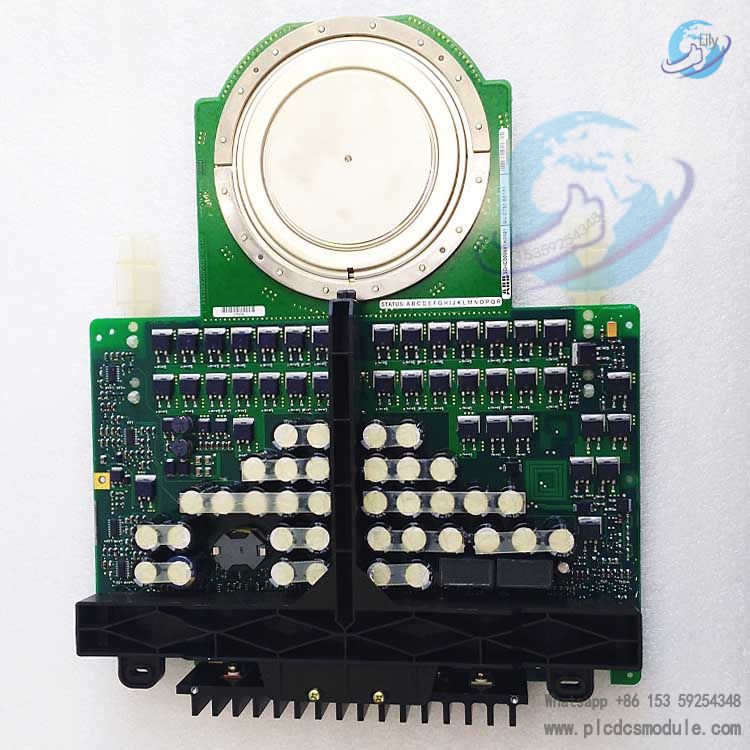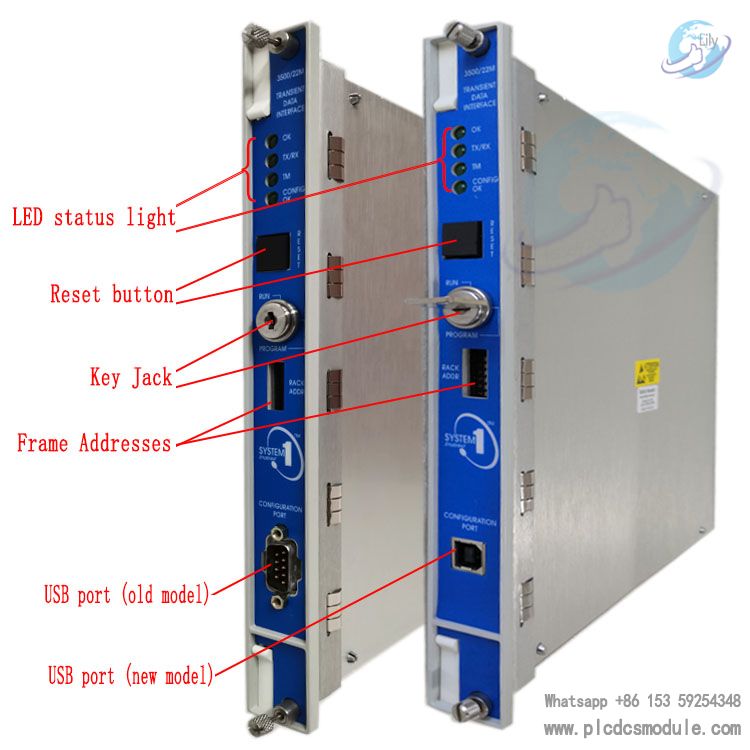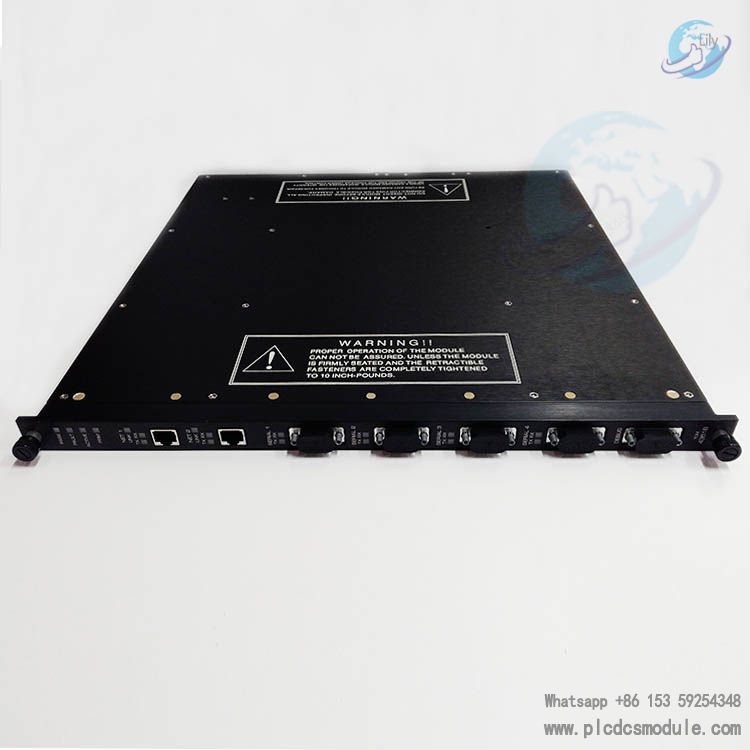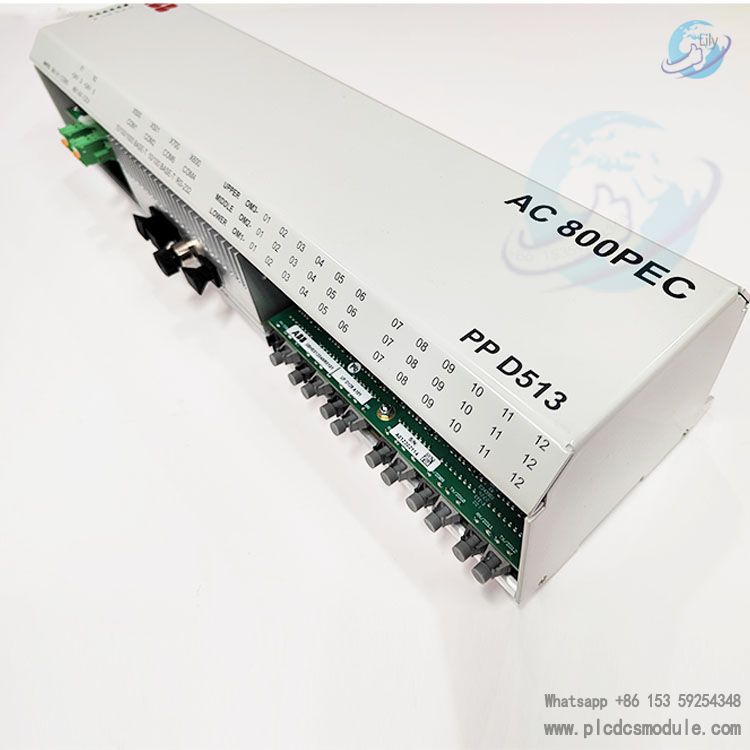


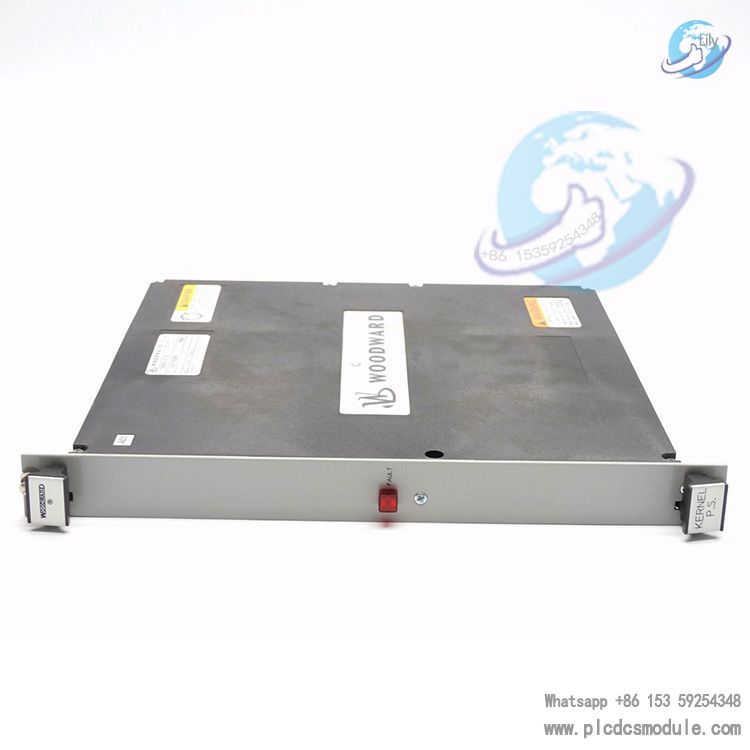
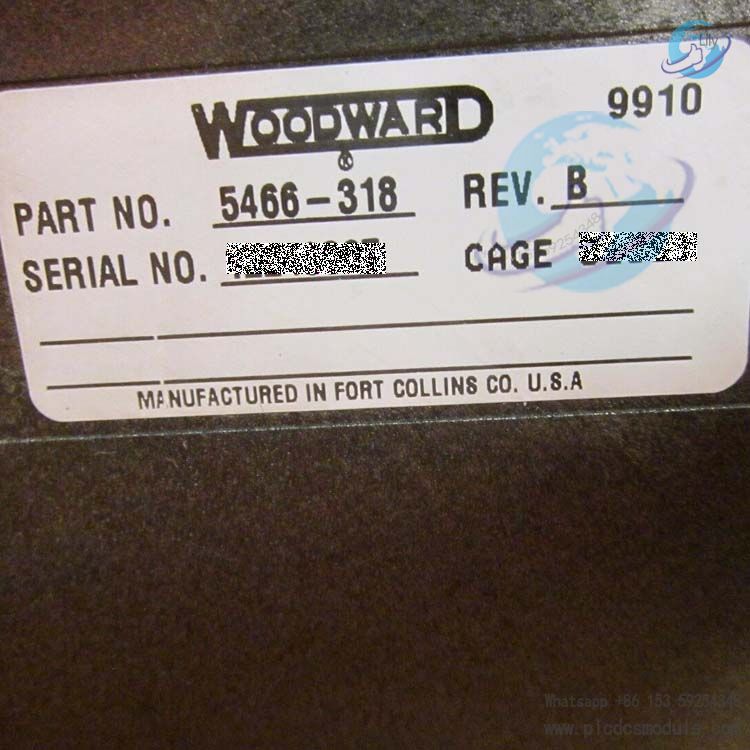
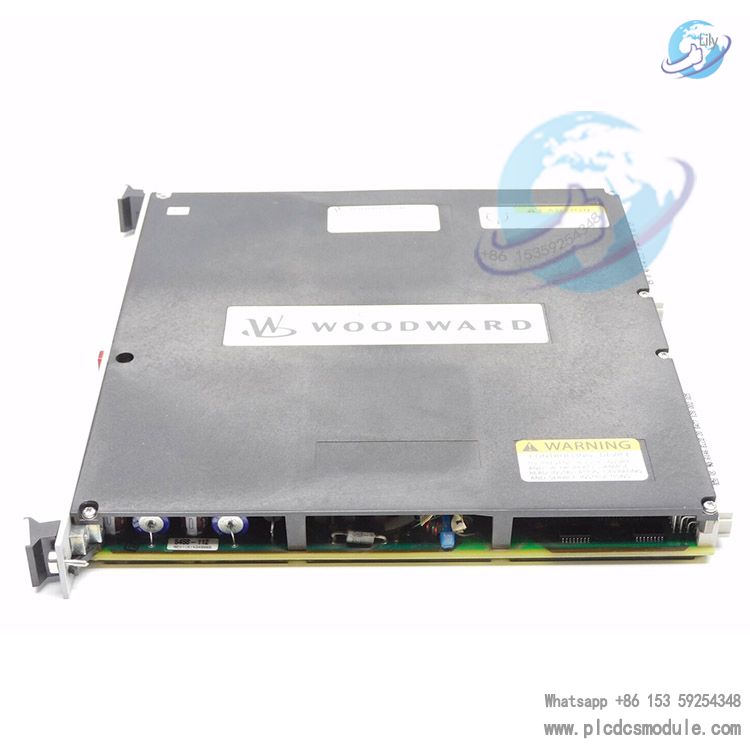
WOODWARD 5466‑318 REMOTE TRANSCEIVER I/O MODULE
Product Description
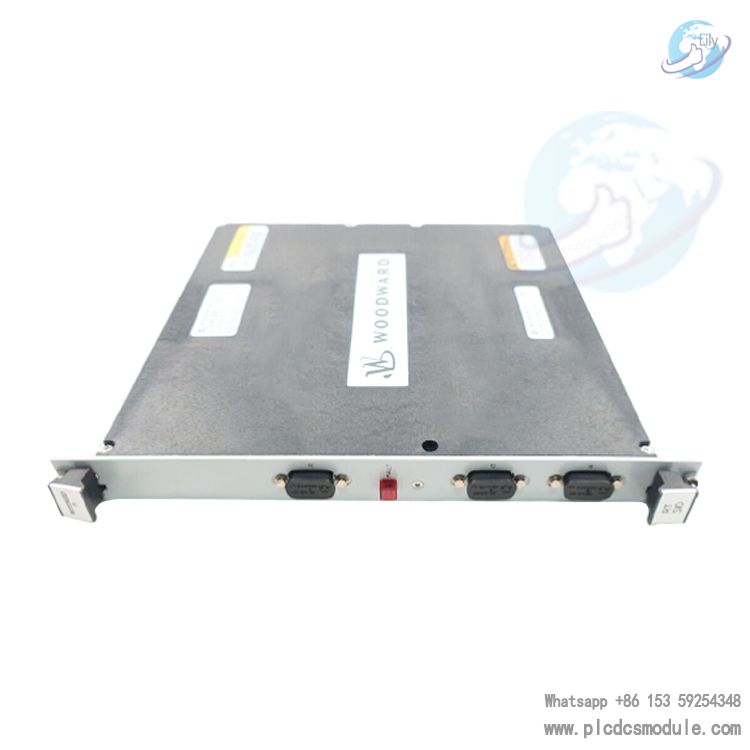
WOODWARD 5466‑318 is a remote transceiver I/O module under the MicroNet control platform. It undertakes real‑time data interaction tasks between distributed racks and builds communication links between the main control unit and remote I/O racks.
5466‑318 forwards field I/O signals and reduces signal attenuation caused by long‑distance wiring, so that scattered measuring points can be connected into one complete turbine unit control system.
It is compatible with MicroNet and MicroNet Plus hardware architectures and widely used for spare‑part replacement in unit retrofitting projects. It serves as critical communication hardware in oil‑gas and power generation control systems.
The module delivers deterministic low‑latency data transmission to guarantee real‑time synchronization of process parameters such as speed, pressure and temperature and avoid system communication stalling.
Technical Specifications
| Platform Affiliation | MicroNet / MicroNet Plus Distributed Control System |
| Power Supply Input | 24 VDC, withstand ±10% power supply fluctuation |
| Bus Type | RTN Real‑Time Remote Network Bus |
| Operating Temperature | ‑20℃~+60℃; Storage Temperature: ‑40℃~+85℃ |
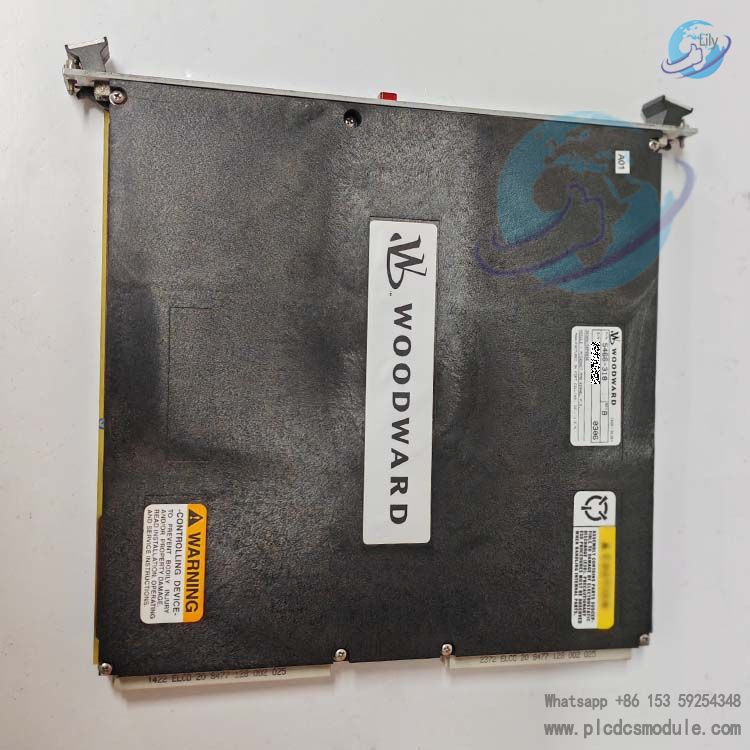
| Hardware Form | Card‑type board, fits standard system rack slots |
| Data Features | Low‑latency deterministic communication, supports networking of multiple remote I/O nodes |
| Anti‑Interference | Industrial‑grade EMC, suitable for heavy electromagnetic interference site conditions |
| Installation Method | Direct plug‑in into rack slot, hot‑swap supported |
| Humidity Condition | Up to 95% relative humidity, non‑condensing environment |
Core Advantages
- WOODWARD 5466‑318 delivers stable remote bus forwarding capability to realize long‑distance data communication between main control cabinet and distributed I/O racks.
- It reduces large‑scale laying of field analog signal cables, lowering wiring cost and fault points.
- On‑board diagnosis is integrated; communication link exceptions can be reported to the system to help operation‑maintenance staff quickly locate faults.
- Compatible with TMR triple‑modular redundant architecture to meet high‑availability unit control requirements.
Strong hardware compatibility; no large‑scale modification to existing programs for spare‑part replacement on legacy MicroNet systems.
Product Features
- Supports RTN real‑time network protocol to guarantee stable timing for control data transmission.
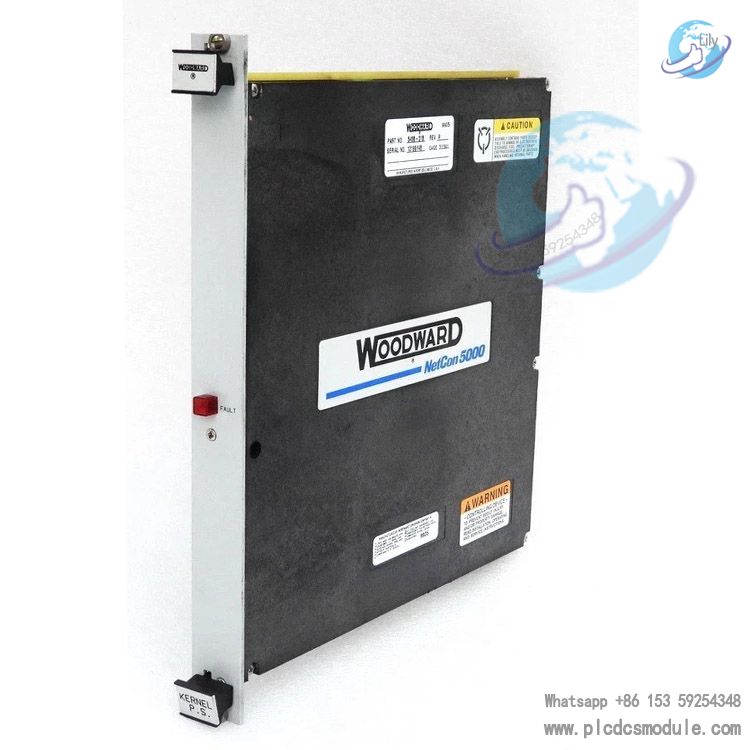
- Board‑level status LED indicators for intuitive viewing of transceiver link operating status.
- Supports multi‑node cascading networking to expand access quantity of remote I/O devices.
- Built‑in link fault detection, output corresponding alarm information upon communication interruption.
- Integrated card‑structure for easy assembly and disassembly and short maintenance time consumption.
- Good tolerance to surge and electromagnetic interference in industrial sites.
- Capable of cooperating with various I/O cards of the same platform to complete full‑range signal acquisition and output.
Application Fields
- Gas turbine and steam turbine unit control
- Oil‑gas pipeline compressor drive control system
- Combined heat and power generation units
- Drive control of large‑scale industrial pumps and fans
- Spare‑part replacement for power plant control system retrofitting
- Power control units on offshore platforms
Monitoring for distributed industrial drive equipment
Same‑brand Product Comparison
- WOODWARD 5466‑318 focuses on remote rack transceiver communication and does not undertake CPU calculation or local I/O acquisition.
- 5466‑1036 is also a remote transceiver module with different hardware revisions, suitable for partial MicroNet Plus systems with updated firmware versions; direct interchange is not allowed.
- 5466‑315 is a high‑density analog I/O module dedicated to analog signal acquisition and output without remote bus forwarding capability.
- 5466‑303 is a dual‑channel overspeed monitoring card oriented to unit overspeed protection with limited communication capacity.
- Check rack model and firmware version during model selection to confirm whether 5466‑318 matches the overall hardware environment.
Matching Related Products
- 5466‑1035: CPU Processing Module
- 5466‑315: High‑density Analog I/O Module
- 5466‑316: Analog Combo I/O Module
- 5501‑470: Kernel Power Supply Module
- 5466‑303: Dual‑channel Overspeed Module
- 5441‑693: Field Terminal Module
- 5466‑402: SIO Serial Communication Module
5466‑285: Solenoid Protect Module
Frequently Asked Questions
Q:Can 5466‑318 directly replace 5466‑1036?
A:Direct interchange is not allowed. They differ in firmware adaptation versions and hardware revision versions. Confirm the rack firmware version of the whole system before replacement; mismatched firmware will lead to communication drop‑out.
Q:Does 5466‑318 support hot‑swap? What risks exist for hot‑swapping on site?
A:Hot‑swap is supported at hardware level, yet maintenance under power‑off status is highly recommended. Hot‑swap may cause transient bus disturbance and temporary I/O data jitter, which will affect unit operation.
Q:If the communication indicator of 5466‑318 flashes abnormally, which items shall be checked?
A:Prioritize checking stability of 24VDC power supply, RTN bus wiring terminals, bus termination resistor configuration, and then verify status of other cards in the same rack.
Q:What key information needs to be confirmed when purchasing 5466‑318?
A:You need to confirm board revision version, target system rack model, system firmware version, and confirm whether it is for spare‑part replacement or new‑node addition for new projects.
Q:Can 5466‑318 be applied to other WOODWARD controllers outside MicroNet series?
A:No. 5466‑318 is only used for MicroNet / MicroNet Plus platform and cannot connect to standalone controllers such as 505 and 2301.
Q:How many pieces of 5466‑318 are required when adding one remote I/O rack to the whole system?
A:One piece of 5466‑318 shall be configured for each remote I/O rack, and matching bus hardware shall be deployed on main control side to complete the whole link construction.
Q:Will unit shutdown be triggered directly once 5466‑318 fails?
A:If the primary‑link transceiver module fails, all remote I/O measuring points will get disconnected and interlock logic will trigger unit shutdown. Under redundant architecture, standby link will take over and the unit can keep short‑term running.
Q:Is separate program burning required after arrival of 5466‑318?
A:No separate program burning is required for the module. System configurations are stored in CPU module. Parameters will be automatically identified and loaded by CPU after installation.
Same‑brand Product Models
- 5466‑1035 CPU Module
- 5466‑1141 MicroNet Plus CPU Module
- 5466‑315 High Density Analog I/O Module
- 5466‑316 Analog Combo I/O Module
- 5466‑1036 Remote Transceiver Module
- 5466‑303 Dual Overspeed Module
- 5466‑285 Solenoid Protect Module
- 5466‑402 SIO Communication Module
- 5501‑470 Kernel Power Supply Module
- 5441‑693 Field Terminal Module
- 5466‑1014 Semi Iso RTD Input Module
- 5466‑405 Digital Speed Sensor Module
- 5466‑5026 Simplex High Density Analog I/O Module
Notes
- Install 5466‑318 strictly following rack slot sequence; do not swap slot positions arbitrarily.
- RTN bus cables shall adopt platform‑specified cables; ordinary signal wires are prohibited for replacement.
- Keep away from humid, dusty and strongly corrosive gas storage environment to prevent circuit oxidation of the board.
- Check hardware revision of the board before spare‑part installation; mismatched versions will cause identification failure.
- Synchronously update firmware of the whole rack during system expansion to guarantee cooperative work between 5466‑318 and CPU.
- Do not disassemble faulty cards by yourself; modification to internal circuits will cause unexpected system faults.
Product Tags
WOODWARD 5466‑318,Remote Transceiver I/O Module,MicroNet I/O module,MicroNet Plus spare part,WOODWARD remote transceiver card