

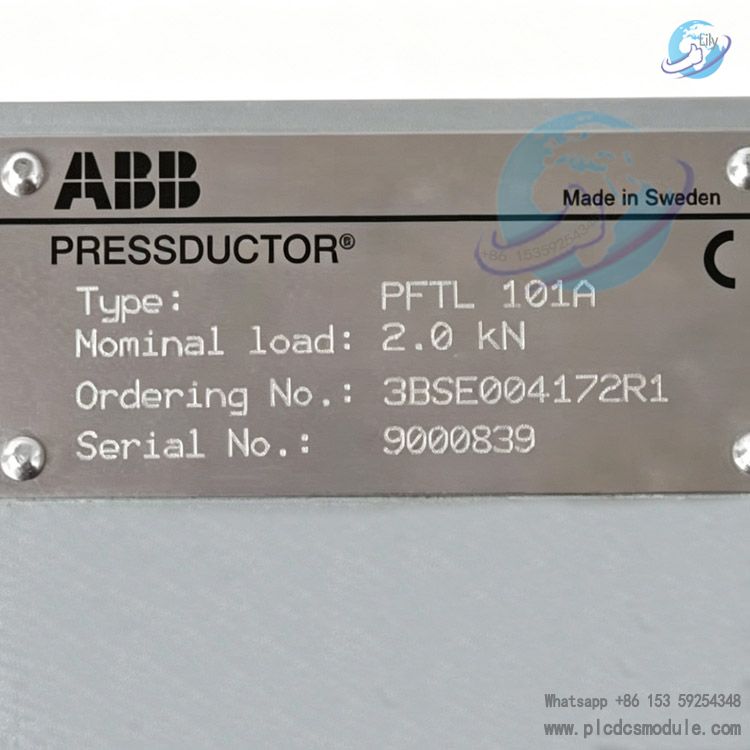
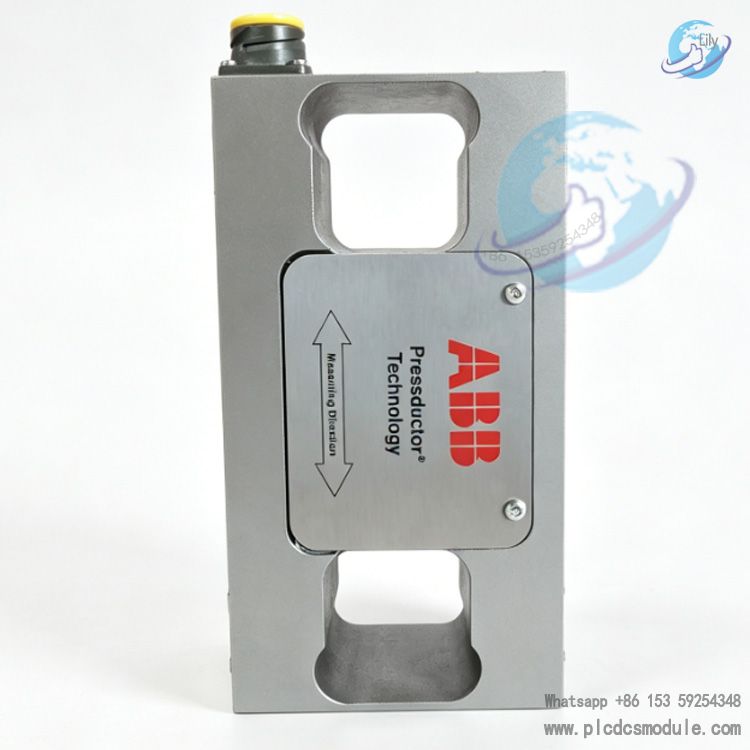
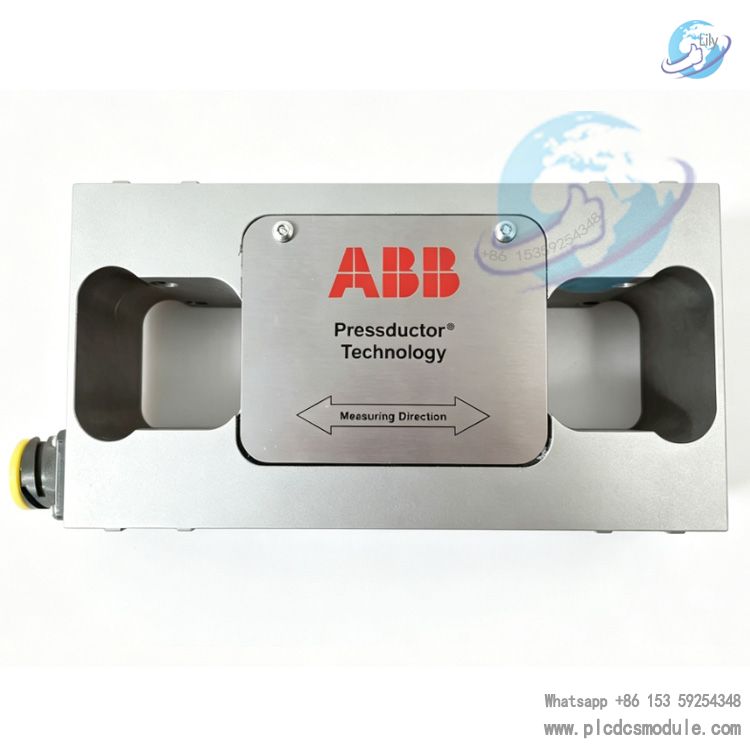
PFTL101A-2.0KN 3BSE004172R1 is an ABB Pressductor pillow block type horizontal tension sensor with a rated load of 2 kN. It is specially designed for high-precision horizontal force measurement of webs and strips, serving as a core force-measuring component for low-tension, heavy-roller and high-speed working conditions in industries such as metallurgy, papermaking, wire & cable and film. The letter "A" in the model number stands for standard dimensions and pluggable cable connectors, making it suitable for general industrial environments.
DOCUMENT DOWNLOAD
 PFTL 101A-2.0kN Load cell 3BSE004172R1.pdf
Product Advantages
Superior Measuring Accuracy: Accuracy class ±0.5% FS, linearity < ±0.3%, repeatability < ±0.05%, hysteresis < 0.2%. Each unit is individually calibrated and temperature-compensated before delivery, delivering excellent long-term stability.
Robust & Durable Construction: Forged from monolithic stainless steel (1.4104 / AISI 430F) with no welded joints. It features outstanding vibration and shock resistance, with a safe horizontal overload capacity of 10 kN (5 times the rated load).
Reliable Pressductor Technology: Adopts the Pressductor® magnetostrictive principle, which converts changes in magnetic permeability caused by mechanical stress into electrical signals. Compared with strain gauge sensors, it offers stronger anti-interference capability, lower temperature drift and longer service life.
Flexible Installation: Compatible with horizontal and inclined mounting, with uniform sensitivity for bidirectional force application. Designed for installation on roller bearing housings without restricting the axial thermal expansion of rollers.
Industrial-grade Environmental Resistance: Compensation temperature range: +20 °C to +80 °C; Operating temperature range: -10 °C to +105 °C. Rated IP66 for dust and water protection, ideal for humid and dusty industrial environments.
Key Technical Specifications
Model: PFTL101A-2KN (Order No.: 3BSE004172R1)Measuring Direction: Horizontal (radial)Rated Load (FRnom): 2 kNPermissible Transverse Force (FVnom): 10 kN; Permissible Axial Force (FAnom): 5 kNUltimate Overload (Fmax): 10 kN (measuring direction)Dimensions (L × W × H): 230 mm × 84 mm × 125 mm; Weight: 10 kgMaterial: Stainless steel 1.4104 (AISI 430F); Corrosion-resistant version AER (1.4404 / AISI 316L) available as option
Electrical Parameters: Excitation: 0.5 A / 330 Hz; Secondary output impedance: 1 ~ 3 Ω; Zero drift: 30 ppm/K; Sensitivity drift: 150 ppm/K
Connection: Pluggable connector (Series A); Fixed cable version available as Series AE
Application Scenarios
Metallurgy: Closed-loop tension control for steel strips on cold rolling, pickling and annealing lines to prevent strip breakage and uneven thickness.
Papermaking & Printing: Tension control for paper machine fabrics and felts, as well as web tension in high-speed printing processes, avoiding web deviation and misregister.
Cables & Optical Fibers: Tension monitoring during wire drawing and stranding to ensure uniform wire diameter and stable tensile strength.
Films, Rubber & Plastics: Winding and unwinding tension control for BOPET and BOPP films to eliminate tensile deformation and wrinkles.
Textiles & Nonwovens: Tension measurement for high-speed looms, spunlace and spunbond production lines to improve the flatness of finished products.
Operation Manual
1. Pre-installation Preparation
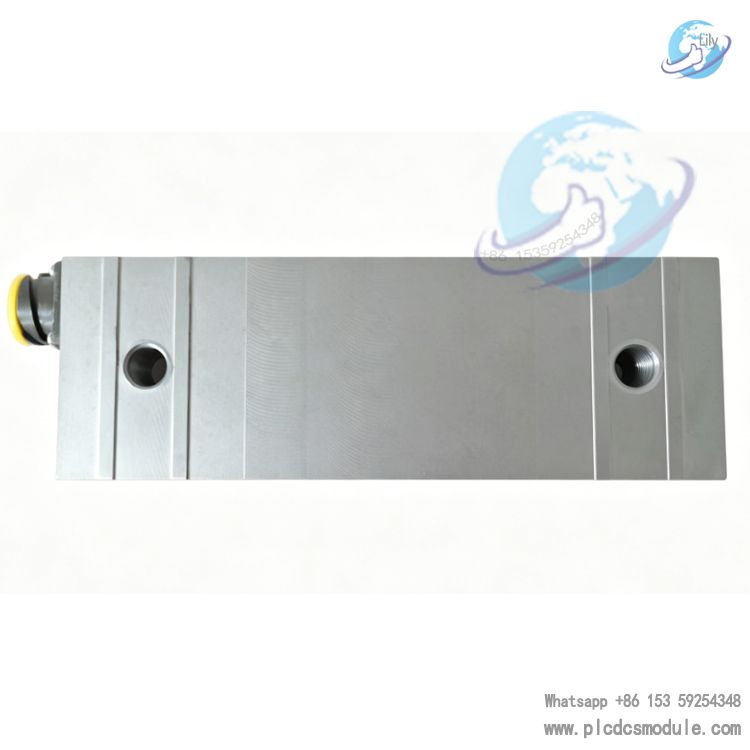
The mounting base shall have flatness ≤ 0.05 mm and surface roughness Ra3.2. No gaskets are allowed between the sensor and mating surfaces; gaskets may only be placed between the adapter and the base/bearing housing.
Use dedicated adapters for PFTL101A with thickness ≥ 30 mm and flatness ≤ 0.05 mm. Austenitic stainless steel adapters are required for corrosive environments.
Fasteners: Grade 12.9 alloy steel bolts are recommended (Torque: M12 = 136 Nm; M16 = 333 Nm). A4-80 stainless steel bolts are also available (Torque: M12 = 76 Nm).
2. Installation Procedures
- Clean the mounting surface, then fasten the lower adapter, sensor and upper adapter in sequence, and tighten bolts to the specified torque.
- Mount the bearing housing and roller, then align the sensor to be horizontal and the roller perpendicular to the sensor.
- Cable routing: Prevent extra force from acting on the measuring direction. Secure cables to brackets and reserve allowance for thermal expansion.
- Wiring: Primary (excitation) impedance: 1 Ω; Secondary (signal) impedance: 1 ~ 3 Ω. Insulation resistance ≥ 1 MΩ.
3. Commissioning & Calibration
- Connect to compatible control units (e.g. PFEA111/112/113) and set the measuring range to 2 kN.
- Perform zero adjustment under no load, then apply rated load to calibrate sensitivity.
- Verification: Transverse force and axial force shall not affect measurement readings, and the zero point shall remain stable.
4. Maintenance Guidelines
- Conduct quarterly inspections on bolt torque and adapter gaps. Remove debris regularly to avoid force shunting.
- Protect cables against abrasion and corrosion; reinforce cable fixing in vibration-prone areas.
- Spare parts recommendation: Prepare one identical sensor and one set of connector assemblies as spares.
FAQ
Q1: No signal or fluctuating signal from the sensor?A1: ① Loose wiring or poor insulation: Check terminals and shield grounding (single-end grounding only). ② Force shunting: Foreign objects trapped in adapter gaps or cable tension. ③ Damage caused by overload: Excessive zero drift, replace the sensor.
Q2: Severe zero drift and inaccurate readings with temperature changes?A2: ① Poor mounting flatness: Deformation of the base or adapters. ② Failed temperature compensation: Operating beyond the compensation temperature range (+20~+80℃). ③ Excessive transverse or axial force: Check roller axial fixation and bearing clearance.
Q3: Can it directly replace the old model?A3: PFTL101A of the same specification is fully interchangeable; only re-zero the control unit. For legacy models such as PFTL100, verify mounting dimensions and connectors.
Q4: Is it applicable in corrosive environments?A4: Standard Series A adopts 1.4104 stainless steel, suitable for mildly corrosive conditions. For severe corrosion (acid, alkali, seawater), choose PFTL101AER made of acid-resistant 1.4404 stainless steel, together with matching adapters and bolts of the same material.
Q5: Which control units are compatible?A5: Recommended original ABB units: PFEA111/112/113 (tension control) and PFXC141 (signal conversion). It supports 0~10V / 4~20mA analog output and Profibus communication.