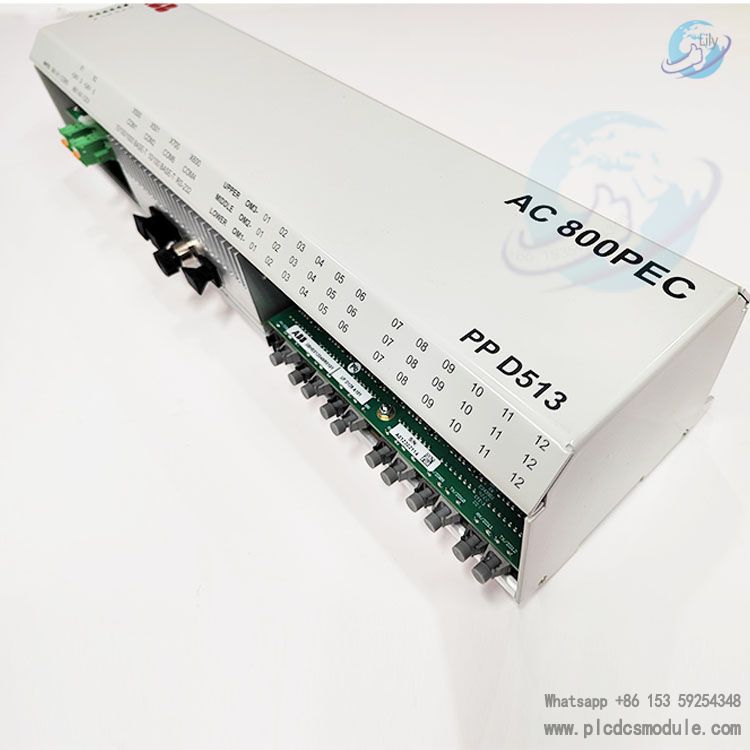


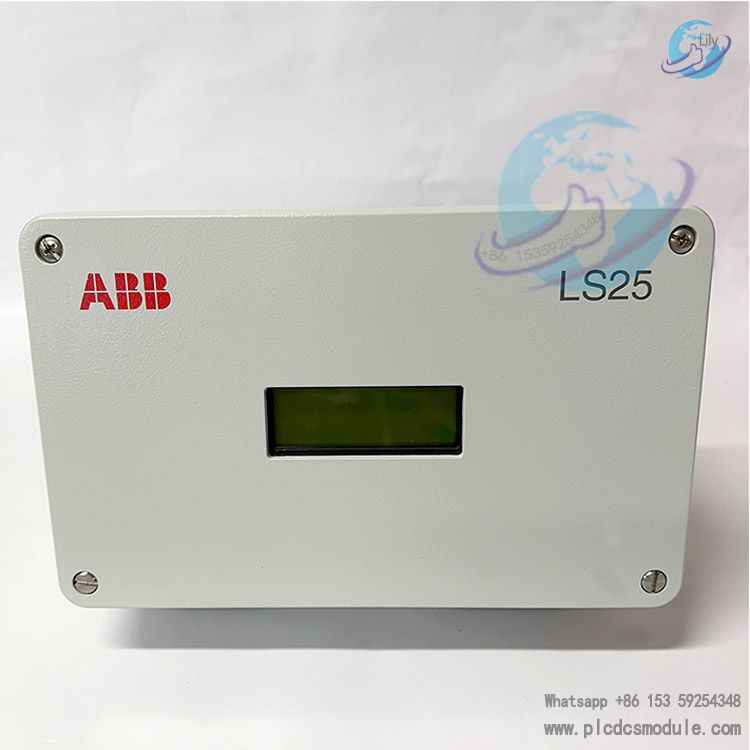
ABB AO2000‑LS25 Advance Optima TDLAS Laser Gas Analyzer
The AO2000‑LS25 is an in-situ TDLAS laser analysis module within the modular AO2000 Advance Optima analysis system. Adopting Tunable Diode Laser Absorption Spectroscopy (TDLAS), it performs non-contact online in-situ gas measurement inside flue gas ducts, pipelines and reaction chambers. It is a cross-duct (cross-pipe) laser analyzer and requires no sample pretreatment system.

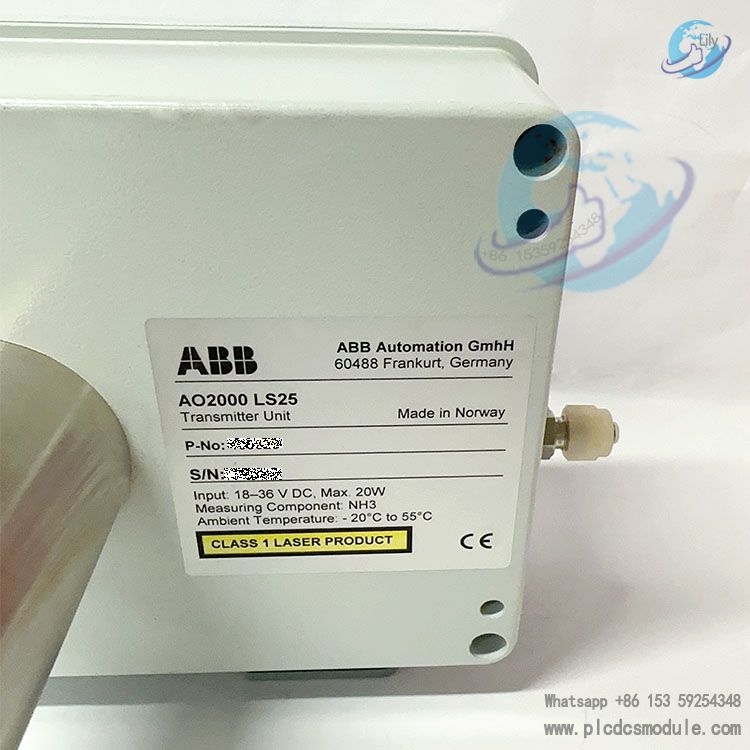
Measurement Principle
AO2000‑LS25 works based on TDLAS, single-line near-infrared absorption spectroscopy.
The transmitter unit uses a temperature-stabilized single-mode diode laser to scan the unique near-infrared absorption line of the target gas. Carefully selected absorption peaks eliminate cross-interference from other background gases.
The opposite receiver unit captures laser intensity after the beam passes through process gas.
Wavelength modulation and second harmonic (2f) detection technology greatly improve detection sensitivity. The instrument extracts both peak amplitude and line width of absorption spectra to automatically compensate spectral broadening caused by pressure and temperature fluctuations, so measurement is not affected by background gas spectral broadening.
Important characteristic: The analyzer only detects free gaseous molecules. It cannot respond to molecules bound or adsorbed on liquid droplets or particles. Differences should be noted when comparing readings with wet sampling analysis results.
Hardware Structure
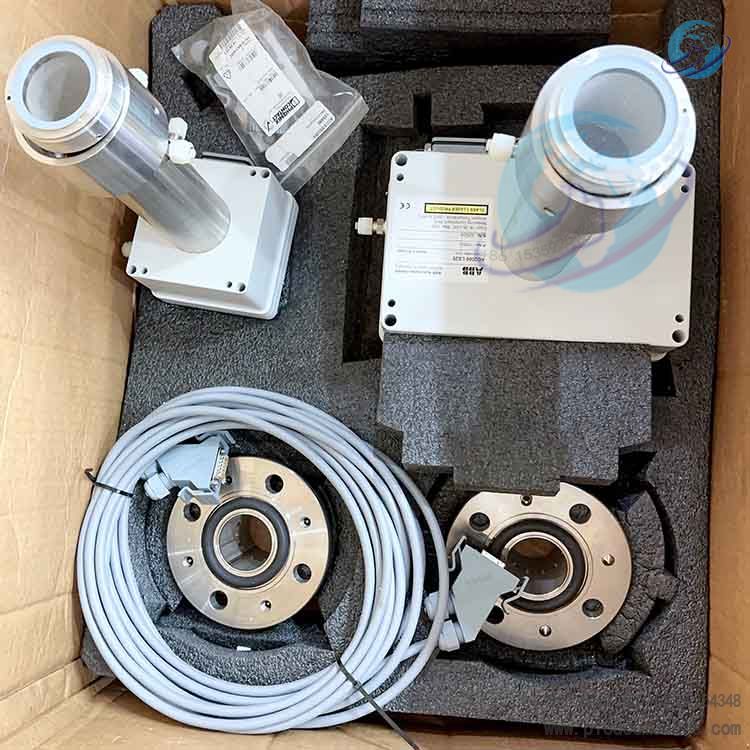
The complete analyzer consists of three independent units:
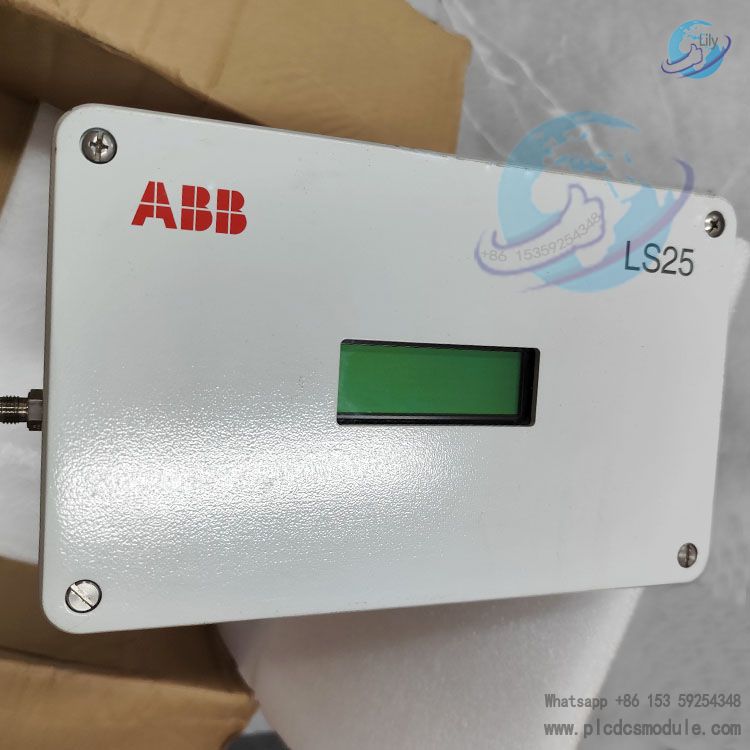
- Transmitter unit: Built-in temperature-controlled diode laser, collimating optics, CPU mainboard, local LCD display. IP66 rated. It handles laser driving, signal calculation, concentration computation and local readout. Interfaces: RS‑232, Ethernet TCP/IP, 4‑20mA analog input for external temperature & pressure sensors.
- Receiver unit: Equipped with focusing lens, photodetector and receiving circuit. IP66 rated. It collects absorbed optical signals and sends signals back to the transmitter. Power for the receiver is supplied by the transmitter via signal cable.
Power supply unit: Converts 85‑264V AC to 24VDC to power the transmitter. If 24VDC is already available on site, the transmitter can be powered directly without this power supply box.
Accessories
- DN50 cross-flange + purge alignment assembly: Mounted on both sides of pipeline for coarse and fine optical alignment
- Optical window purge system: Purge with instrument air or nitrogen to prevent dust contamination on optical windows
- Red laser alignment tool: For coarse optical path adjustment during field installation
- Optional built-in flow calibration cell / sealed calibration cell for on-site zero and span verification
Installation Parameters
- Optical path (pipe inner diameter): 0.5 ~ 6 m
- Standard optical window pressure rating: 5 bar absolute
- Max signal cable length between transmitter and receiver: 150 m
- Max power cable length: 100 m
Enclosure protection: Transmitter / receiver IP66
Measurable Components & Measuring Ranges
A single LS25 unit can measure up to 2 gas components simultaneously and adapts to high-temperature and high-pressure process conditions. Typical gases listed below (parameters based on 1m optical path, 25℃, 1 bar absolute, nitrogen base; ranges can be adjusted by changing optical path length).
| Gas | Min Range | Max Absolute Pressure | Max Process Temperature |
| O₂ | 0‑1 %vol | 10 bar | 1500 °C |
| NH₃ | 0‑15 ppm | 2 bar | 500 °C |
| HCl | 0‑5 ppm | 2 bar | 600 °C |
| HF | 0‑2 ppm | 2 bar | 400 °C |
| H₂S | 0‑300 ppm | 2 bar | 300 °C |
| H₂O | 0‑10 ppm / 0‑0.5 %vol | 2 bar | 1000‑1500 °C |
| CO | 0‑30 ppm /0‑0.3 %vol | 2 bar | 1500 °C |
| CO₂ | 0‑100 ppm /0‑1 %vol | 2 bar | 1500 °C |
| NO | 0‑1000 ppm | 2 bar | 350 °C |
| HCN, CH₄ and other gases available upon request | |||
Software & Communication
Firmware runs on the CPU board inside the transmitter for real-time measurement, self-diagnosis, data logging and alarm handling.
Windows service configuration software is only used for installation, commissioning and calibration. PC connection is not required during normal operation. Connection via RS‑232 serial port or Ethernet TCP/IP.
Software functions: real-time trend plotting, 2f harmonic signal view, data log, fault log reading, parameter configuration, PROPORTIONAL calibration / GLOBAL calibration, parameter backup & restore.
System integration: As a module of AO2000 Advance-Optima system, it connects to AO2000 central unit. Multiple LS25 units can be networked for centralized remote monitoring over Ethernet.
Interfaces
- Ethernet TCP/IP
- Isolated RS‑232 serial port
- 4‑20mA analog input: for external temperature and pressure sensors for T&P compensation
- Local LCD display: gas concentration, laser transmittance, instrument status, fault alarms
Calibration Modes
The instrument is factory calibrated with certified span gas. On-site calibration is not required every time. Two calibration modes available:
- PROPORTIONAL (Proportional Calibration, commonly used): Only adjusts concentration proportional factor. Can be executed under on-site process conditions for routine verification.
- GLOBAL (Global Calibration): Calibrates both concentration coefficient and spectral width parameters. Requires stable certified calibration gas under known pressure & temperature. Only performed by certified technicians after laser module replacement or major repair, password protected.
This instrument uses baseline-free technology and does NOT support zero calibration. Optional built-in sealed / flow cell can be used for on-site span verification.
Explosion Protection & Certifications
AO2000‑LS25 is available in general-purpose and hazardous-area explosion-proof versions.
- ATEX / IECEx
- Zone 1 version: II 2 G Ex pxb [op is Ga] IIC T4 Gb; pressurized enclosure protection
- Zone 2 version: II 3 G Ex ec nC [op is Ga] IIC T4 Gc
- CSA certification: Class I Division 2, Groups A,B,C,D, T4
- Laser safety: Class 1 for all models except oxygen version (Class 1M). Non-visible near-infrared laser per IEC 60825‑1.
- Emission monitoring certification: NH₃, H₂O compliant with EN14181 / EN15267 European flue gas monitoring standards.
Note: The power supply unit cannot be installed in Zone 1 hazardous area. Zone 1 version must be equipped with certified pressurization purge monitoring unit.
Key Advantages
- In-situ non-contact measurement, no sample pretreatment system. No sampling line blockage, condensation or adsorption loss, fast response speed
- High selectivity: selected unique absorption spectral lines, nearly no cross-gas interference
- Built-in spectral broadening compensation, maintains accuracy under large process temperature & pressure fluctuations
- Transmittance output for predictive maintenance: early warning for lens fouling or optical path drift
- Modular design: seamlessly integrates into AO2000 Advance-Optima system. Can mix with photometers, oxygen analyzers, up to 4 analysis modules; supports remote Ethernet operation
- Wide explosion-proof options: ATEX/IECEx/CSA for Zone1/Zone2 and Class I Div2 for chemical & incinerator hazardous processes
- Optical window purge design, suitable for high-dust flue gas conditions
Typical Applications
- Flue gas emission monitoring: NH₃ slip monitoring for SCR DeNOx; CO, H₂O, HCl, HF, H₂S acid gas measurement for incinerators
- Chemical process pipelines & reactors: high-temperature process gas and corrosive gas (HCl/HF/NH₃/H₂S) online monitoring
- Metallurgy, cement kiln gas analysis
- Explosion-proof process gas measurement in hazardous classified areas
Maintenance Guidelines
- Monitor laser transmittance daily. When transmittance alarm triggers, check purge gas supply and clean optical windows first.
- Regularly inspect flange purge flow to prevent window dust accumulation.
- Vibration or thermal deformation may shift optical path; realign optics if needed.
- Use calibration cell periodically for span verification; perform proportional calibration as required.
- Do not open the enclosure in explosive atmosphere for hazardous-area units. After maintenance on Zone1 pressurized model, complete full pre-purge before power restoration.
Product Limitations
- Only measures free gaseous molecules; molecules adsorbed on particles or droplets cannot be detected
- Requires cross-flange installation on both pipe sides; pipe inner diameter must be within 0.5‑6 m
- Reliable purge is mandatory under heavy dust conditions; excessive laser attenuation will cause measurement failure
- GLOBAL calibration requires certified span gas and cannot be directly performed on raw flue gas
Frequently Asked Questions
Q1: What type of analyzer is AO2000‑LS25? What gases can it measure?
A: AO2000‑LS25 is a TDLAS tunable diode laser in-situ cross-duct gas analyzer. It measures gas directly across pipe/duct without sample pretreatment. It supports NH₃, HCl, HF, H₂S, CO, CO₂, NO, H₂O, O₂, HCN, CH₄ and more. One unit can measure maximum 2 gas components, widely used in flue gas DeNOx, incineration and chemical processes.
Q2: Does AO2000‑LS25 need a sampling pretreatment system?
A: No. It is in-situ cross-pipe measurement. Laser beam passes directly through process gas. No sampling lines, heat tracing or filters, eliminating measurement distortion caused by adsorption, blockage or condensation, with fast response.
Optical window purge is mandatory for high-dust applications to protect lenses from fouling.
Q3: What pipe size is supported? What installation requirements are there?
A: The optical path range is 0.5‑6 m, matching pipe inner diameter 0.5~6 m. DN50 cross flanges need welding on both pipe sides. Recommended straight pipe length: ≥5 times pipe diameter upstream, ≥2 times pipe diameter downstream for well-mixed gas. Flange coaxial tolerance must be satisfied for proper optical alignment.
Q4: Can AO2000‑LS25 be deployed in hazardous explosion areas?
A: Yes, certified ATEX, IECEx and CSA.
Zone2 / CSA Class I Div.2 version can be directly used in Zone 2 hazardous locations.
Zone1 version uses Ex-pxb pressurized enclosure and must pair with certified pressurization purge monitoring unit.
Power supply unit cannot be installed inside Zone1. Do not open enclosure arbitrarily in hazardous atmosphere.
Q5: Does this analyzer require frequent field calibration? How to perform zero calibration?
A: Factory calibrated with certified span gas, no immediate calibration required after delivery.
LS25 uses baseline-free second-harmonic technology and zero calibration is not supported.
Daily verification uses PROPORTIONAL calibration, can be done with calibration cell.
GLOBAL calibration is only for laser module replacement or major overhaul, requires stable certified gas, password access and professional engineers. Optional built-in sealed/flow cell for on-site span check.
Q6: What causes Low transmission alarm?
A: Low transmission is the most common alarm, 3 main reasons:
1. Optical window fouling by dust or oil; check purge gas supply and clean windows if needed. 2. Optical path shift caused by pipe vibration or thermal deformation, requiring realignment. 3. Extremely high process dust causing laser attenuation. Transmittance value can be read directly on local LCD for predictive maintenance.
Q7: Must AO2000‑LS25 work with AO2000 central unit? Can it run independently?
A: The transmitter has built-in LCD and can run independently for measurement and display. When integrated into AO2000 central unit, multiple analyzers can be networked for centralized data collection and remote commissioning. Interfaces include Ethernet TCP/IP and isolated RS232, plus 4‑20mA input for T&P compensation sensors. PC software is only used during installation, calibration and maintenance; PC is not required during normal operation.
Q8: Why is there deviation between LS25 readings and wet sampling analyzer results?
A: LS25 only detects free gaseous molecules. If target gas molecules are adsorbed on liquid droplets or particles or form bound complexes, laser cannot detect these fractions. Wet sampling methods capture adsorbed/bound molecules together, so deviation occurs. When comparing data, fully consider aerosol and droplet conditions in the process.