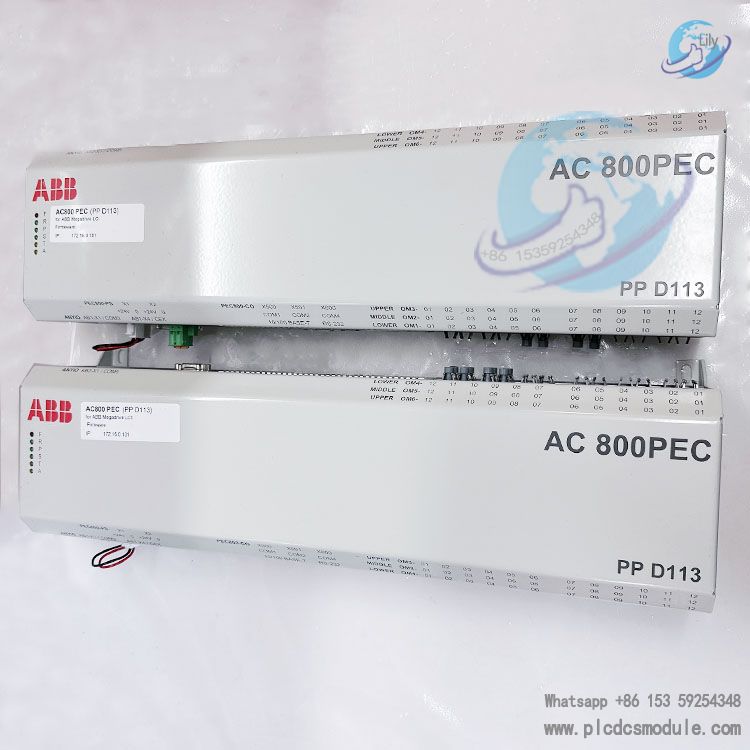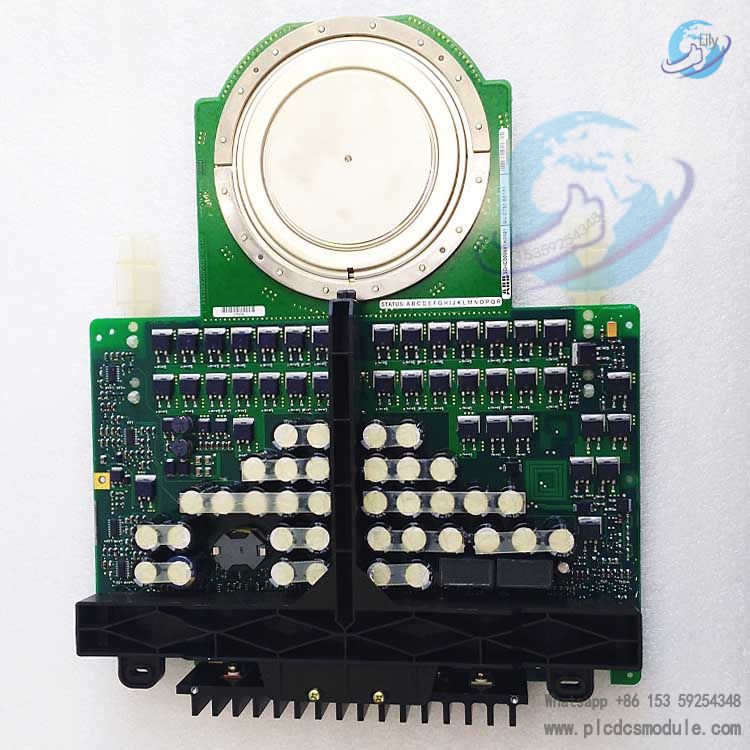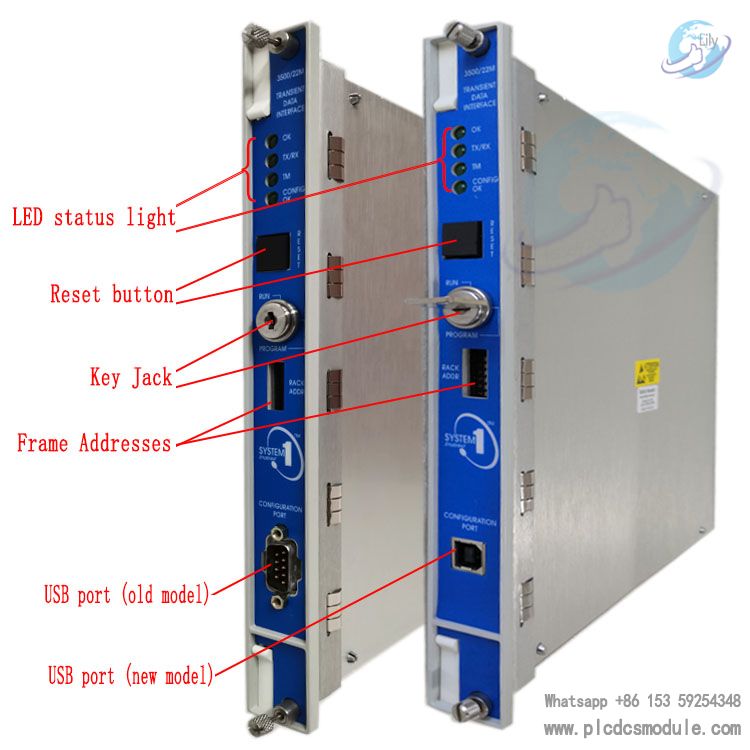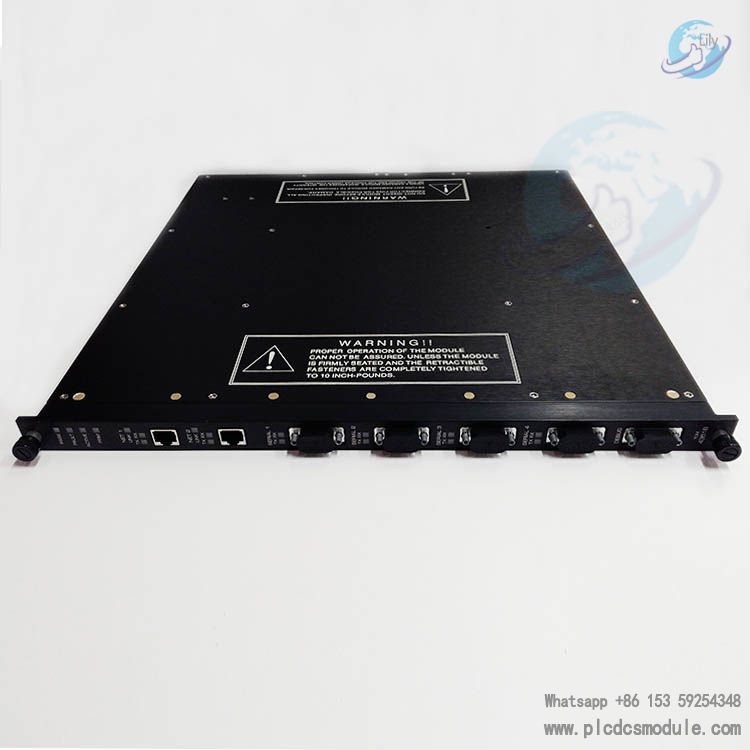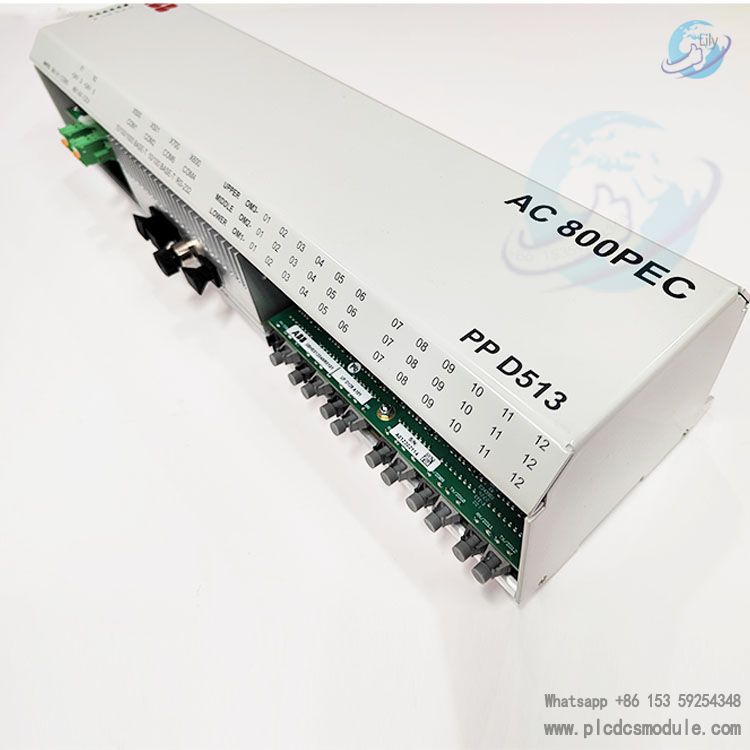


The ABB PC D247 AC 800PEC is an industrial-grade excitation controller designed specifically for medium- and high-voltage high-power power electronics systems, belonging to ABB industrial automation control product portfolio.
Featuring a dual-core architecture with PowerPC and FPGA, it delivers high-bandwidth control, precise signal processing, and strong environmental adaptability. It is mainly applied in three-phase dual active bridge (DAB3) converters, medium-voltage DC grid interface equipment, and new energy power generation systems, serving as a key core component for efficient high-power energy conversion and stable control.It was designed to address precise excitation control, fast current response, and multi-device coordinated scheduling in medium- and high-voltage applications. It has been proven in offshore wind farm collection systems, PV DC gathering grids, solid-state transformers, and other fields.

Core Technical Parameters
Control Core & Processing Performance
- PowerPC Processor: Executes medium–low speed tasks including voltage/current closed-loop control and fault diagnosis, with a cycle time of 100–1000 µs.
- Xilinx Spartan3 FPGA: Performs high-speed tasks such as IGCT gate drive, dead-time control, and Instantaneous Current Control (ICC), with response time down to 25 ns.
- Data Interaction: High-speed communication between PowerPC and FPGA via Dual-Port RAM (DPRAM).
Signal Input & Output
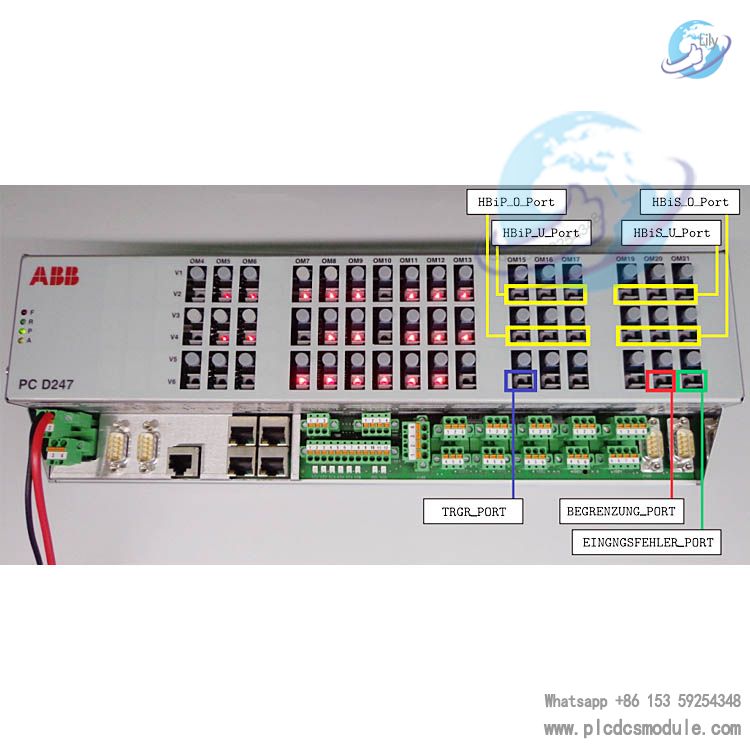
- Phase Compensation Angle Input: 3 channels (PHIiP_PORT), adjustable range ±90°.
- Load Angle Input (PHI_PORT): Default range ±60° (ICC mode), expandable to ±90° when ICC is disabled.
- Optical Output Modules: OM1–OM22 for galvanically isolated signal transmission to power devices.
- External Clock Input: 40 MHz (CLK_PORT).
Switching Frequency & Dead-Time Control
- Switching Frequency: Configurable from 868 Hz to 27.77 kHz, updated via DRTLPERI_PORT trigger.
- Dead Time (t_dead): Flexibly set via TOTZT_PORT to match the switching characteristics of different power devices.
Environmental & Adaptation Characteristics
- Suitable for medium-voltage power electronics systems, compatible with IGCT, IGBT and other power devices of 2.8 kV and above.
- Meets industrial-grade environmental requirements, supports temperature and humidity ranges for liquid cooling systems.
- Primarily designed for converter applications of 5 MW and above.
Communication & Interfaces
- Ethernet Ports: X61, X63
- MODBUS Interface: X65 for data exchange with host or industrial control systems.
- JTAG Debug Interface: X102 for system development and troubleshooting.
Key Features and Advantages
Dual-Core Architecture: Balances Precision & Speed
- PowerPC handles complex algorithms to ensure steady-state accuracy of voltage/current control.
- FPGA enables ultra-high-speed signal processing, shortening instantaneous current response to 1/3 of the switching cycle, allowing fast load tracking and oscillation-free power stepping.
Multi-Mode Control & Flexible Adaptation
- Built-in Instantaneous Current Control (ICC) and improved I2CC algorithm to compensate for transformer winding resistance.
- Supports 2-step / 3-step load angle switching to avoid current oscillation.
- Integrated balance control corrects current imbalance caused by asymmetric transformer impedance via independent phase compensation angles, improving DC-side power quality.
High Reliability & Safety Design
- Multiple protection mechanisms: emergency stop (NOTAUS_PORT), input over-limit detection (EINGNGSFEHLER_PORT), etc., for fast gate drive cutoff.
- Supports Zero-Voltage (ZV) / Zero-Current (ZC) switching detection to prevent hard-switching damage and ensure safe operation of soft-switching topologies.
Industrial Compatibility & Scalability
- Galvanically isolated drive for IGCT, IGBT via optical modules, compatible with ABB 5SHY series IGCT and Infineon dedicated diodes.
- Supports cooperation with Auxiliary Resonant Commutated Pole (ARCP), medium-high frequency transformers, and scalable to multi-module series/parallel systems.
Low Loss & High-Efficiency Control
- Dynamic voltage balancing with lossless snubbers reduces switching losses of series power devices.
- Precise load angle control and harmonic suppression algorithms lower losses in transformers and filters, helping system efficiency exceed 99%.
Installation & Maintenance
Installation Requirements
- Mount in a shielded industrial control cabinet to avoid electromagnetic interference.
- Low-inductance wiring layout between the controller and power devices (e.g., IGCT stack); optical cables routed separately from power cables.
- Powered by an independent 24 V galvanically isolated auxiliary supply with UPS backup for safe shutdown during power failure.
Commissioning & Configuration
- Control algorithm development and code generation via MATLAB/Simulink & Real-Time Workshop, supporting fast download to PowerPC.
- FPGA integrates customizable blocks; custom logic (e.g., special topology algorithms) can be extended via VHDL.
- TRGR_PORT trigger port for oscilloscope connection to synchronously observe switching signals and current waveforms.
Maintenance Highlights
- Regularly check optical module connections and clean interface dust.
- Monitor operating data (PowerPC/FPGA temperature, power status, fault logs) via MODBUS.
- Full calibration every 2 years, focusing on current/voltage sampling accuracy and trigger signal synchronization.
Troubleshooting
- EINGNGSFEHLER_PORT triggered: Check if load angle or compensation angle inputs exceed rated range.
- Phase current imbalance: Adjust PHIiP_PORT or enable balance control algorithm.
- Emergency stop (NOTAUS): Identify trigger source first; restart via EINSCHALTER_PORT only after fault clearance.
Recommended Associated Products
Power Devices
- ABB 5SHY series IGCT (e.g., 5SHY3545L0001, 5SHY55L4500)
- ABB 5SNA series IGBT modules (e.g., 5SNA2000K451300)
- Infineon D1031SH series anti-parallel diodesFor high-power switching and energy conversion.
Power Electronics Topology Components
- Medium-high frequency transformers (e.g., 2.2 MVA/1 kHz silicon steel core)
- Auxiliary Resonant Commutated Pole (ARCP)
- Lossless snubbers (Csn = 1–3.5 µF)For soft-switching operation and dynamic voltage balancing.
Sensing & Feedback Devices
- High-precision current sensors (αβ coordinate sampling)
- Isolated voltage sampling modules
- Zero-Voltage (ZV) detection circuitsProvide accurate state feedback for control algorithms.
System-Level Cooperation Products
- ABB AC 800M DCS
- Medium-voltage DC grid protection devices
- New energy power generation monitoring platformsFor multi-device coordinated scheduling and global optimization.
Recommended Models
- 5SHX0660F0002: Standard AC 800PEC CPU module, 100 μs control cycle, suitable for small and medium-sized excitation systems
- GFD563A102 (3BHE046836R0102): High-performance AC 800PEC control module, 200 MHz PowerPC processor, suitable for high-power excitation and drive control
- PC D231: AC 800PEC interface module, 16 relay outputs + 12 digital inputs, supports Profibus DP expansion
- PPD512: Control output board, 24 I/O channels, 220 V output, suitable for protection and switching control
- S800 I/O Series: AI/AO/DI/DO modules such as AI810, DO810, for AC 800PEC expansion