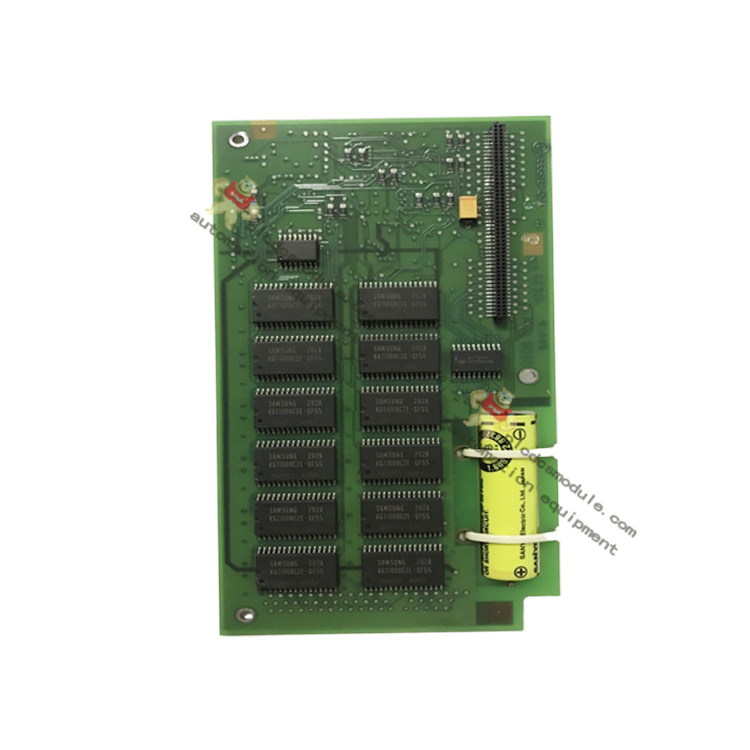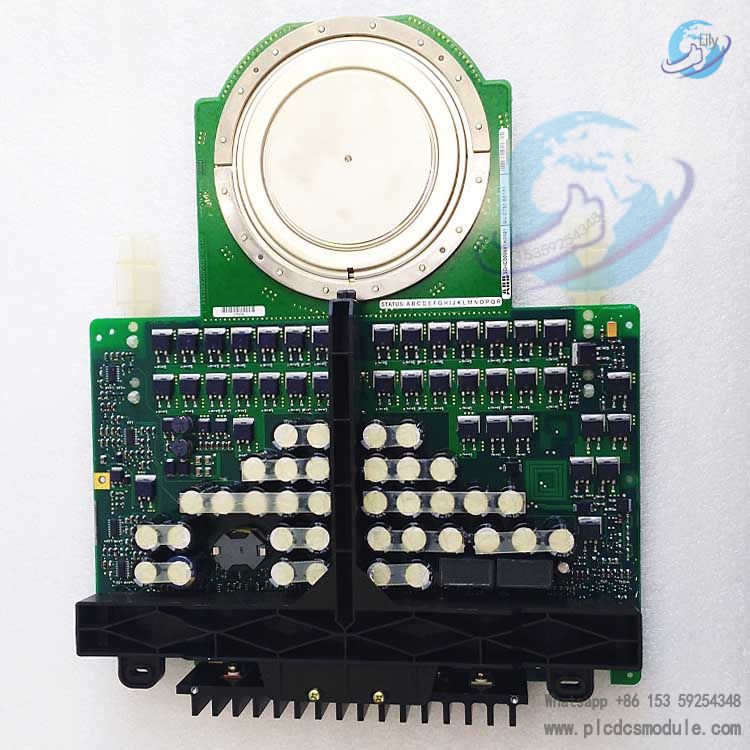


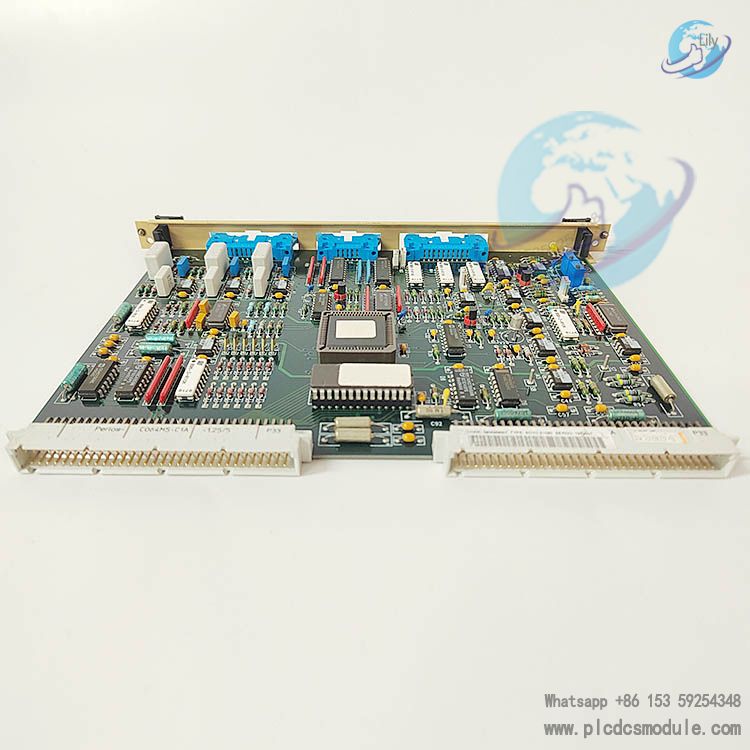
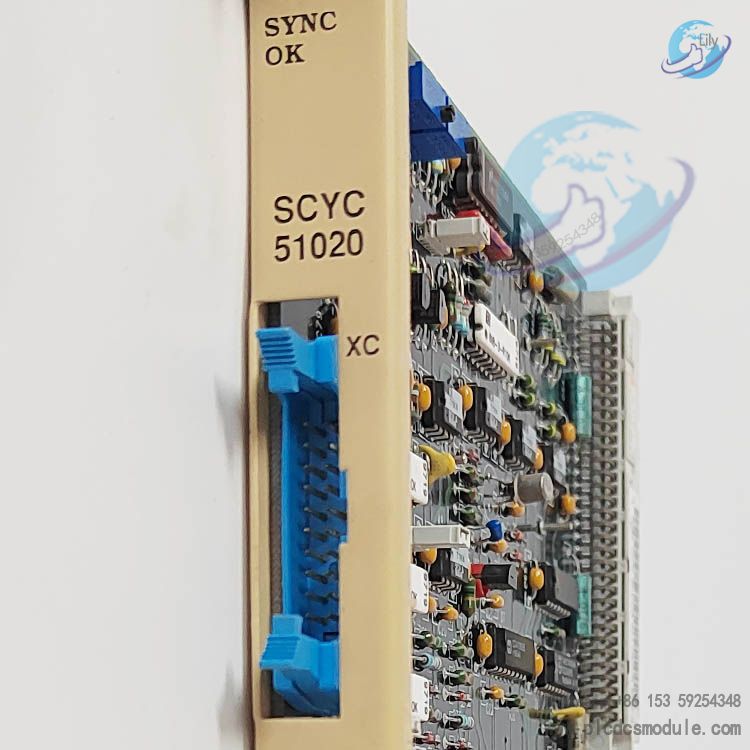
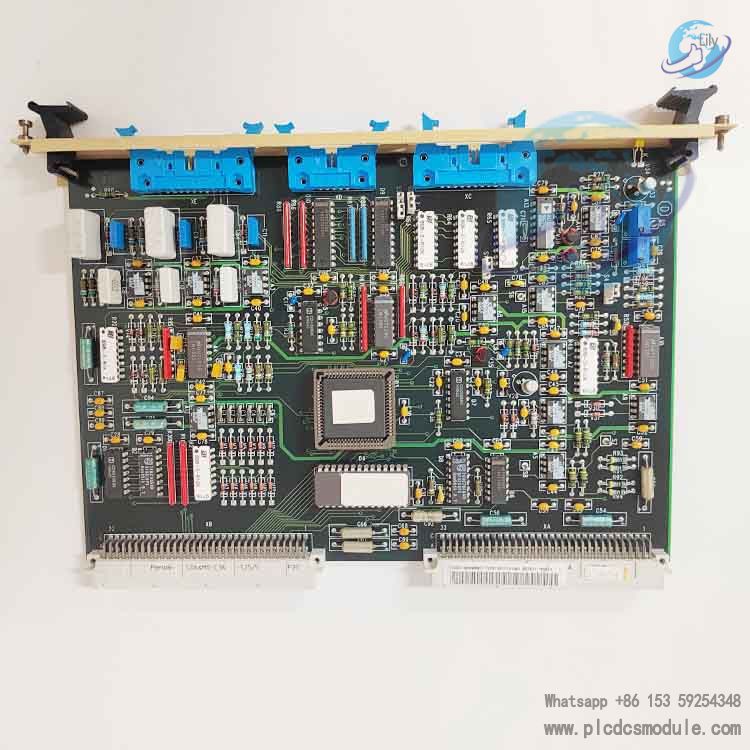
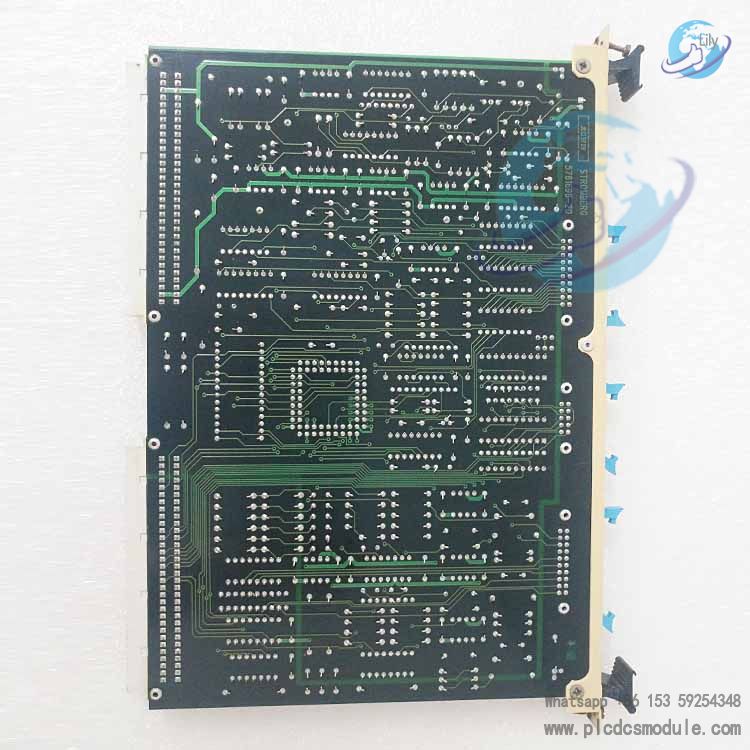
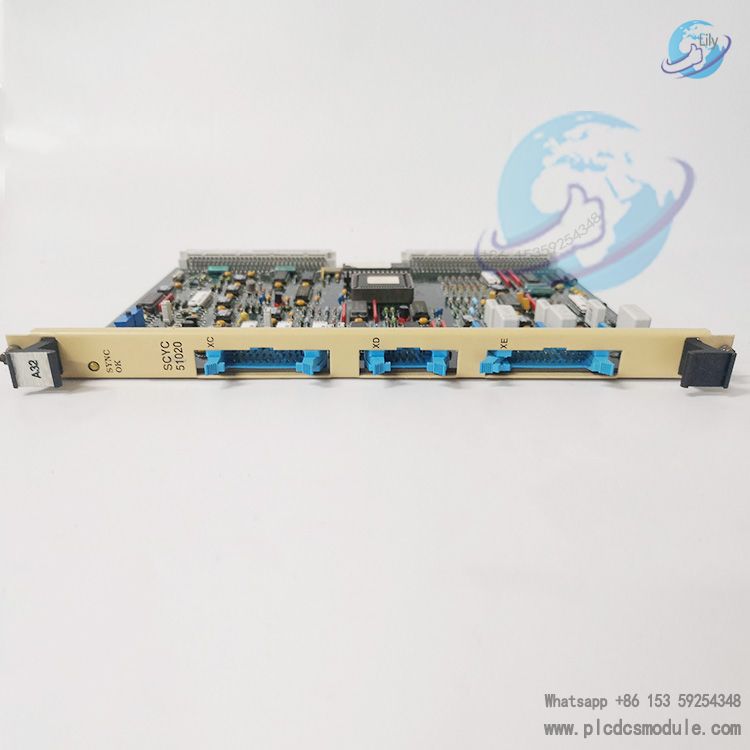
ABB SCYC51020 (Part No. 58052582H) is a synchronization card specially designed for power electronic equipment such as high-voltage inverters, rectifiers, and reactive power compensation devices (SVG/SVC).Its core function is to achieve precise phase synchronization between control signals, grid voltage, and multiple power units, and output high-precision trigger pulses to ensure stable, reliable and efficient operation of power electronic devices.
As a core spare part for ABB drives and power electronic control systems, it is widely used in industrial applications with strict requirements for synchronization accuracy and operational stability, including metallurgy, wind power, hydropower, rail transit, and new energy grid connection.
Core Functions
Grid Synchronization & Phase Locking
Real-time acquisition of three-phase grid voltage signals, with precise tracking of grid frequency, phase and amplitude, achieving zero-phase-difference synchronization between control pulses and grid voltage. Supports adaptive locking over a wide frequency range (45–65 Hz), suitable for various grid conditions worldwide.
High-Precision Pulse Trigger Output
Generates multiple (typically 6–12) independently controllable trigger pulses for driving power devices such as thyristors and IGBTs. Pulse width, delay angle and triggering sequence are programmable, with microsecond-level triggering accuracy, ensuring precise commutation of power units, no circulating current and no waveform distortion.
Multi-Unit / Multi-Bridge Synchronization Coordination
Supports synchronous control of multiple power units and bridge arms in cascaded multilevel inverters and multi-pulse rectifiers. Realizes accurate phase distribution and coordination of trigger pulses across units, ensuring high sinusoidal quality of output voltage/current waveforms and low total harmonic distortion (THD).
Signal Monitoring & Fault Protection
Real-time monitoring for faults including loss of synchronization signal, phase abnormality, overvoltage/undervoltage, and pulse output short circuit. Quickly outputs a fault blocking signal to disable trigger pulses and protect power modules and equipment. Provides fault status feedback and diagnostic functions.
System Communication & Parameter Configuration
Communicates with host controllers (e.g., main control boards, PLCs) via a dedicated bus interface (compatible with ABB SCYC series bus). Supports remote parameter read/write, status monitoring and firmware upgrade, and is compatible with mainstream ABB drive control systems (e.g., ACS series, UNITROL series).
Technical Specifications
- Model: SCYC51020
- Part No.: 58052582H
- Applicable Systems: ABB high-voltage inverters, rectifiers, SVC/SVG, excitation control systems
Synchronization Input
- 3-phase grid voltage input: 0–500V AC (suitable for secondary side of voltage transformers)
- Frequency range: 45–65 Hz (adaptive tracking)
Trigger Pulse Output
- 6–12 optically isolated pulse outputs
- Output current: ≥ 100 mA
- Isolation voltage: ≥ 2500V AC
Control Accuracy
- Phase synchronization error: ≤ ±0.1°
- Pulse delay accuracy: ≤ 1 μs
Power Supply
- 24V DC ±10%
- Power consumption: ≤ 15 W
Operating Environment
- Temperature: -40℃ to +70℃
- Humidity: 5%–95% RH (non-condensing)
- Protection class: IP30 (board level)
- EMC: Complies with IEC 61000-6-2/4 industrial standards
Physical Characteristics
- Dimensions: Standard 6U Eurocard format (160 mm × 100 mm)
- Mounting: Rack-mounted plug-in module, compatible with ABB standard control cabinet slots
- Weight: Approx. 0.5 kg
Product Features
High Reliability
Built with industrial-grade, military-quality components and wide-temperature design, equipped with three-proof coating (moisture-proof, salt-fog-proof, mildew-proof). Passed strict vibration, shock and EMC tests, adapting to harsh industrial sites. MTBF > 100,000 hours.
Excellent Synchronization Accuracy
Adopts dedicated digital phase-locked loop (DPLL) algorithm with strong resistance to grid fluctuations and harmonic interference. Maintains stable synchronization even when grid distortion rate exceeds 10%, avoiding equipment tripping or damage caused by triggering errors.
Strong Compatibility
Seamlessly compatible with the full range of ABB high-voltage power electronic devices. Can directly replace old version cards of the same model without modifying hardware wiring or system configuration, supporting upgrades across multiple generations of control systems.
Easy Maintenance & Diagnosis
Onboard LED status indicators (power, synchronization, operation, fault) support quick fault location. Supports hot-swapping (on selected systems), allowing replacement without full power shutdown and reducing downtime.
Flexible Programmability
Trigger modes, pulse parameters and protection thresholds can be configured via ABB dedicated software (such as DriveWare, Control Builder), adapting to different topologies (two-level, three-level, multi-pulse) and various control requirements.
Application Scenarios
- High-Voltage Variable Speed DrivesSynchronous triggering of power units for high-voltage inverters in metallurgical rolling mills, mine hoists, fans and water pumps.
- Power Rectification / InversionGrid synchronization and pulse control for electrolysis, electroplating and new energy grid-connected inverters.
- Reactive Power CompensationGrid synchronization and valve group control for SVG/SVC dynamic reactive power compensation equipment.
- Power Generation ExcitationSynchronization and trigger control for excitation systems of hydro and turbo generators.
- Rail TransitMulti-unit synchronous control of traction converters and auxiliary converters.
Frequently Asked Questions (FAQ)
Q1: The “Synchronization Fault” light stays on and synchronization fails after powering on the SCYC51020 58052582H sync card. How to troubleshoot?A1:
- Check synchronization wiring: Ensure correct wiring of the three-phase voltage transformer (PT) secondary side with no short circuit or open circuit, and correct phase sequence (U/V/W corresponding to the card’s sync input terminals).
- Measure sync signal amplitude: Ensure input voltage is within 100–300V AC (card rated input); excessively low or high voltage causes synchronization failure.
- Check grid quality: Excessive harmonics, phase loss or voltage dips may disturb synchronization. Install filters or stabilize the grid before retrying.
- Inspect hardware: Test with a replacement card of the same model. If the fault disappears, the original card’s sync sampling circuit is damaged and requires factory repair.
Q2: The sync card runs normally but trigger pulse output is abnormal and power modules do not conduct. How to solve?A2:
- Check pulse output wiring: Ensure trigger cables are intact without short circuits, firmly connected to power module driver boards, and optical isolation interfaces are secure.
- Measure pulse output: Use an oscilloscope to verify normal square-wave output (amplitude ≥15V, width matches configuration). If no pulse exists, check card configuration (trigger enable, delay angle).
- Check protection interlock: Review fault status of the host controller. Overcurrent, overvoltage, overheating or other faults will block pulse output. Resolve main system faults first.
- Hardware failure: If wiring, parameters and system are all normal, the card’s pulse output circuit is defective and the card needs replacement.
Q3: Can this synchronization card be used in non-ABB power electronic equipment?A3: Direct use in non-ABB equipment is not recommended. The card is designed with ABB-specific bus protocols and interfaces; triggering timing, protection logic and communication protocols are all matched to ABB control systems. Third-party equipment would require redevelopment of interfaces and protocols, resulting in poor compatibility and safety risks.
Q4: What is the difference between SCYC51020 and models such as SCYC51040?A4:
- SCYC51020 (58052582H): Basic synchronization card focused on grid synchronization + 6–12 channel pulse triggering, suitable for standard two-level, three-level and multi-pulse topologies.
- SCYC51040: Extended synchronization/bus adapter card emphasizing multi-unit coordination, bus expansion and communication bridging, usually used together with SCYC51020.
Core difference: different functional positioning. SCYC51020 is the core sync and trigger unit, while SCYC51040 is an expansion auxiliary card. They are not directly interchangeable.
Q5: How to perform parameter configuration and firmware upgrade for the synchronization card?A5:
- Configuration tool: Use ABB dedicated software (such as DriveMonitor, Control Builder Plus). Connect to the card via the control cabinet programming port or dedicated debug cable to read/write synchronization parameters, trigger modes and protection thresholds.
- Firmware upgrade: Under ABB technical support guidance, upgrade using official firmware packages and dedicated tools. Back up parameters before power-off to avoid card damage caused by unexpected power loss.