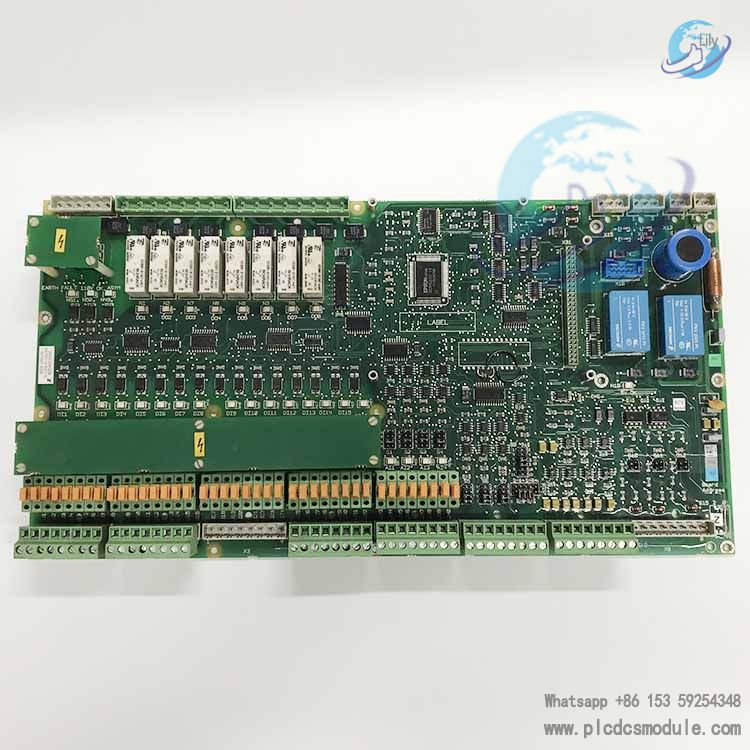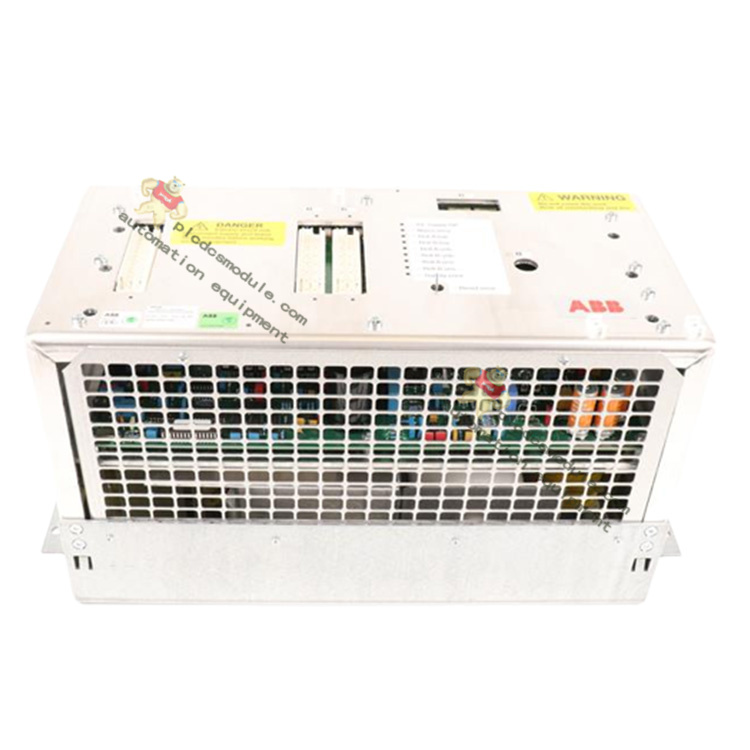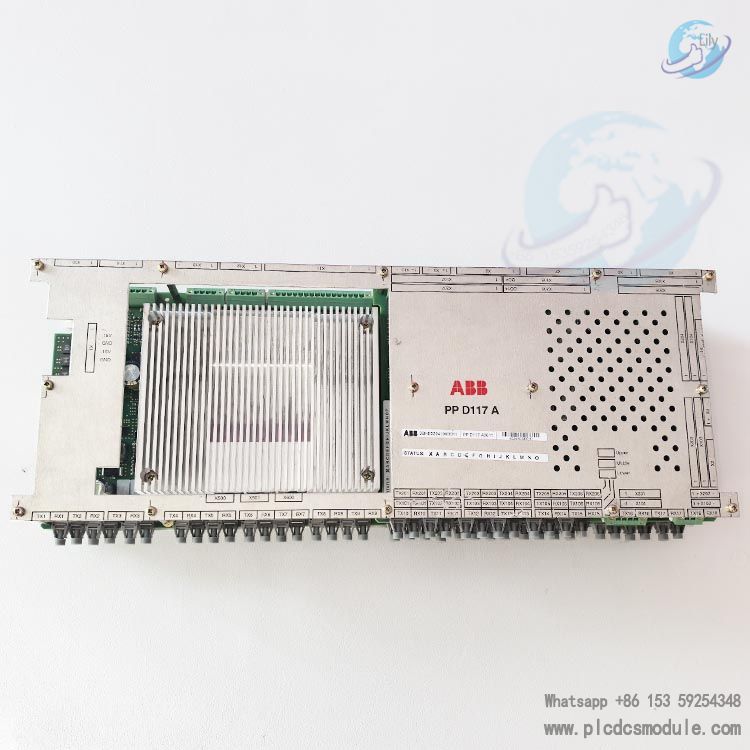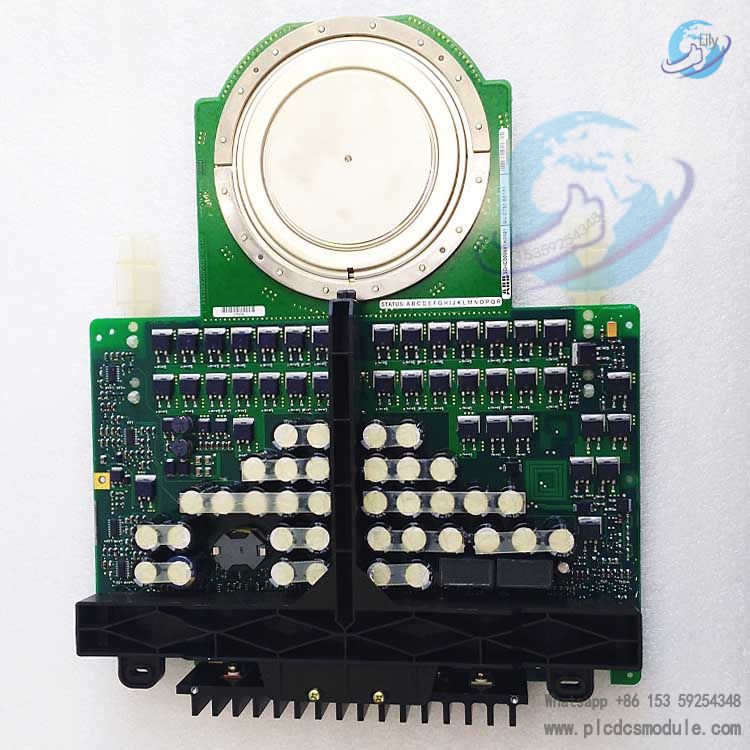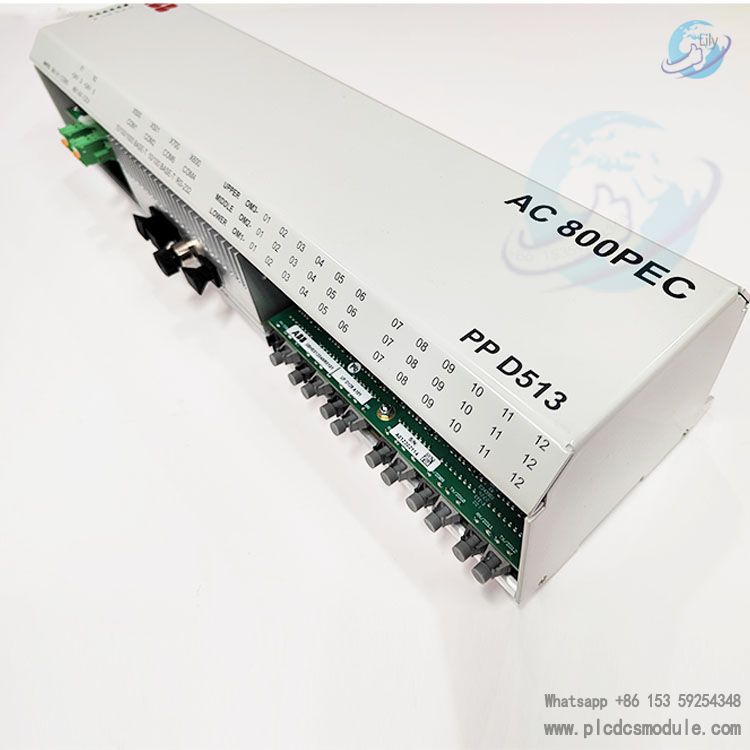


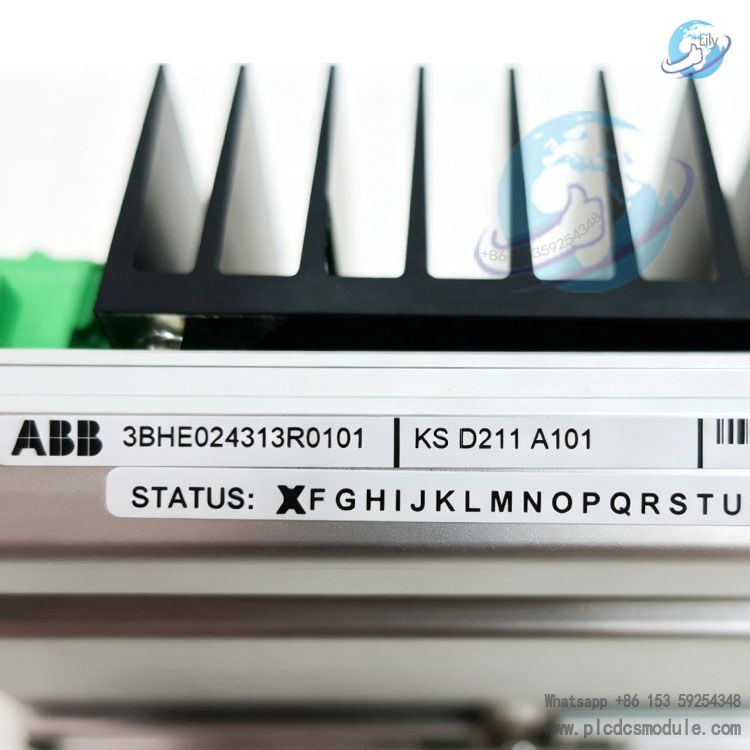
KSD211A101 (Part No.3BHE024313R0101) is a dedicated Input Coupling Unit (ICU) designed for generator excitation control systems and Symphony Plus DCS platforms. Manufactured in Switzerland under the KSD211 signal conditioning series, it acts as an isolated intermediate interface between field primary sensors, excitation master boards and DCS controllers.
The module performs analog & digital signal acquisition, galvanic isolation, filtering, waveform shaping and level conversion. It standardizes raw field signals for upper control systems while blocking surge and common-mode interference to protect controllers from breakdown. As standard critical spare parts for excitation cabinets of thermal and hydro power generators, it is officially matched with ABB UNITROL excitation equipment.
Net weight ranges from 0.5kg to 1.2kg with mounting dimensions of 263×95×55mm, IP20 protection rating and 24VDC power supply, delivering reliable hardware support for safe signal sampling and closed-loop regulation of excitation systems.
Core Advantages
Three-Port Isolation for Enhanced System Fault Tolerance
Full galvanic opto-isolation across input, output and power circuits with dielectric withstand of 2500VAC/1min. It suppresses severe EMI generated by motor startup and rectifier switching, shielding excitation master boards from field short-circuit and surge damage and effectively cutting unplanned excitation shutdown risks.
Native Compatibility with ABB Excitation Systems
Hardware and firmware are optimized for the full UNITROL5000/6000 controller range. Plug-and-play onto excitation backplanes without extra driver configuration and conforms to standard cabinet wiring norms, outperforming third-party isolators in platform compatibility.
Wide Ambient Operating Durability
Operates from -25℃ to +70℃ at 5%~95% non-condensing humidity, resistant to high temperature, moisture, dust and variable-frequency harmonics in control rooms. Compliant with IEC61000 EMC standards and engineered for continuous 7×24-hour reliable service in thermal and hydropower plants.
Multi-Signal Compatibility for Wide Project Adaptability
One module accepts 4~20mA, 0~10V analog signals, passive dry contacts and excitation feedback pulses. It covers stator current, rotor voltage, terminal voltage and temperature measurements to reduce spare part varieties inside cabinets.
Modular Hot-Swap Design
Live online replacement available without total excitation system shutdown, slashing maintenance downtime by around 80% to satisfy strict no-shutdown operation requirements of generating units.
Full-Chain OEM Diagnostics
Onboard LED indicators deliver instant visual alarms for open circuit, overcurrent, overtemperature and input short-circuit. Remote channel fault codes can be retrieved via ABB Control Builder software for faster troubleshooting.
Technical Specifications
(I) Electrical Parameters
Power Supply: 24VDC ±20%, total power consumption ≤12W; dual redundant power inputs for power-failure prevention.Input Signals: 8 independent channels supporting 4~20mA DC, 0~10V DC and passive dry contacts; PT100 RTD input available as optional configuration.Signal Accuracy: Analog sampling accuracy ≤±0.05% FS; temperature drift ≤50ppm/℃ to meet high-precision closed-loop voltage regulation of excitation systems.Noise Immunity: CMRR ≥120dB, DMRR ≥80dB; passed EMC tests including ESD, EFT and surge immunity.Output Interface: Dual standardized digital and analog outputs, compatible with excitation backplane parallel bus and Modbus-RTU over RS485.
(II) Mechanical & Environmental Specifications
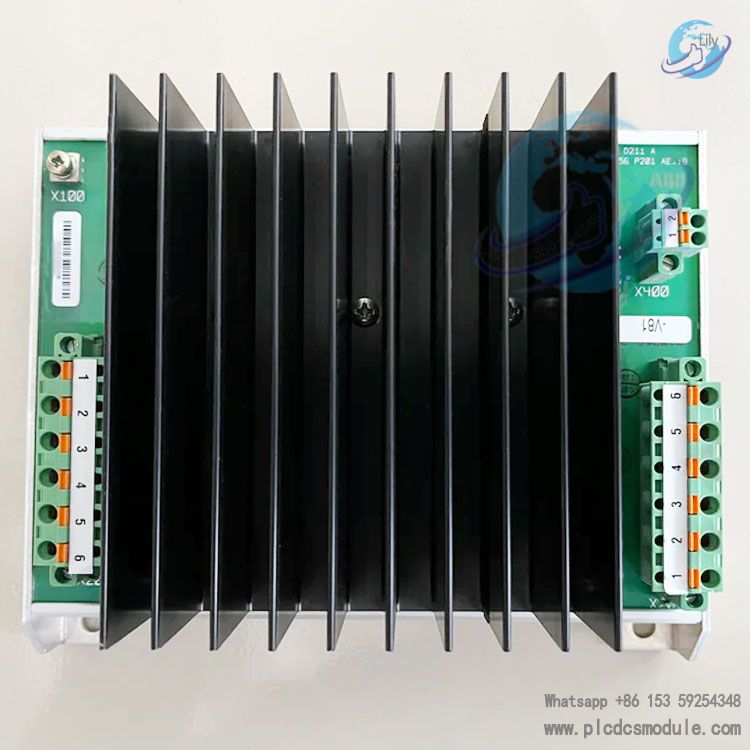
Construction: Die-cast aluminum housing; dual fixing via DIN rail clip and screw, fits standard 3U excitation cabinet slots.Terminals: Green spring-cage screw terminals rated for 1.5mm² wiring with anti-loosening structure to avoid loose connection under long-term vibration in power plants.Multi-level Protection: Integrated four-fold hardware protection against overcurrent, overvoltage, overtemperature and reverse polarity. The faulty channel locks automatically upon fault while remaining channels keep normal operation without module-wide outage.Certifications: CE, UL and IECEx certifications, compliant with China GB/T power equipment standards; approved for control cabinets in hazardous areas of chemical plants and hydropower stations.
FAQ
Q: Can KSD211A101 and KSD211B be directly interchanged?A: Direct replacement is unavailable. Model A runs customized firmware for excitation systems while Model B is a universal DCS module with different pin assignment and internal program. Installing B in excitation cabinets causes distorted signal acquisition and abnormal excitation regulation; replacement must follow original part number strictly.
Q: How many KSD211A101 modules are required per excitation cabinet?A: Standard configuration is two modules per unit (active/standby redundancy). Add one extra module for every additional 8 measurement points exceeding the onboard channel limit.
Maintenance Questions
Q: Power indicator stays off after power-on, troubleshooting?A: First inspect DC24V circuit breaker and loose terminal wiring. If input power is normal yet LED remains off, internal power circuit is damaged and full module replacement is required; on-site component repair is not feasible.
Q: Single channel red alarm with other channels working normally.
A: ①Broken or short-circuited field sensor cable;
②reversed signal polarity. If fault persists after field wiring troubleshooting, the corresponding channel hardware is damaged; isolate the faulty channel and shift signals to spare channels.
Q: Frequent false alarms after thunderstorms, rectification solution?A: Ground instrument shield cables at a single point to cabinet copper earth bar, install surge arresters at sensor front end and DC24V surge protection devices on module power supply to eliminate lightning-induced interference.
Q: Is hot-swap permissible without unit shutdown?A: Hot-plugging is factory-approved. Cut off field instrument power for the faulty channel beforehand and complete swap rapidly to minimize transient system disturbance.