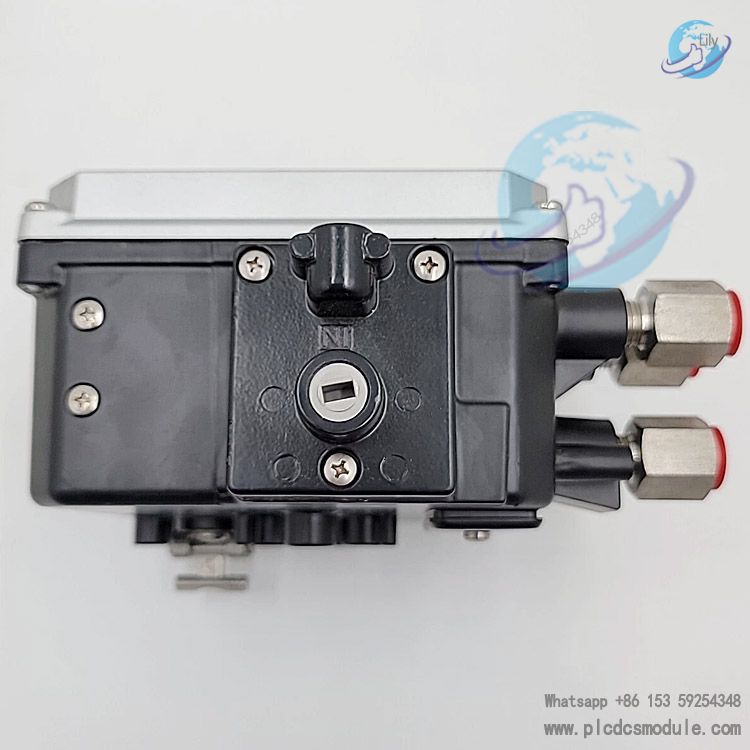
Adopting the force-balance operating principle, it features robust construction and excellent vibration resistance. It serves as a mainstream valve positioner for pneumatic valves in heavy industry, oil & gas, chemical and other high-risk, high-vibration working environments. Its overall protection performance, stability and compatibility are all engineered to adapt to harsh industrial sites.
DOCUMENT DOWNLOAD
 NP727.pdf
Valmet N6eles Positioner.pdf
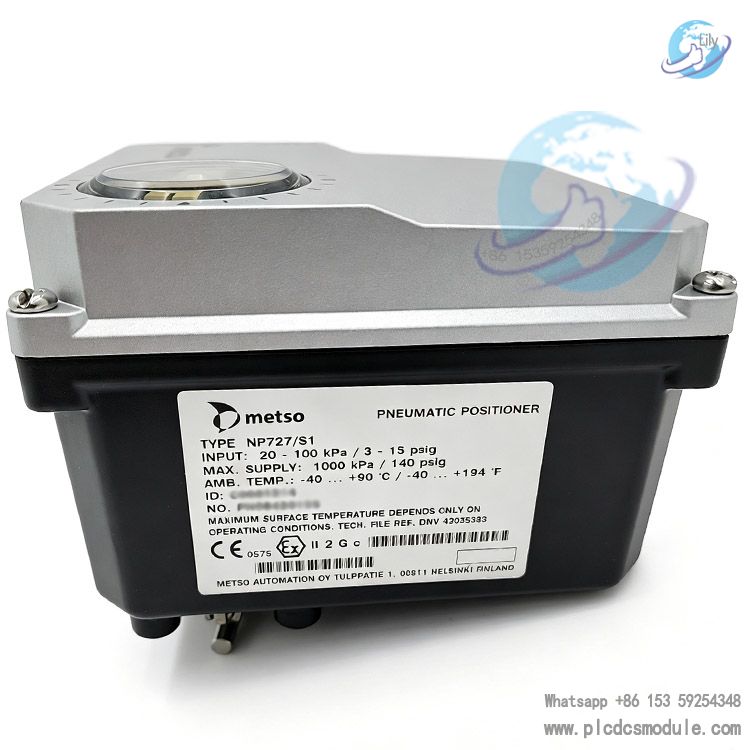
Core Advantages
Excellent Compatibility with Large ActuatorsSpecially designed for large pneumatic actuators with a volume over 30 dm³. Equipped with a high-flow pilot valve, it delivers an air supply capacity of 32.0 m³n/h (18.6 scfm). Sufficient air output effectively eliminates slow response and insufficient thrust of large valves.
Superior Vibration Resistance & Environmental AdaptabilityWith simplified components, lightweight moving parts and rigid mounting structure, its performance deviation is less than 1% under vibration of 1.5 g within 5-100 Hz. The operating temperature ranges from -40 ℃ to 90 ℃, featuring outstanding resistance to extreme temperatures for outdoor sites and high-temperature workshops.
Intrinsic Safety with Fully Pneumatic DesignThe all-pneumatic structure contains no electrical circuits or ignition sources, suitable for flammable and explosive areas. Optional ATEX, FM and CSA explosion-proof certifications are available, making it an ideal choice for gas, petrochemical and oil & gas industries.
Reversible Design without Pipeline ModificationSwitching between direct and reverse action requires no disassembly of on-site air pipelines. Simply flip the built-in reversing component and feedback cam to complete the adjustment, greatly reducing on-site modification and commissioning work.
Stable Operation & Low MaintenanceIt is barely affected by fluctuations in air supply pressure and valve load. Boasting excellent control accuracy with linearity < 2%, dead band < 0.3% and hysteresis < 1.2%, it ensures low failure rate during long-term operation.
Standardized MountingThe S1 interface complies with VDI/VDE 3845 standard. Fitted with H-type clamps, it can be directly mounted on mainstream rotary actuators with universal accessories for easy installation and removal.
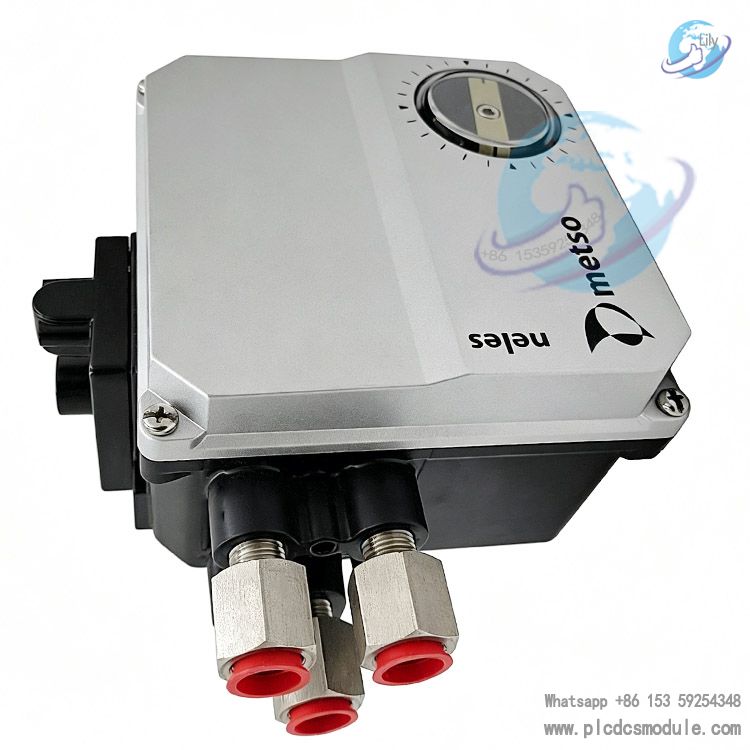
Product Features
1. Basic Structure & Materials
Housing: Made of anodized aluminum alloy with epoxy resin coating for corrosion and wear resistance. The top cover is available in polycarbonate or aluminum alloy. Core internal components adopt stainless steel and aluminum alloy. Standard diaphragms and seals are manufactured from nitrile rubber, offering good resistance to common industrial media.
Overall Weight: Approximately 1.6 kg. The compact and lightweight structure imposes no extra load on actuators.
Protection Rating: Standard IP54; IP65 dustproof and waterproof structure is optional. The S1 interface is exclusively designed for rotary actuators and not applicable to linear globe valve actuators.
2. Technical Parameters
Input Signal: Standard pneumatic signal 20~100 kPa (0.2~1.0 barg / 3~15 psig). Split range control (20~60 kPa, 60~100 kPa) is supported. The maximum rotation angle of the feedback shaft is 95°, with a linear relationship between rotation angle and input signal.
Supply Pressure: Operating air supply pressure: 0.14~1.0 MPa (1.4~10 barg / 20~140 psig). A pressure variation of 10 kPa causes performance deviation less than 0.2%, delivering strong resistance to air supply fluctuation.
Temperature Performance: Ambient temperature range: -40 ℃ ~ 90 ℃. Performance deviation is less than 0.07% per 1 ℃ temperature change. A high-temperature version is optional, with a maximum operating temperature of 120 ℃.
Pneumatic Performance: Equipped with a standard high-flow pilot valve. Air consumption is 1.8 m³n/h, and the maximum air output reaches 32.0 m³n/h. It can steadily drive large-volume actuators under the standard supply pressure of 0.4 MPa.
Control Accuracy: Under normal load conditions, dead band < 0.3%, hysteresis < 1.2%, linearity < 2%, fully meeting the requirements of high-precision throttling regulation.
3. Functional Characteristics
Working Principle: It adopts the force-balance principle. The pressure of input pneumatic signal acts on the diaphragm piston to generate thrust. The actuator position creates a counter-balance force via the feedback spring. When force imbalance occurs, the pilot valve switches the air circuit to drive the actuator until force balance is restored, realizing accurate valve positioning.
Easy Calibration: Zero and span adjustment can be performed after removing the top cover of the positioner. Fine-tuning the zero and span knobs brings minimal interference to set points, enabling simple and efficient calibration.
Operation Mode: Compatible with single-acting and double-acting actuators. It supports split range control and direct/reverse action switching without modifying external pipelines.
Optional Accessories & Configurations: Explosion-proof housing (ATEX II 2 G EEx d IIC T4/T5/T6, FM/CSA Class I/II Div.1), pressure gauge assembly, filter regulator, dedicated module for natural gas service, high-temperature seal assembly and others.
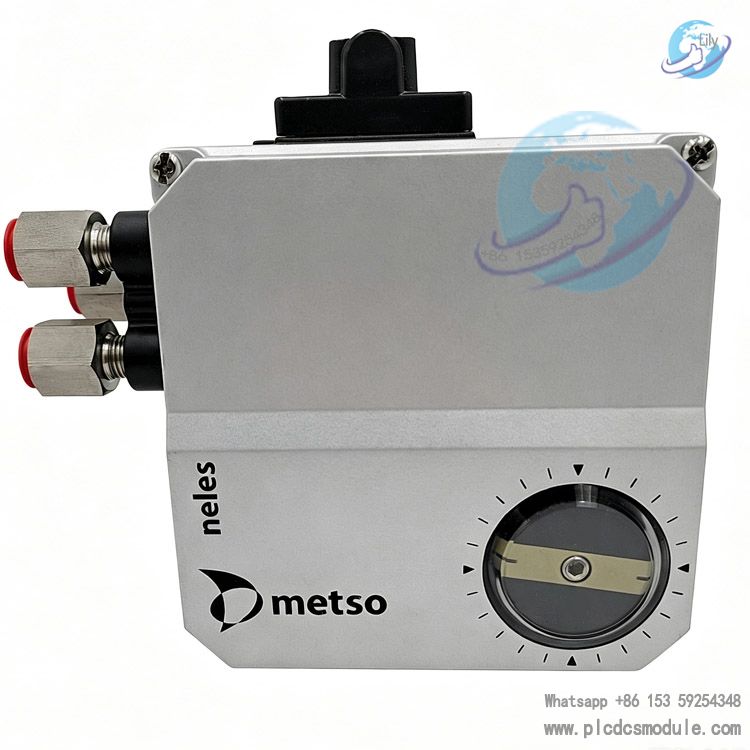
Application Scenarios
Leveraging its all-pneumatic design, high flow capacity, excellent vibration resistance and explosion-proof performance, this positioner is mainly applied to large pneumatic control valves and rotary valves in the following fields:
Oil & Gas Industry
Suitable for long-distance pipelines, gas gathering stations and LNG facilities. Its explosion-proof and all-pneumatic structure adapts to flammable and explosive gas media, while the high-flow design matches large-bore pipeline valves.
Chemical & Coal Chemical Industry
Ideal for process industries including refining units, reactors and distillation towers. It operates stably under severe vibration, high temperature and dusty conditions, and works well with control valves fitted with large diaphragm and piston actuators.
Power Industry
Applied to auxiliary systems as well as desulfurization and denitrification pipelines in thermal power plants. With no electrical signals required, it performs reliably in outdoor and heavily vibrating workshop environments and reduces the risk of circuit failures.
Papermaking & Water Treatment
Used for control valves on large process pipelines. It resists humidity and dust, and the optional IP65 protection rating allows deployment in outdoor water treatment pump stations.
Heavy Industry & Metallurgy
Deployed on control valves for high-temperature smelting and conveying pipelines. It withstands equipment resonance and high temperatures, and the all-pneumatic design eliminates electromagnetic interference.
Application Restrictions
It is exclusively compatible with large pneumatic actuators with a volume above 30 dm³, such as B1CU40 and above, B1JU32 and above, and QP7 series Quadra-Powr™ actuators. The S1 standard mounting interface is recommended for installation on rotary valves.
Frequently Asked Questions
Q1: What does "S1" stand for in NP727/S1? Can it be replaced with other interfaces?A: S1 indicates the positioner mounting interface complies with VDI/VDE 3845 standards. It comes with standard H-type clamps and is designed exclusively for rotary pneumatic actuators. This interface is fixed and cannot be replaced directly. For linear valves, please select models with the suffix "A".
Q2: Is a filter regulator mandatory for use with this positioner?A: It is highly recommended. Moisture and dust in on-site air supply may clog the pilot valve. A 5 μm filter regulator (KS accessory) is available as an original option. For extra-large actuators such as B1CU40 and B1JU32 or higher models, a high-flow filter regulator is required.
Q3: What explosion-proof certifications does NP727 support? Is it applicable to natural gas service?A: Optional certifications include ATEX II 2 G EEx d IIC T4/T5/T6, FM and CSA. A dedicated natural gas module (GN option) is also available, making it suitable for natural gas pipelines and stations.
Q4: How to verify if the on-site actuator is compatible with NP727?A: Check the swept volume of the actuator. It is compatible when the volume exceeds 30 dm³, including B1CU40 and above, B1JU32 and above, and QP7 series Quadra-Powr™ actuators. For small-volume actuators, NP723/NP724 is recommended.
Q5: The positioner receives normal input signal, but the valve does not move at all. How to troubleshoot?A: ① Check if the main air supply is cut off or the air pressure is lower than 0.14 MPa. ② Inspect air line connections for air leakage and pipes for bending or blockage. ③ Dismantle and check if the internal pilot valve is stuck by dust. ④ Verify whether the coupling of the feedback shaft is disconnected or jammed.
Q6: What causes slow valve response and actuation delay?A: As a high-flow model, delayed response is generally caused by insufficient air supply, clogged front filter elements or excessive actuator load. Clean the filter cartridge of the filter regulator and check air pressure. Meanwhile, inspect for over-tight packing or stiction on the valve stem.
Q7: Zero drift occurs after long-term operation. How to resolve it?A: Zero drift is mainly caused by temperature variation, valve stem friction or fatigue of the feedback spring. Remove the top cover and readjust the zero screw. Perform full range calibration every 6 to 12 months. For high-vibration environments, select the enhanced anti-vibration version (W option).
Q8: How to select a suitable model when the ambient temperature exceeds 90 ℃?A: The standard NP727 has a maximum operating temperature of 90 ℃. For high-temperature conditions, choose the H high-temperature option equipped with fluororubber diaphragms and seals, which can withstand up to 120 ℃. Note that the high-temperature version cannot be fitted with A (pressure gauge) and KS (filter regulator) accessories.