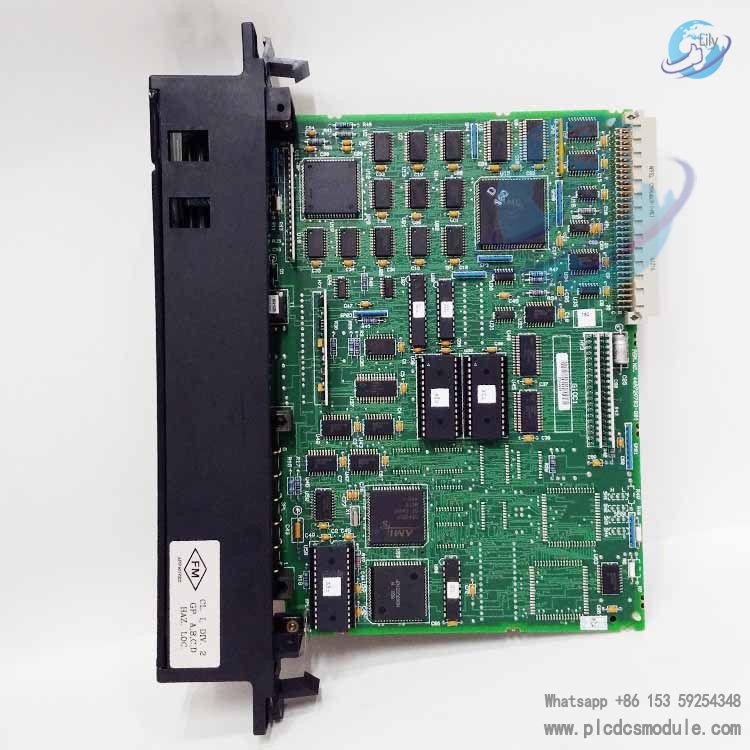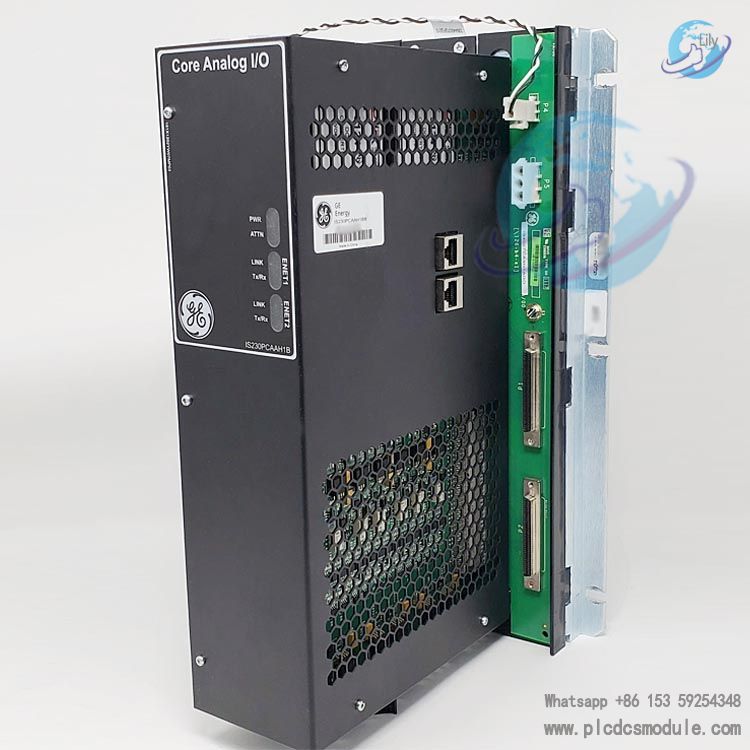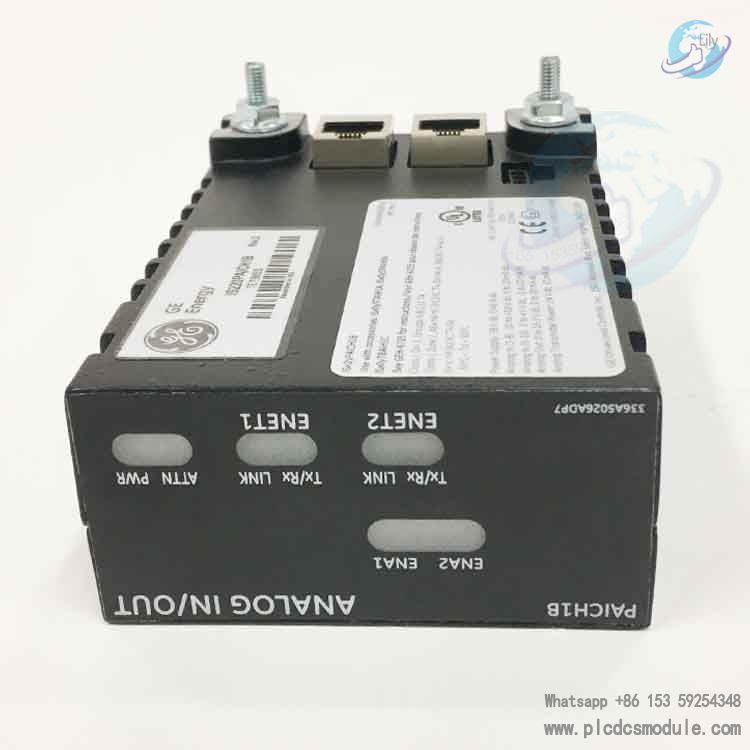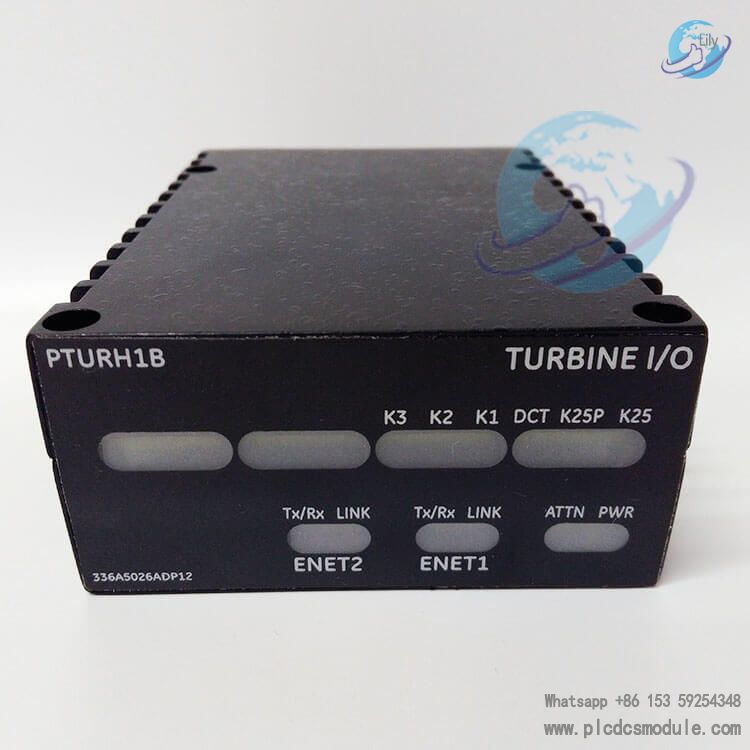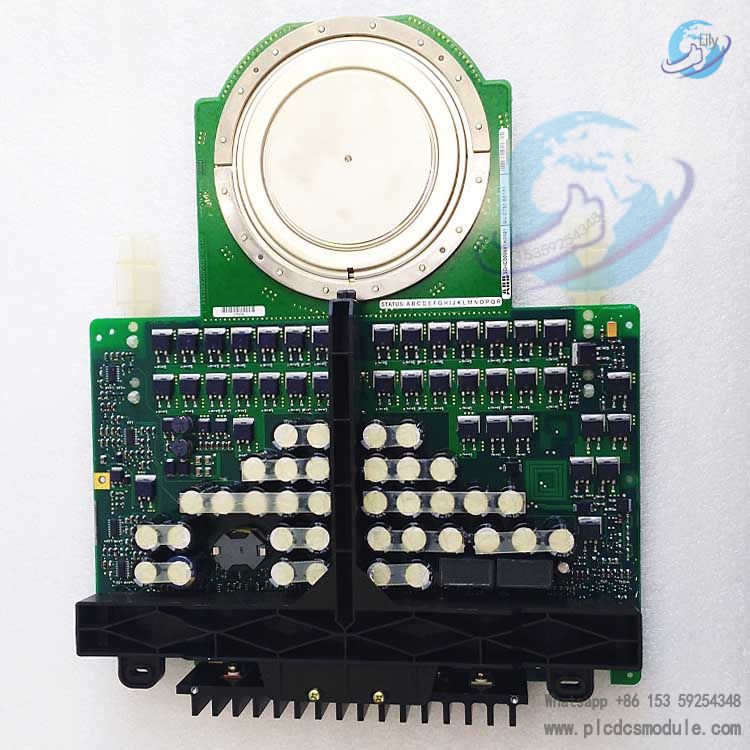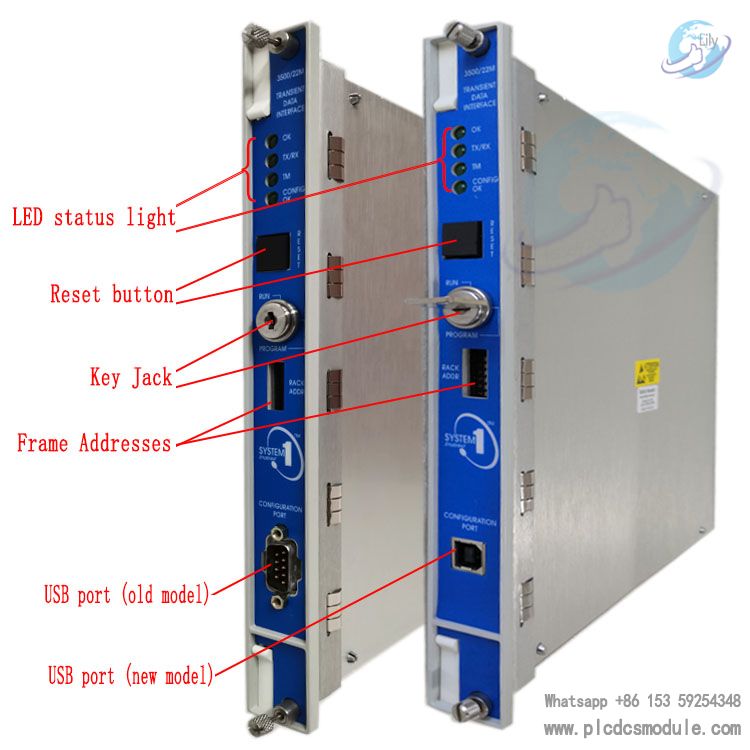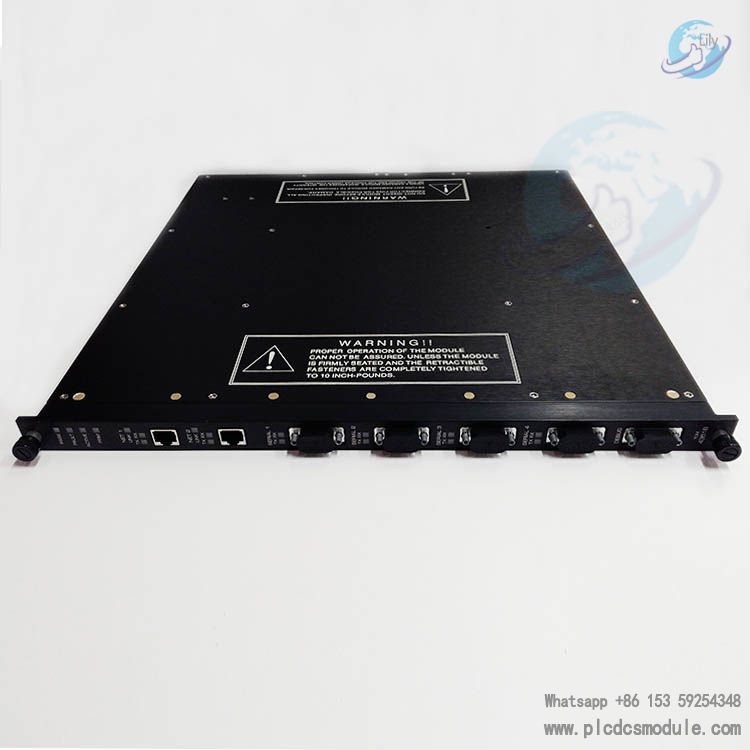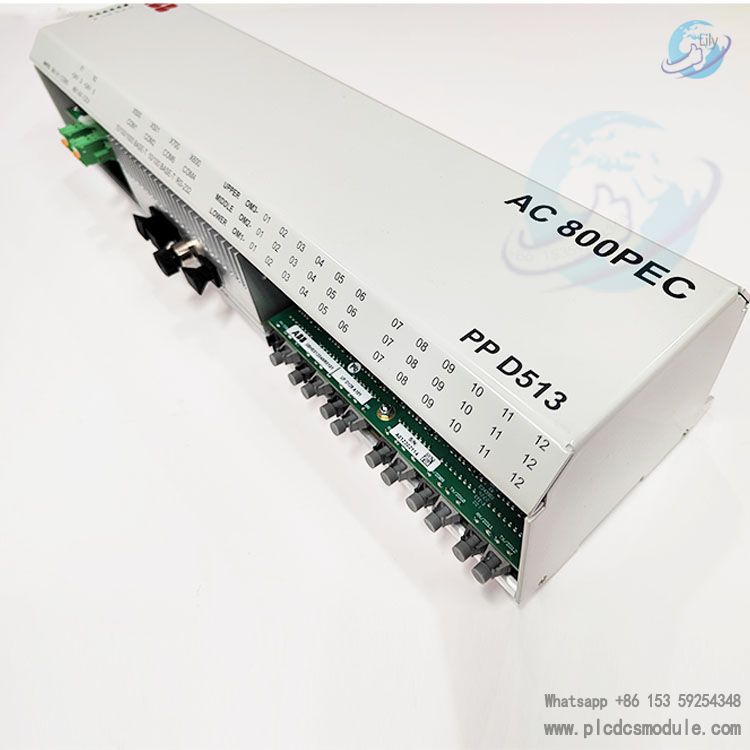


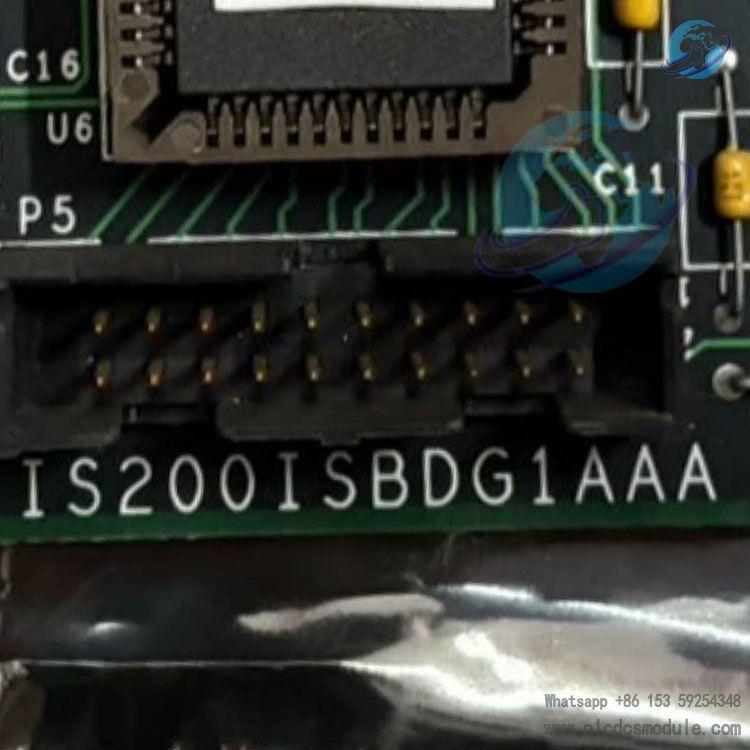
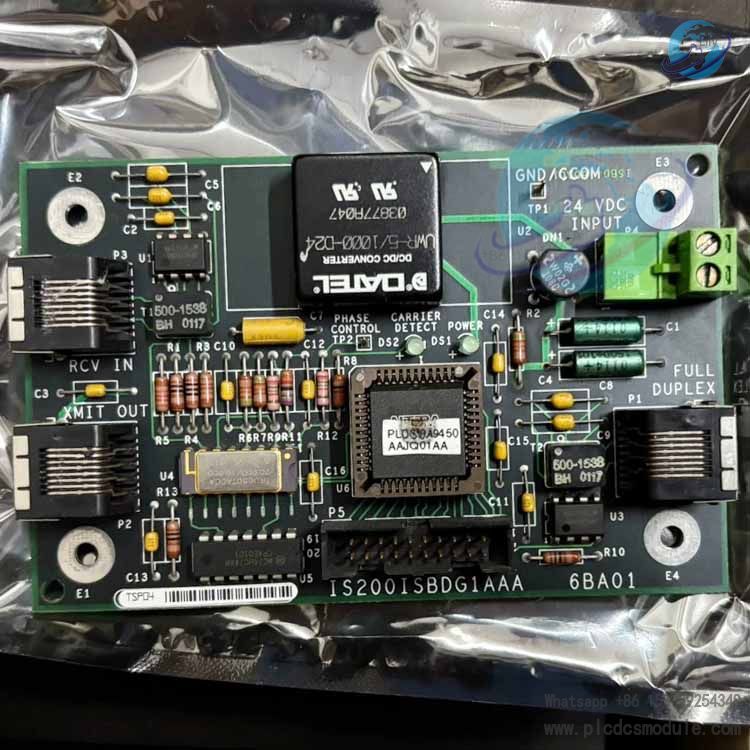
IS200ISBDG1AAA board is a dedicated InSync bus synchronization delay processing module for GE Speedtronic Mark VI and EX2100 excitation control systems. Part of GE IS200 innovative hardware platform, it serves as a factory-original core timing management component for gas and steam turbine generator units.
This board performs high-precision timing delay correction on control messages, speed feedback signals and excitation synchronization signals transmitted via the high-speed InSync bus. Inside the control cabinet, inconsistent wiring lengths between multiple main controllers, I/O modules and excitation rectifier bridges will cause signal transmission time offsets, which this module effectively eliminates.
For units built with triple redundant control architecture, the board standardizes clock references, output commands and feedback signals across all control units to achieve fully aligned signal timing on every channel. It acts as an essential timing benchmark component to guarantee smooth grid connection, stable speed regulation and reliable operation of the excitation circuit.
It corresponds to GE factory technical manual GEI-100284 and is compatible with complete Mark VI control cabinets of both single-redundant and triple-redundant configurations.
The suffix AAA indicates a fully factory-assembled version with standard full sets of onboard circuits, external ports and filter components without any omitted parts. It is directly interchangeable with the base hardware IS200ISBDG1A for cabinet installation.
Detailed Product Technical Specifications
1. Hardware Interface Definition
Terminal Block P4: 24VDC module power input (standard system control power supply)P1: Full-duplex InSync bus communication interfaceP2: Bus transmission XMIT Out signal portP3: Bus reception RCV In signal portP5: Vertical pin-type ribbon expansion connector for connection to backplane synchronous busFour-corner ground terminals E1/E2/E3/E4: Overall unit shielding grounding and ESD discharge points
2. Electrical and Physical Specifications
Number of channels: 12 independent synchronous delay channelsInput signal range: 1~5VDC transmitter / feedback signalsOverall dimensions: 10.16 cm (W) × 33.02 cm (H), standard rack-mounted card form factorNet weight: approx. 397 g (14 oz)Power supply: 24VDC ±10% DC power supplyDelay adjustment: Software online adjustable segmented delay parameters ranging from 0 to 100 ns
3. Functional Features
- InSync bus message timing equalization to compensate transmission path delay discrepancies between different cards
- Phase signal delay calibration for generator synchronous grid connection to achieve zero phase deviation during synchronous closing
- Timing alignment for multi-channel control signals including speed encoders, fuel valves and excitation bridges
- Real-time hardware alarms for bus transmit/receive faults, undervoltage and overtemperature conditions
- Built-in ESD protection with factory-applied anti-static coating; original manufacturer’s anti-static installation specifications included
- Support for online parameter configuration via system software; delay adjustment without hardware jumper modification or unit disassembly
Core Advantages
Nanosecond High-Precision Timing Calibration
Equipped with built-in adjustable delay circuits offering a maximum delay range of 100 ns and delay accuracy of ±1 ns, which greatly outperforms the ±5 ns error standard of general industrial delay boards. It completely eliminates signal transmission time differences across multiple boards, preventing critical equipment hazards such as gas turbine overspeed, grid synchronization loss, and excitation oscillation.
Native Seamless Compatibility with Mark VI Systems
The card features factory-standard dedicated interfaces P1 to P5, and its backplane slot positioning structure matches Mark VI racks. Plug-and-play operation is supported without adapter boards or custom wiring. Compared with third-party compatible boards, it cuts installation man-hours by 30% and eliminates bus protocol compatibility conflicts entirely.
Industrial-Grade Robust Design for Wide Operating Conditions
The standard operating temperature range spans -30°C to +65°C, with short-term extreme temperature tolerance from -40°C to +85°C. It suits enclosed high-temperature gas turbine control cabinets and power plant environments with heavy dust and high humidity. It supports mixed logic levels of 3.3 V ~ 5 V TTL/CMOS and is compatible with all signal loops of the full system.
Comprehensive Fault Self-Diagnosis and Redundancy Compatibility
It monitors the 24 VDC power supply, bus transmit/receive links and internal timing chip status in real time, with fault signals uploaded to the system HMI. Fully compatible with the Mark VI Triple Modular Redundant (TMR) architecture, a single module fault will not disrupt the operation of the entire synchronous bus, enabling unit maintenance without shutdown.
Integrated EMC Anti-Electromagnetic Interference Circuitry
Multi-layer shielding ground planes and independent isolated filter circuits are integrated on the board to suppress EMI/RFI interference generated by frequency converters and high-voltage excitation cabinets. The bus message packet loss rate approaches zero under heavy electromagnetic interference in power plants, ensuring stable output of grid synchronization signals.
Applicable Industries
Thermal Power Generation Industry
Steam turbine generator sets and Mark VI speed regulation & excitation control systems for captive power plants, ensuring timing synchronization during unit grid connection and load regulation.
Gas Power Generation Industry
Heavy-duty gas turbine combined-cycle power plants and distributed gas turbine power plants equipped with EX2100 excitation systems, suppressing dynamic speed regulation oscillation of gas turbines.
Oil & Gas Energy Industry
Self-contained power stations at oil & gas fields and offshore platform generator sets, delivering stable synchronous control under high humidity, high heat and strong vibration working conditions.
Metallurgy & Steel Industry
Waste heat generator units at steel mill captive power plants, realizing unified timing calibration for multi-unit parallel operation.
Chemical & Petrochemical Industry
Self-contained generator sets for large chemical plants, guaranteeing timing accuracy for 7×24-hour non-stop continuous operation.
Hydropower Auxiliary Equipment Control
GE excitation and speed regulation systems matched with hydroelectric generators, enabling precise timing control for synchronous grid connection.
Product Comparison
| Comparison Item | IS200ISBDG1AAA (InSync Bus Delay Card) | IS200ISBBG1AAB (Basic InSync Bus Interface Card) | IS200ICBDH1ABA (Interconnect Control Bus Card) |
|---|---|---|---|
| Core Function | Nanosecond-level delay compensation and timing calibration for bus signals | Basic InSync bus signal transmission, reception and relay forwarding | Cross-chassis main controller data exchange and logic signal transfer |
| Delay Performance | Adjustable range: 0~100 ns, high precision ±1 ns | No delay adjustment function, signal forwarding only | No hardware delay circuit |
| Compatible Systems | Full sets of Mark VI and EX2100 excitation systems | Only basic single-redundancy simple Mark VI cabinets | New-generation Mark VIe control system; incompatible with legacy Mark VI |
| Interface Configuration | Full-duplex P1-P5 interfaces + 24V power terminals | Basic transmit/receive interfaces P1/P2 only, no independent power terminals | Multi-channel parallel data bus interfaces, no synchronous delay channels |
| Application Scenarios | Generator grid connection, precise timing control for triple modular redundancy systems | Small simple units with no high-precision synchronization requirements | Distributed main controller data exchange across multiple racks |
| Procurement Positioning | Essential core timing card, standard factory configuration for generating units | Low-cost auxiliary basic card | Exclusive for new Mark VIe systems, not compatible with old Mark VI |
| Failure Impact | Failure directly causes out-of-step grid connection and disordered speed regulation | Only bus communication interruption, no risk of phase offset | Only cross-chassis communication interrupted; local control remains functional |
Frequently Asked Questions
Q: Can IS200ISBDG1AAA and IS200ISBDG1A be directly interchanged?A: Direct hardware replacement is supported. IS200ISBDG1AAA is the fully assembled upgraded version of IS200ISBDG1A with complete compatibility in components, pin definitions and software parameters. The AAA variant features optimized filtering and grounding circuits, making it the preferred choice for power plants under complex operating conditions.
Q: Is this module compatible with the Mark VIe control system?A: Factory specifications only support Mark VI and EX2100 excitation systems. The Mark VIe adopts an upgraded bus architecture, which requires IS220 series synchronization boards; IS200ISBDG1AAA cannot be directly used.
Q: How many IS200ISBDG1AAA modules are required for one triple modular redundant Mark VI cabinet?A: The standard triple redundant configuration comes with 3 units, each corresponding to an independent InSync synchronous bus to realize redundant timing calibration. Only 1 module is needed for simple single-redundancy units.
Q: The HMI displays a fault of excessive bus delay deviation on the ISBD module. What is the troubleshooting sequence?A:① Check for voltage fluctuations on the P4 24V power supply;② Re-seat the P1-P5 bus ribbon cables and clean oxidized pins;③ Inspect whether cabinet ground terminals are loose;④ Reset delay parameters via software and perform recalibration;⑤ Replace the module if hardware damage is confirmed.
Q: What consequences will occur if the module operating temperature exceeds 70°C?A: Long-term operation above 70°C will cause accuracy drift of the internal delay chips and increased synchronous phase deviation. In severe cases, bus alarms will be triggered and unit grid connection will fail. Clean cabinet filter screens and install additional cooling fans to keep operating temperature ≤65°C.
Q: What damage may occur if anti-static procedures are not followed during module disassembly and installation?A: The on-board timing chips and bus transceiver chips are extremely vulnerable to electrostatic breakdown. No visible physical damage will appear, yet latent faults such as lost delay accuracy and bus disconnection will occur with extremely high maintenance costs. Strict anti-static protocols must be followed during all disassembly and assembly work.
Q: Can the unit carry load for a short period after a module failure?A: In a triple redundant system, the unit can operate under load temporarily when a single module fails. However, grid connection and large load adjustments are prohibited, and spare part replacement must be completed within 48 hours. For single-redundancy systems, the unit must immediately reduce load and shut down for module replacement to prevent out-of-step tripping.