

YOKOGAWA ANB10D‑415 ESB Dual‑Redundant ESB Bus Node Unit
1. Product Overview
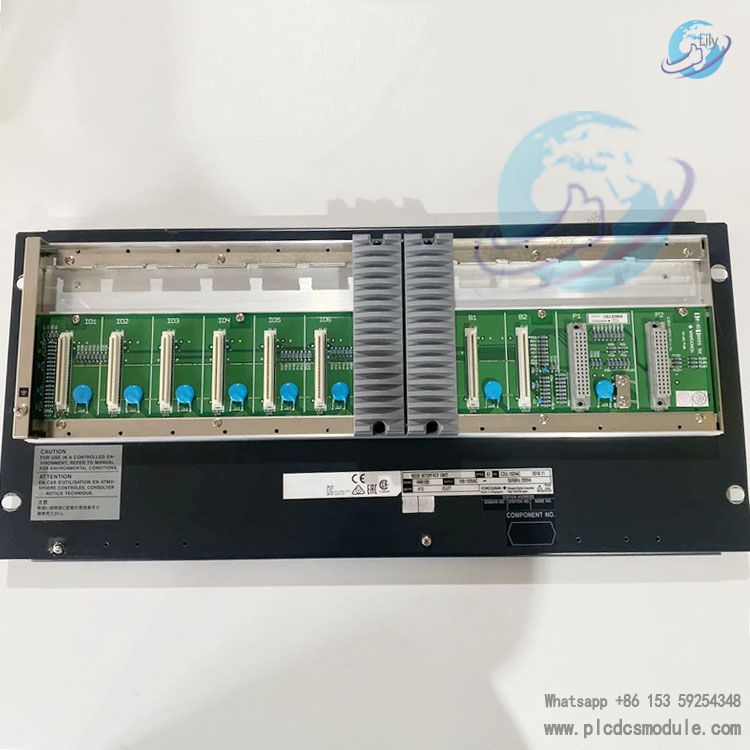
YOKOGAWA ANB10D‑415 is a dual‑redundant ESB Bus Node Unit developed for Yokogawa FIO distributed I/O system. Serving as the core intermediate interface between the Field Control Unit (FCU) and field analog/digital I/O modules, the ANB10D‑415 transmits field signals to controllers via the dual‑redundant ESB bus, while supplying stable power to I/O modules and field transmitters.
The ANB10D‑415 supports up to 8 mixed I/O modules. Equipped with dual‑redundant power supply and dual‑redundant SB401 slave modules, it guarantees non‑stop operation for continuous‑process industries such as chemical plants and power stations. It is the standard local I/O expansion hardware for CENTUM VP and CENTUM CS3000 DCS systems. The single‑bus counterpart ANB10S is only applied to low‑risk auxiliary control loops. Benefiting from full dual‑redundant architecture, the ANB10D‑415 is the mainstream selection for core control cabinets.
Download

2. Technical Specifications
Basic Hardware Specifications
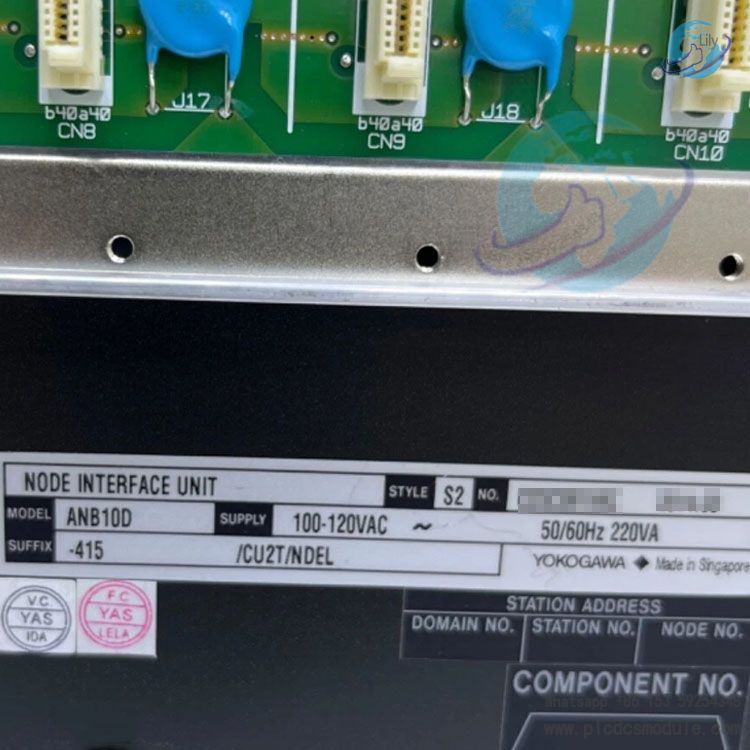
- Model Definition: ANB10D‑415; ANB10D = Dual‑redundant ESB Bus Node Unit; suffix ‑4 = Dual‑redundant power; 1 = 100‑120V AC power supply; 5 = Basic type without explosion‑proof protection
- Overall Dimension: 482.6mm(W) × 221.5mm(H) × 205mm(D), standard 19‑inch rack‑mount, fixed with M5 screws
- Gross Weight: 10kg with full set of 8 I/O modules loaded
- Slot Layout: 2 power supply slots, 2 ESB bus slave slots, 8 I/O expansion slots
- Built‑in Compatible Modules: PW481/PW482/PW484 redundant power modules, SB401 dual ESB slave modules
Electrical Power Specifications
- Rated Input: 100‑120V AC, 50/60Hz
- Full‑load Consumption: 200 VA, rated power 120 W
- DC Power Option (suffix 4 series): 24 V DC, rated operating current 5.5 A
- Terminal Screw Standard: M4 for power circuit wiring
Bus & Expansion Capacity
- Communication Bus: Dual‑redundant Enhanced Serial Bus (ESB). EC401/EC402 ESB coupler modules shall be installed in the FCU rack.
- Maximum Node Quantity per FCU:
- AFV30/AFV40 basic firmware: Max. 3 units of ANB10D‑415
- With LFS1750‑V1 Node Expansion Package: Max. 9 units of ANB10D‑415
- With LFS1750‑V2 Node Expansion Package: Max. 13 units of ANB10D‑415
- Cabinet Installation Limit: Up to 11 ANB10‑series node units in a single AFV40 cabinet
Environmental & Compliance Specifications
- Standard Operating Temperature: 0℃~60℃; G3 wide‑temperature variant supports ‑20℃~70℃
- Humidity Range: 5%~95%RH, non‑condensing
- Global Certifications: CE, CSA, EAC, RCM, KC; explosion‑proof variants with FM Non‑Incendive, CSA Non‑Incendive certification
Insulation Accessory: T9083NA insulating partition; mandatory for I/O modules with built‑in barriers installed at slot 8
3. Core Advantages
- Full‑link dual‑redundant design: Supports redundant ESB bus and redundant power supply. Single‑channel failure of bus or power will not interrupt field I/O data acquisition, minimizing system downtime risks.
- Integrated power distribution & signal conversion: Combines I/O power supply, transmitter power feed and ESB signal conversion in one unit, simplifying cabinet wiring and reducing intermediate hardware components.
- Flexible mixed I/O expansion: Up to 8 slots freely accept analog input, analog output and digital contact modules, compatible with field signals of temperature, pressure, flow rate and valve feedback.
- Standard 19‑inch rack design: Fits all Yokogawa FIO cabinets. Easy disassembly and module replacement for on‑site maintenance and system expansion.
- Multi‑industry compliance certifications: Basic ANB10D‑415 for standard control rooms; E/F/G suffix variants for hazardous explosive process zones, covering most process automation scenarios.
- Scalable system capacity: With /NDEL node expansion license, the ANB10D‑415 breaks FCU node‑quantity limits for large‑scale plant‑wide DCS control systems.
4. Product Features
- Standardized suffix coding: The ANB10D series differentiates power, redundancy, explosion‑proof protection and temperature range via suffix codes. ANB10D‑415 serves as the standard AC dual‑redundant base model for straightforward selection.
- Optional dedicated ESB bus connectors: /CU2N (without terminator) and /CU2T (with terminator) for ANB10D‑415 dual bus. 2 sets are required for redundant bus configuration.
- Layered modular architecture: Power, bus and I/O modules support independent hot‑swap. Only the faulty single module needs replacement instead of disassembling the whole ANB10D‑415 unit.
- Optional ISA G3 corrosion‑resistant grade: ANB10D variants with G3 option withstand heavy dust and mild corrosive gas, suitable for coal‑chemical and flue‑gas denitrification control rooms.
- Complete spare accessories: ADCV01 I/O dummy cover, ADCV02 power dummy cover, S9049PM insulating bush and T9083NA partition are provided for full installation without extra procurement.
5. Application Fields
- Oil & Chemical Industry: DCS local I/O acquisition for refineries, fine‑chemical reactors and oil‑gas gathering stations. Dual redundancy of ANB10D‑415 ensures continuous production.
- Thermal & New Energy Power: Boiler temperature/pressure monitoring, turbine valve control, signal access for PV energy‑storage converters.
- Water Treatment: Flow & pH signal transmission for municipal sewage, industrial circulating water and pure‑water production.
- Pharmaceutical Industry: Clean‑room temperature control, stable signal transmission for batching & metering loops.
- Metallurgy Industry: I/O expansion for monitoring cabinets of reheating furnaces and blast‑furnace pressure & temperature.
- Paper & Building Materials: Hardware nodes for production‑line flow, liquid‑level and rotating‑speed control.
6. Working Principle
Adopting a three‑layer data‑interaction architecture, the ANB10D‑415 acts as the intermediate layer between field I/O and the controller:
- Field Acquisition Layer: Transmitters and limit switches output 4‑20mA or contact signals into I/O modules plugged into ANB10D‑415. Analog‑to‑digital ADC conversion is completed by I/O cards.
- Node Processing Layer: Dual‑redundant SB401 slave modules inside ANB10D‑415 encapsulate digital signals into ESB‑bus protocol data and transmit via two parallel bus channels. PW48x power modules continuously supply isolated power for I/O cards and field instruments.
- Controller Interaction Layer: EC401/EC402 master coupler modules in the FCU rack receive ESB data uploaded from ANB10D‑415, and send down control output commands to I/O modules to close control loops. If one ESB channel or power supply fails, ANB10D‑415 automatically switches to the standby link without data loss or control deviation.
7. Yokogawa Same‑Series Comparison
ANB10S Single ESB Bus Node Unit: Single bus & single power without redundancy, low cost only for auxiliary monitoring loops, cannot replace ANB10D-415 for critical process circuits.
8. Matching Compatible Part Numbers
FCU Controller‑Side Hardware
- Field Control Unit: AFV30D, AFV40D, AFV10D (Vnet/IP architecture), AFF50D compact controller
- ESB Master Coupler Module: EC401 general type, EC402 dual‑port for AFV30/AFV40
- Expansion Firmware Package: LFS1750‑V1, LFS1750‑V2 (raise maximum mount quantity of ANB10D‑415)
- Node Expansion License Code: /NDEL (mandatory when connecting ANB10D‑415 to AFV‑series FCU)
Internal Modules for ANB10D‑415
- Redundant Power Supply: PW481, PW482, PW484 (2 pcs for paired installation)
- Redundant ESB Slave Module: SB401 (2 pcs for paired installation)
Plug‑in I/O Modules for ANB10D‑415 8 Slots
- AAI141 Analog Input Module, AAO141 Analog Output Module, ADV151 Digital Input Module, ADV551 Digital Output Module, AAT145 RTD Temperature Acquisition Module
Connectors & Installation Accessories
- ESB Bus Connector Kit: /CU2N (S9562FA), /CU2T (S9564FA with terminator resistor)
- Mounting Parts: T9083NA insulating partition, ADCV01 I/O dummy cover, ADCV02 power dummy cover, S9049PM insulating bush
9. Frequently Asked Questions
10. Yokogawa Related Product List
- ANB10S Single ESB Bus Node Unit
- ANB10D‑415 Dual‑Redundant ESB Bus Node Unit
- ANB10D‑425 220V Dual‑Redundant ESB Bus Node Unit
- ANB11D Dual‑Redundant Optical ESB Bus Node Unit
- ANR10D Dual‑Redundant ER Remote Bus Node Unit
- EC402 ESB Bus Master Coupler Module
- PW481 FIO Redundant Power Supply Module
- SB401 ESB Bus Slave Interface Module
- AAI141 16‑channel Analog Input Module
- ADV151 Digital Input Module
- AFV40D Dual‑Redundant Field Control Unit
- EB401 ER Bus Master Interface Module
- T9083NA Node Unit Insulating Partition