

Honeywell DC‑PDOD51 Digital Output 24V Module (51454820‑175, Series‑C)
Product Overview
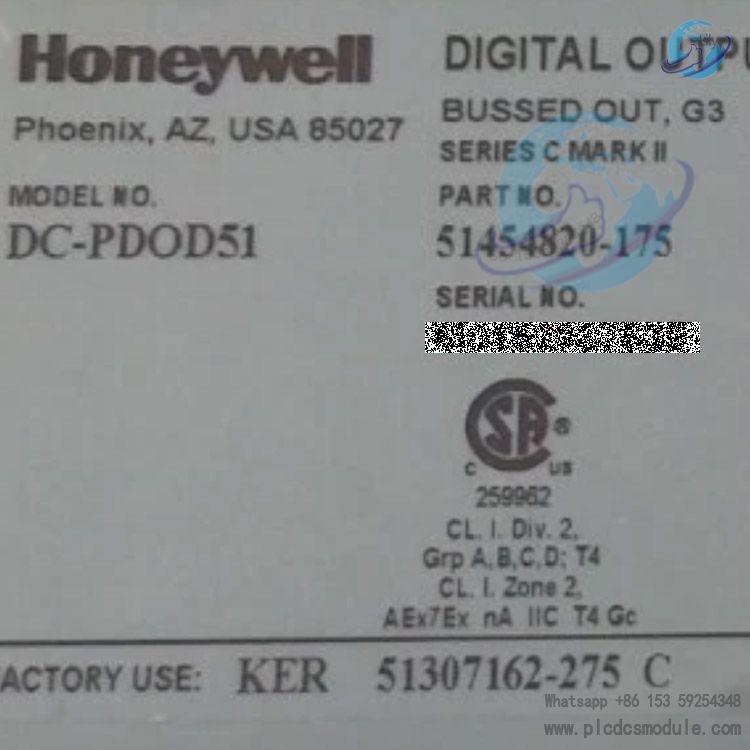
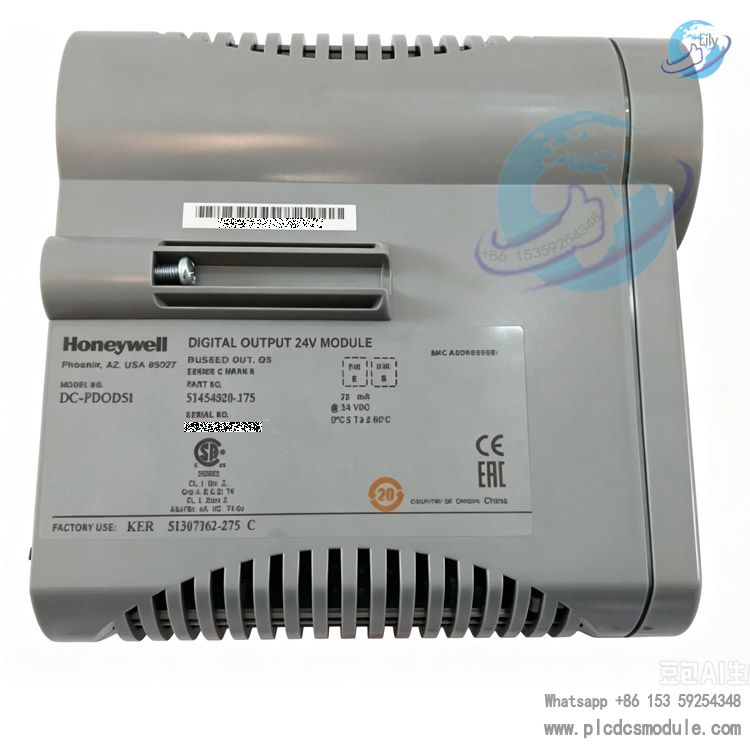
Honeywell DC‑PDOD51 (Part Number: 51454820‑175) is a high‑density digital output module within the Experion PKS Series‑C I/O family. It is the native matching I/O card for Honeywell C200/C300 controllers and only fits Series‑C I/O racks; it is incompatible with third‑party PLC and DCS systems. DC‑PDOD51 51454820‑175 is a Sink / open‑collector type 24VDC digital output module. It receives logic commands issued by the controller backplane bus and outputs switching signals to drive field relays, solenoid valves, indicator lamps, alarm devices and other field actuators. Electrical isolation exists between the controller side and field circuits, with channel‑level fault diagnostics that can report fault information such as short‑circuit and load abnormalities. The hardware supports hot‑swap of the module body. Field cables cannot connect directly to the module; dedicated IOTA terminal bases are mandatory for field wiring. Widely used in process‑industry DCS control scenarios including chemical, oil‑gas production, refinery, thermal power and pharmaceutical plants. Minimum software requirement: Experion PKS R410 or higher firmware; older system versions cannot recognize this hardware.
Core Technical Specifications
| Parameter Item | Parameter Value |
| Complete Model | DC‑PDOD51; Part Number 51454820‑175; Series‑C |
| Module Type | Digital Output Module DO, Sink (Open‑Collector) |
| Output Channels | 32‑channel high‑density output |
| Load Voltage Range | 15‑30 VDC, nominal 24VDC |
| Max. Single‑Channel Load Current | 100 mA (0.1A) |
| System‑to‑Field Isolation Rating | 1000 VAC RMS |
| Turn‑on / Turn‑off Response Time | ≤10 ms |
| Off‑state Leakage Current | ≤100 μA |
| Backplane Scan Cycle | Standard mode 20 ms; Fast mode 5 ms |
| Operating Temperature | ‑40 ℃ ~ +70 ℃ |
| Storage Temperature | ‑40 ℃ ~ +85 ℃ |
| Relative Humidity | 5%‑95% RH, non‑condensing |
| Ingress Protection | IP20 (cabinet‑mount use only) |
| Mounting | Series‑C I/O rack slot mounting; module hot‑swap supported |
| Matching IOTA Bases | CC‑TDOD51 (non‑redundant, 9 inch), CC‑TDOD61 (redundant, 12 inch) |
| System Compatibility | Experion PKS C200, C300 controller, Series‑C I/O backplane bus; software R410 and above |
| Diagnostic Functions | Channel short‑circuit detection, load monitoring, module self‑test, hardware fault alarm upload |
| Fail‑Safe Logic | Output returns to configured safe state upon communication loss / module power loss |
| Indicator LEDs | Front‑panel LEDs for run status, communication, fault and channel output state |
| Weight | Approx. 0.45 kg |
| Dimensions | Standard Series‑C IOM form‑factor, fits 9/12‑inch IOTA base racks |
Main Hardware Features
- High‑density I/O design: 32 DO channels per card, saving cabinet space and reducing rack quantity for dense‑point process units.
- Galvanic isolation: 1000VAC isolation between controller and field side, blocking ground‑loop and surge propagation; single‑channel faults will not damage the whole module.
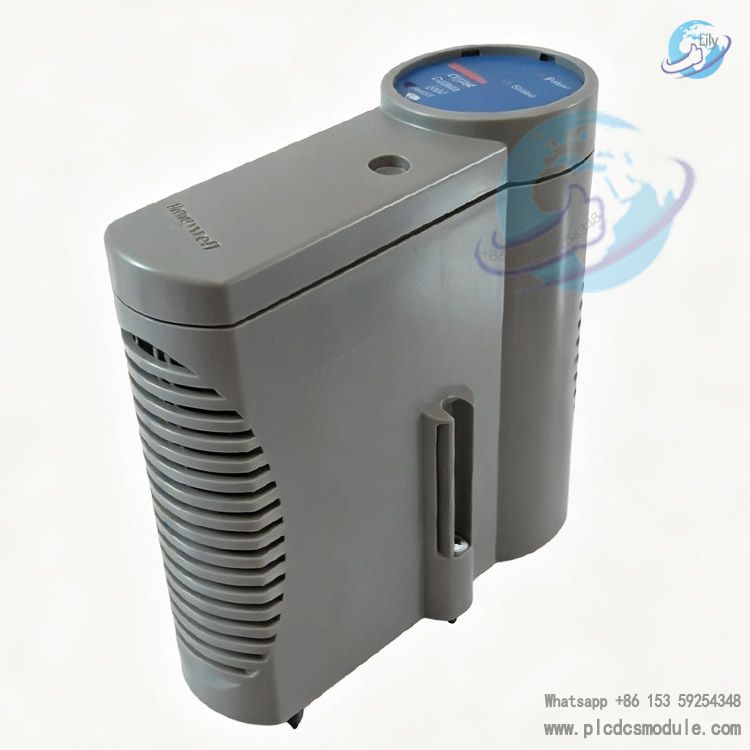
- Front‑panel LED indicators: Visible run, bus communication, hardware fault and channel output status for on‑site inspection without relying fully on HMI screens.
- Built‑in diagnostics: Real‑time per‑channel monitoring; short‑circuit and load anomalies generate diagnostic tags with alarms sent to Experion HMI for fast wiring / load‑fault localization.
- Hot‑swap support: Module body can be replaced while the I/O rack remains powered without disturbing other cards; IOTA wiring bases must NOT be hot‑swapped.
- Configurable fail‑safe logic: Define safe output states under communication‑loss or module‑fault conditions within Control Builder to guarantee interlock safety.
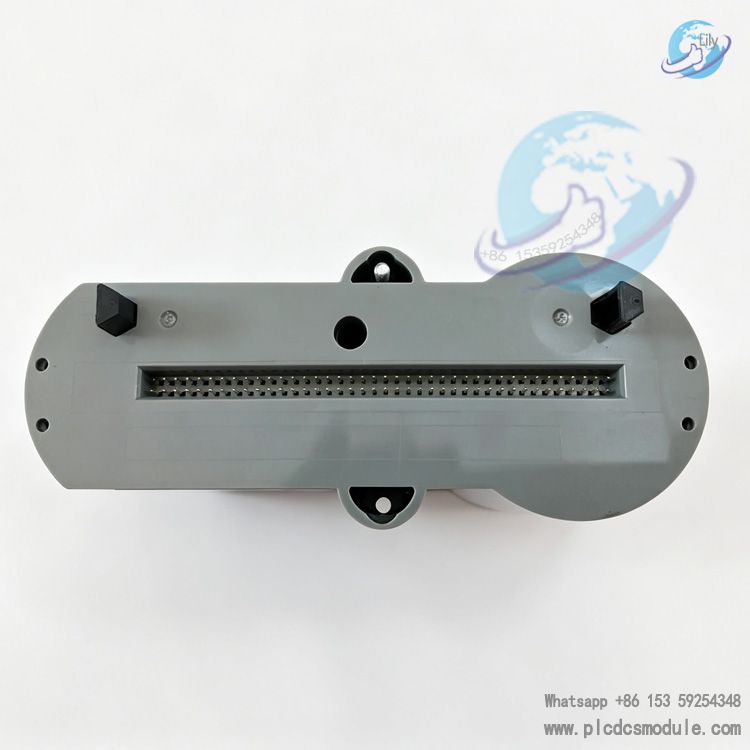
- Split IOTA wiring architecture: Module separated from terminal base; all field cables terminate on IOTA. Module replacement requires no field‑cable disconnection, lowering construction risk and human‑wiring errors.
- Inductive‑load note: When driving solenoid valves or relay coils, fit external free‑wheeling diodes across inductive loads to suppress reverse‑voltage spikes and protect output channels.
IOTA Base Selection Guide
- CC‑TDOD51 (Non‑redundant, 9 inch): Standard single‑module setup. One DC‑PDOD51 pairs with one CC‑TDOD51 base, for general non‑critical control loops with smaller cabinet footprint.
- CC‑TDOD61 (Redundant, 12 inch): Redundant IOTA base accepting two DC‑PDOD51 modules for output redundancy. Used for interlock and emergency‑shut‑down critical loops; voting logic is implemented in control‑system configuration, not within base hardware itself.
Note: IOTA base defines field wiring layout and ground reference. Project selection must confirm matching base model.
Application Scenarios
- Petrochemical DCS interlock outputs, solenoid‑valve drive and valve‑control loops
- Thermal‑power plant auxiliary‑equipment control, audible‑visual alarm lamps and intermediate‑relay control circuits
- Oil‑gas processing units, fine‑chemical and pharmaceutical industry discrete actuator control
- Exclusive for Honeywell Experion PKS Series‑C DCS platform; not compatible with third‑party control systems
Installation, Commissioning & On‑Site O&M Notes
- ESD protection is mandatory during module handling; wear anti‑static wrist‑straps. Hot‑swap is allowed for module body only. Never hot‑swap IOTA bases; live removal will cause permanent hardware damage.
- Stable external 24VDC field supply required; load voltage shall not exceed 30VDC upper limit. Single‑channel current must stay under 100 mA. High‑power loads need intermediate‑relay power conversion.
- Fit external free‑wheeling diodes across inductive loads (solenoid valves, relay coils) to absorb reverse electromotive force and prevent channel breakdown by voltage spikes.
- Use shielded twisted‑pair for field signal cables. Route signal cables separately from power cables to reduce EMI; keep DO cables apart from analog wiring to avoid analog‑acquisition interference.
- After wiring completion, complete hardware configuration in Experion Control Builder, download project, perform channel‑force tests and verify zero diagnostic alarms.
- Routine maintenance: Periodically check IOTA terminal torque and DCS alarm logs. If relays fail to release reliably, check effects of off‑state leakage current. Add bleeder resistors for high‑impedance‑load conditions if needed.
- Firmware requirement: Experion PKS software version ≥ R410; controllers running older releases cannot recognize DC‑PDOD51 hardware.
FAQ
Q1: Can DC‑PDOD51 drive high‑current solenoid valves directly?
A: No. Max rated single‑channel current is only 100 mA. High‑current solenoids and heavy‑duty actuators need intermediate‑relay power conversion to avoid channel burnout. Inductive loads additionally require external free‑wheeling‑diode circuit protection.
Q2: Can DC‑PDOD51 work with third‑party PLC without Honeywell C300 controller?
A: No. This module uses proprietary Series‑C backplane‑bus protocol with no general‑purpose external communication interface. It only works with Experion PKS C200 / C300 controllers, minimum software version R410. Third‑party control‑system integration is impossible.
Q3: The module supports hot‑swap. Can I hot‑swap the IOTA wiring base as well?
A: Module‑body hot‑swap is supported. IOTA terminal bases must never be removed under power; live removal will destroy modules and bases. Power‑down before servicing IOTA hardware.
Q4: What triggers channel short‑circuit faults?
A: Typical causes: field‑loop positive‑to‑negative short‑circuit, internal‑short within load coils, shorted terminal‑block wiring. The module applies channel protection upon fault. Reset alarms in software after repairing field shorts. Very‑low‑impedance loads may also trigger short‑circuit diagnostics.
Q5: Is DC‑PDOD51 sourcing‑type or sinking‑type output?
A: Sink (open‑collector) output. Current path: external 24V supply positive connects to load, load connects to module output channel; module turns‑on and sinks current to ground. Match field‑load‑supply wiring accordingly; do not treat it as source‑type output.
Q6: What is the difference between DC‑PDOD51 and CC‑PDOD51?
A: Part‑number 51454820‑175 is documented as DC‑PDOD51 in some materials and CC‑PDOD51 in other manuals. Both refer to the same Series‑C 32‑channel Sink‑type DO module, only documentation naming variation. Part‑number 51454820‑175 is the unique hardware identifier.
Q7: How to implement redundant‑output configuration?
A: Output redundancy requires CC‑TDOD61 redundant IOTA base paired with control‑system redundant configuration. Two independent DC‑PDOD51 modules install on one base. Voting logic resides within software, not inside module hardware.
Q8: Why do some relays fail to fully release or chatter after power‑off?
A: Off‑state leakage current up to 100 μA exists. Small‑coil high‑impedance relays are susceptible to residual current. Remedies: fit bleeder resistors across loads, use higher‑power intermediate relays, optimize field‑grounding practice.
Q9: Can older Experion PKS versions run DC‑PDOD51?
A: No. This module requires Experion PKS R410 or newer firmware. Older controller releases report unknown‑hardware faults and cannot recognize this card.
Ordering Information Quick Reference
| Item | Content |
| Product Model | DC‑PDOD51 |
| Part Number P/N | 51454820‑175 |
| Product Series | Experion PKS Series‑C |
| Standard IOTA Base | CC‑TDOD51 (9 inch, non‑redundant) |
| Redundant IOTA Base | CC‑TDOD61 (12 inch, redundant) |
| Minimum Software Version | Experion PKS R410 |
| Compatible Controllers | C200, C300 |
| Mounting Style | Series‑C I/O rack slot‑mount, hot‑swap module |