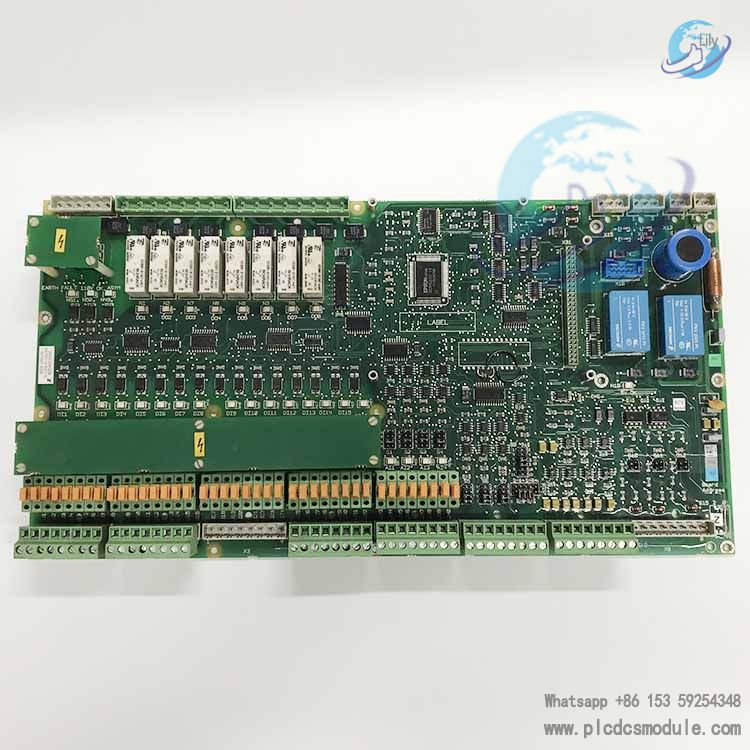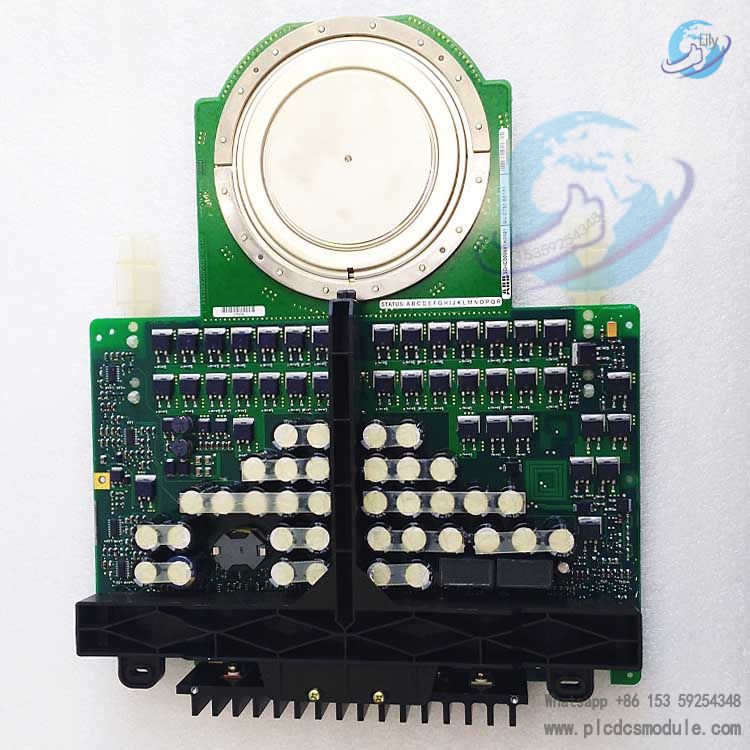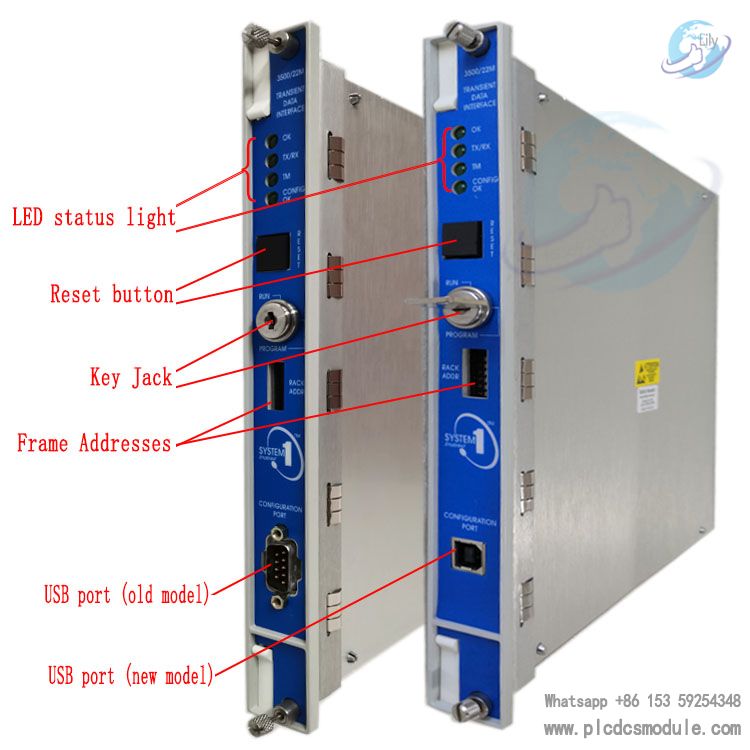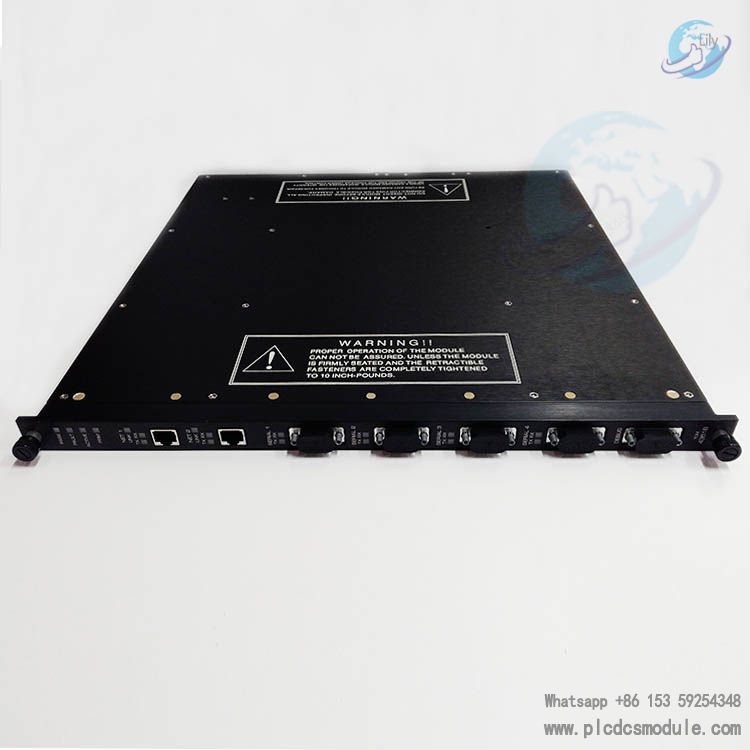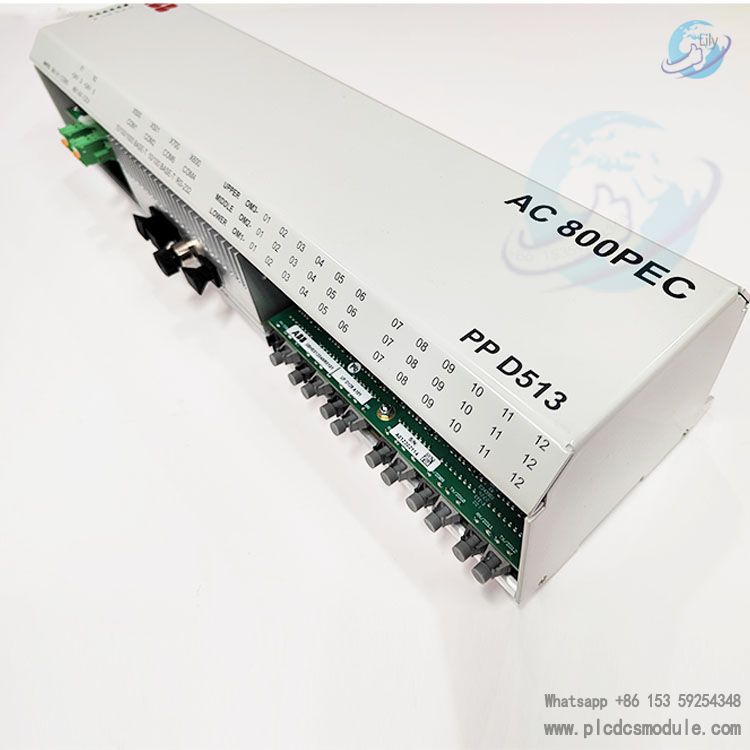


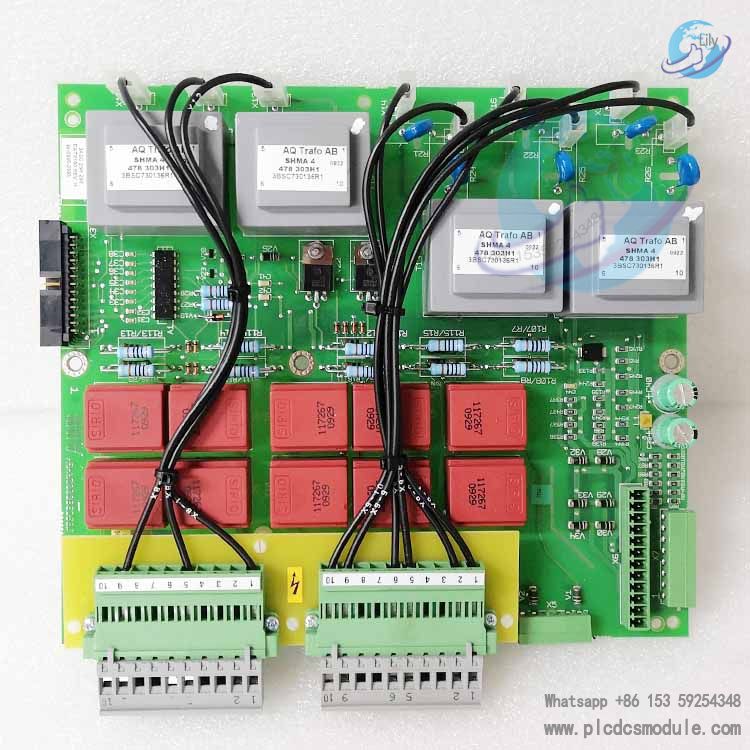
The ABB DATX100 (Model: 3ASC25H208) is a pulse transformer board originally designed by ABB Sweden. It serves as a core interface module for ABB Symphony Plus, AC 800M and Advant OCS systems. Widely applied in industrial automation and power electronics scenarios, it delivers fast and high-precision pulse trigger signals for power devices such as silicon controlled rectifiers (SCRs) and IGBTs. Additionally, it provides galvanic isolation between control circuits and high-voltage power circuits, ensuring stable system operation under severe electromagnetic interference conditions.

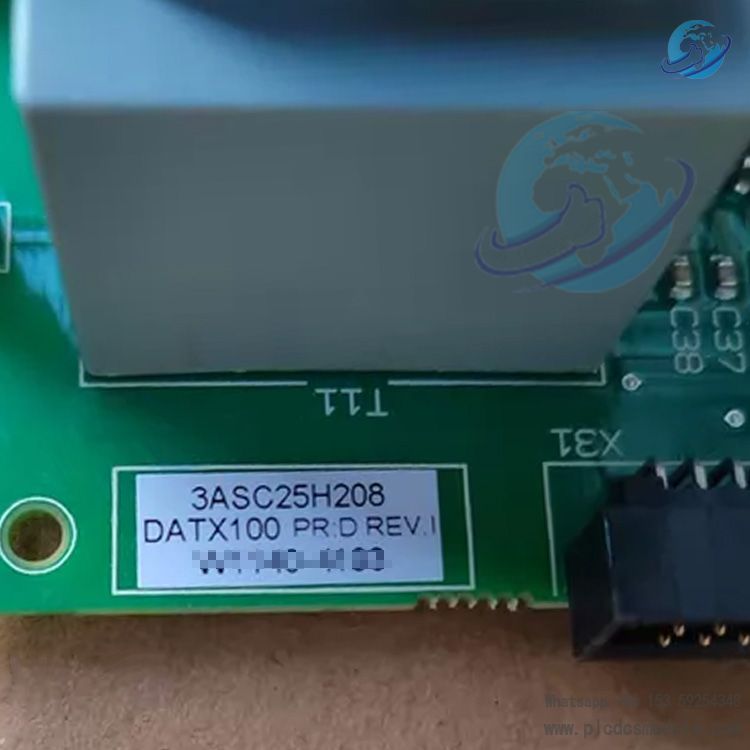
Basic Information
Brand: ABB (Sweden)Model: DATX100, Part No. 3ASC25H208Type: Pulse Transformer BoardOrigin: Sweden / FinlandDimensions: 215 mm × 200 mm × 35 mmWeight: Approx. 1.06 kgMounting Type: DIN rail mounting (compatible with TP867 base)
Core Functions & Technical Parameters
1. Core Functions
Pulse Signal Generation and Isolation: Built with high-precision pulse transformers, it outputs high-frequency pulses ranging from 10kHz to 100kHz. It realizes galvanic isolation between the control side and high-voltage side, suppresses surge and noise, and protects the main control circuit.
Power Device Driving: Specially designed for SCR, IGBT and other power components, it supplies fast high-voltage trigger pulses, suitable for power conversion, motor drive, excitation control and other application scenarios.
Signal Conversion and Conditioning: Converts control signals into isolated pulses, compatible with various ABB DCS/PLC systems. It supports Modbus RTU (RS-485) communication with an optional Ethernet interface.
High-reliability Design: Adopts epoxy insulating resin, redundant power supply (DC 24V ±10%) and anti-interference circuits, adapting to harsh industrial environments.
2. Technical Parameters
Supply Voltage: DC 24V ±10%Number of Channels: 8-channel pulse outputOperating Temperature: -40°C to +70°C (wide temperature range)Relative Humidity: 5%–95% (non-condensing)Dielectric Withstand Voltage: ≥2500V AC between control side and power sideCommunication Interface: RS-485 (Modbus RTU), Ethernet optionalCertifications: CE, UL, CSA, RoHS
Structure & Interface Description
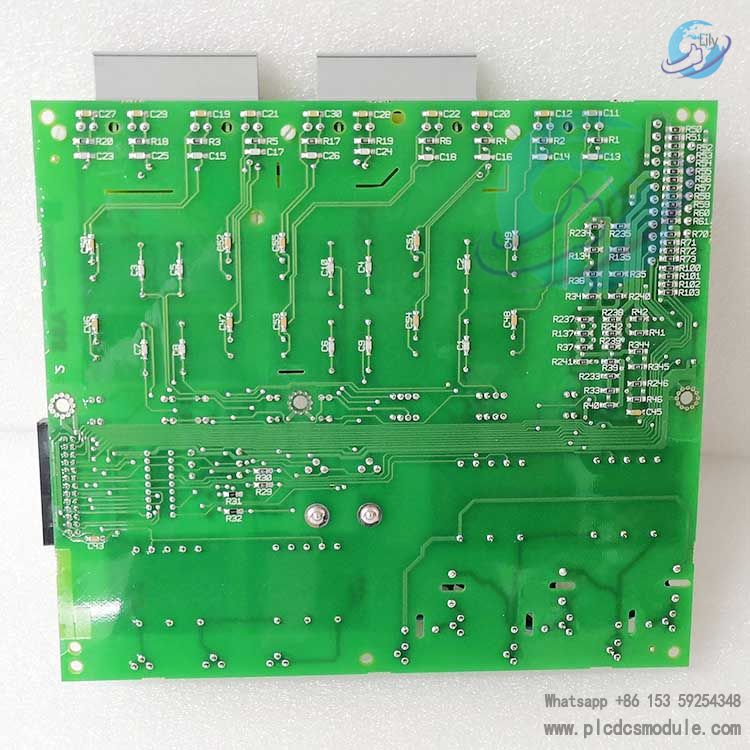
Board Layout: Green PCB main board, integrated with 3 sets of pulse transformers, red high-voltage capacitor array, signal conditioning circuits and terminal blocks.
Wiring Terminals:
- Control Side: 2×3-pin screw terminals (power supply, RS-485 communication, ground)
- Power Side: 8 sets of pulse output terminals, used to drive the gates of SCR/IGBT
Status Indicators: On-board power indicator (PWR), communication indicator (COM) and fault indicator (FAULT)
Application Scenarios
Power System: Generator excitation control, high-voltage direct current transmission (HVDC), and static var generators (SVG).
Industrial Drive: Medium and high-voltage frequency converters, motor soft starters, and high-power drive equipment for metallurgy and paper industries.
Energy Management: Power conversion systems (PCS), grid-tied inverters for photovoltaic and wind power, and power quality improvement equipment.
ABB System Integration: Serving as the I/O interface for Symphony Plus DCS and AC 800M PLC systems to realize seamless connection between power circuits and control systems.
FAQ
Q1: What is the difference between DATX100 (3ASC25H208) and ordinary I/O boards?A: Ordinary I/O boards only process low-voltage digital and analog signals without high-voltage isolation capability. Equipped with integrated pulse transformers, DATX100 can output high-voltage trigger pulses and provide galvanic isolation above 2500V. It is specially developed for power device driving and cannot be interchanged with common I/O boards.
Q2: What to do if the module fails to communicate and no indicator lights up?A:
- Check whether the DC 24V wiring is correct and the voltage is within the tolerance range of ±10%.
- Ensure proper grounding of the RS-485 bus shield and correct configuration of the 120Ω terminal resistor.
- Inspect loose bus connectors and replace the shielded cable for retesting.
- If the fault persists, read fault codes via the ABB engineering workstation to judge board damage.
Q3: Why does the module frequently report overcurrent or overvoltage faults during operation?A:
- Check for short circuits on pulse output wiring and damage to SCR/IGBT loads.
- Verify stable power supply free of spike interference; a power filter is recommended if needed.
- Confirm the ambient temperature does not exceed +70°C and heat dissipation is sufficient.
- Test pulse waveforms with an oscilloscope. Severe waveform distortion requires board calibration or module replacement.
Q4: Is hot-swap supported?A: Hot-swap is available under system redundant configuration. The module can be directly replaced without system shutdown and will not affect normal operation.
Q5: What is the alternative model?A: The original factory replacement is 3ASC25H209 with identical functions and parameters. Non-original third-party substitutes are prohibited, as they may cause isolation failure and board burnout risks.