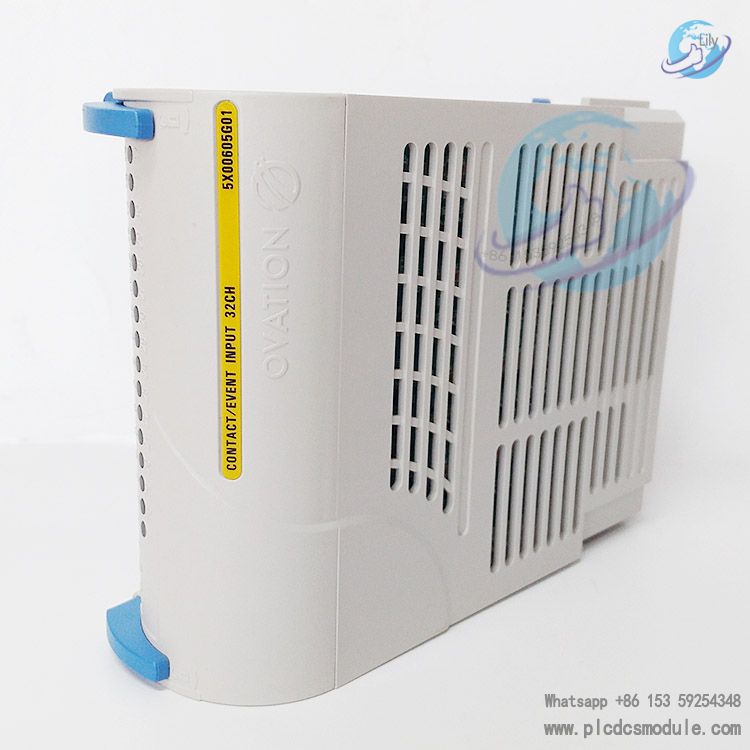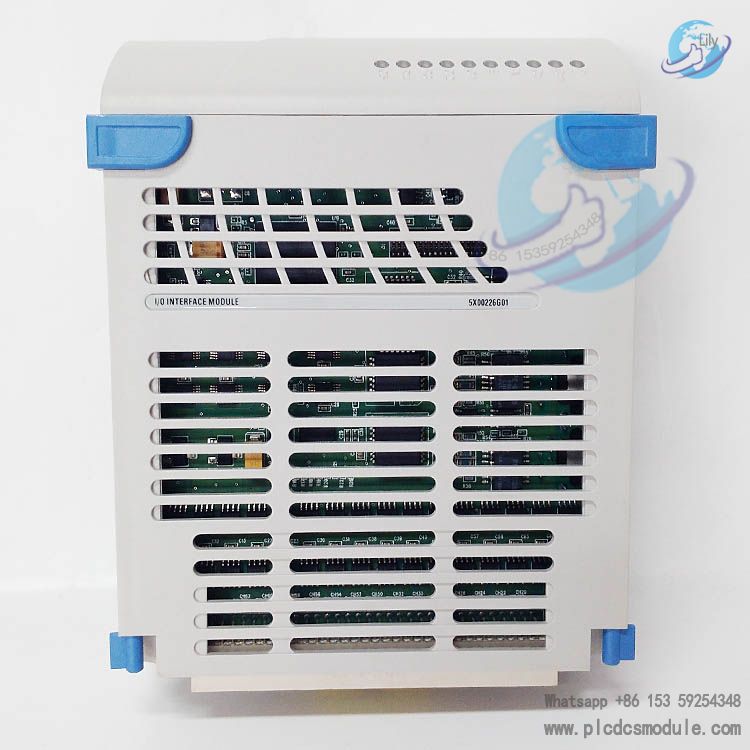


Overview
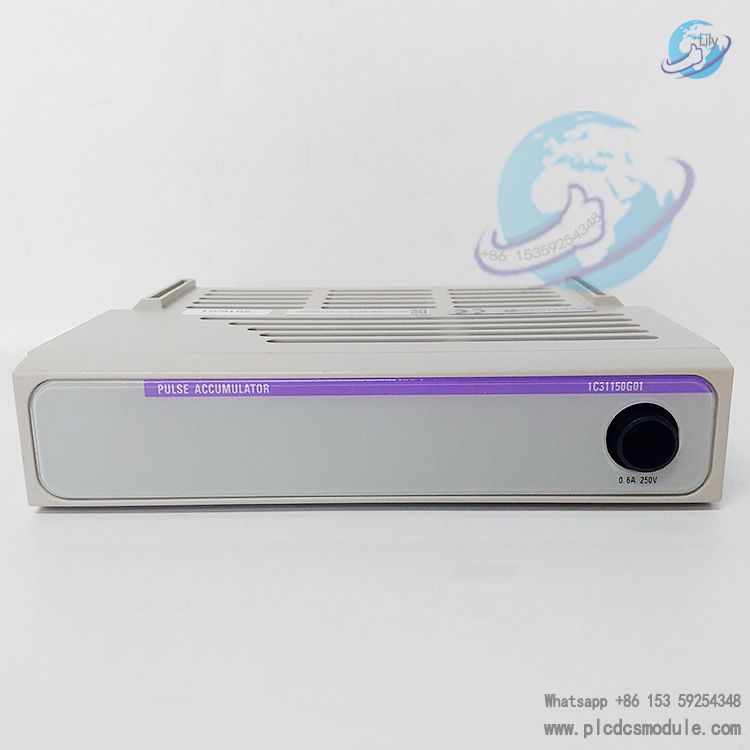
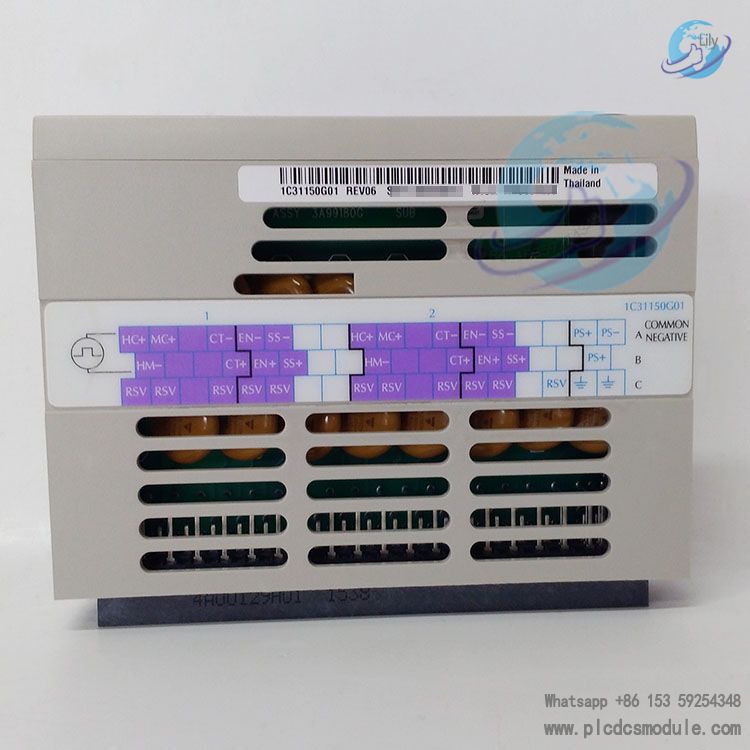
Emerson 1C31150G01 is a pulse accumulator module specifically designed for the Ovation Distributed Control System. It can accurately accumulate pulse signals from two input channels and transmit key data to the controller. The module supports multiple pulse processing modes, including pulse counting, frequency measurement, pulse width detection, and period measurement, which can flexibly meet diverse pulse signal processing needs in industrial scenarios. With stable performance, reliable structural design, and a comprehensive fault diagnosis mechanism, it has become a core component in industrial automation control, widely adaptable to various industrial control environments such as power, chemical, and manufacturing industries, ensuring stable and efficient operation of the system.
related documents

Technical Specifications
Advantages
Multi-mode adaptation
Covers pulse counting, frequency measurement, pulse width detection, and period measurement, meeting diverse industrial scenario needs without additional equipment
Wide voltage compatibility
Count input covers 5V-48V multi-range voltages, control input supports 24V/48V, enabling direct connection to on-site devices with different voltage standards
High reliability
1000V AC/DC strong insulation, 0°C-60°C operating temperature, 0%-95% humidity tolerance, stably coping with harsh industrial environments
Accurate processing
1μSec input filter range and configurable 1.4mSec-2.0mSec contact debounce time, ensuring pulse signal detection accuracy and stability
Easy integration
Standardized design, seamlessly compatible with Ovation DCS, simplifying installation and system integration, reducing deployment costs
Comprehensive diagnosis
Built-in fault detection mechanism, real-time monitoring of module status, quickly identifying wiring abnormalities and power supply failures
Flexible configuration
Supports external control signal triggering (enable, snapshot), adjustable working parameters for different pulse signal processing needs
Application Fields
Metallurgical industry
Working Principle
The core working process of the Emerson 1C31150G01 module revolves around the reception, processing, and transmission of pulse signals. Firstly, the module receives pulse signals output by on-site equipment (such as sensors, encoders, etc.) through input channels. After entering the module, the signals first pass through a built-in preset filter circuit to filter out high-frequency interference signals, and then eliminate signal distortion caused by contact bounce through a configurable debounce circuit. Subsequently, according to the preset working mode (pulse counting, frequency measurement, etc.), the module uses a built-in 15-bit high-precision counter to process the processed pulse signals — directly accumulating pulse counts in counting mode, calculating frequency through pulse counting within a fixed time in frequency measurement mode, and recording the duration of high and low levels of pulses in pulse width and period measurement modes. After processing, the module transmits data to the Ovation controller via the I/O bus. When new valid data is detected, the update bit (Bit 15) is triggered synchronously to ensure the controller obtains the latest data in a timely manner. At the same time, the module supports triggering via external control signals (enable, snapshot), which can flexibly respond to on-site operation needs and realize flexible management of pulse signals.
MAINTENANCE
- Regularly inspect the module's terminal blocks to check if the wiring is firm without loosening and if the terminals have oxidation or corrosion, avoiding abnormal signal transmission due to poor contact
- Clean the module surface and installation environment every 6 months to remove dust, oil, and other debris, preventing accumulations from affecting the module's heat dissipation performance and insulation effect
- Regularly verify input filter and debounce parameters, adjusting them in combination with the characteristics of on-site pulse signals (such as frequency, amplitude, etc.) to ensure the parameters match the actual signals and guarantee detection accuracy
- Real-time monitor the stability of the module's power supply voltage, checking whether the voltage is within the rated range through the controller or special monitoring equipment to avoid module failure caused by overvoltage or undervoltage
- When the module malfunctions, check the error code through the diagnostic function of the Ovation controller, and locate the problem type (such as power supply failure, signal abnormality, etc.) in combination with the error code description to quickly carry out maintenance
- When replacing the module, first record the configuration parameters of the original module (such as filter range, debounce time, etc.), ensuring the parameter settings of the new module are consistent with the original module to avoid affecting system compatibility and overall operation effect due to parameter mismatch
- When the module is out of service for a long time, remove it from the equipment and store it in a dry, ventilated environment free of corrosive gases to avoid moisture or corrosion
Same-Brand Series Products