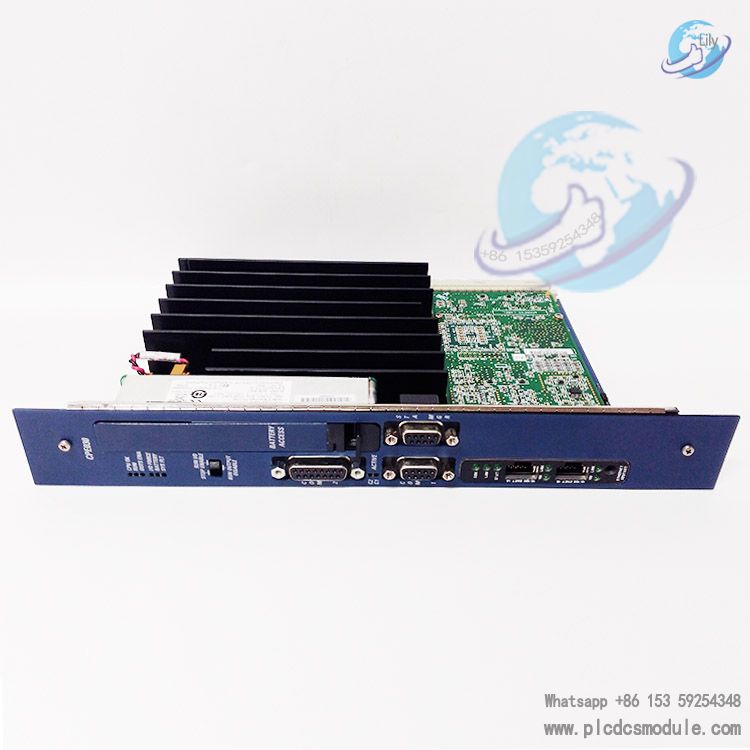


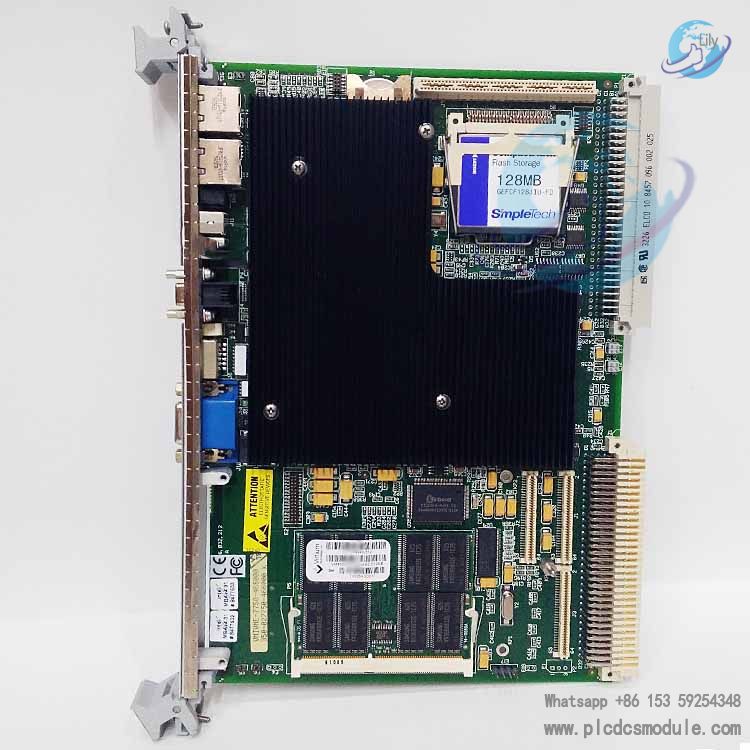

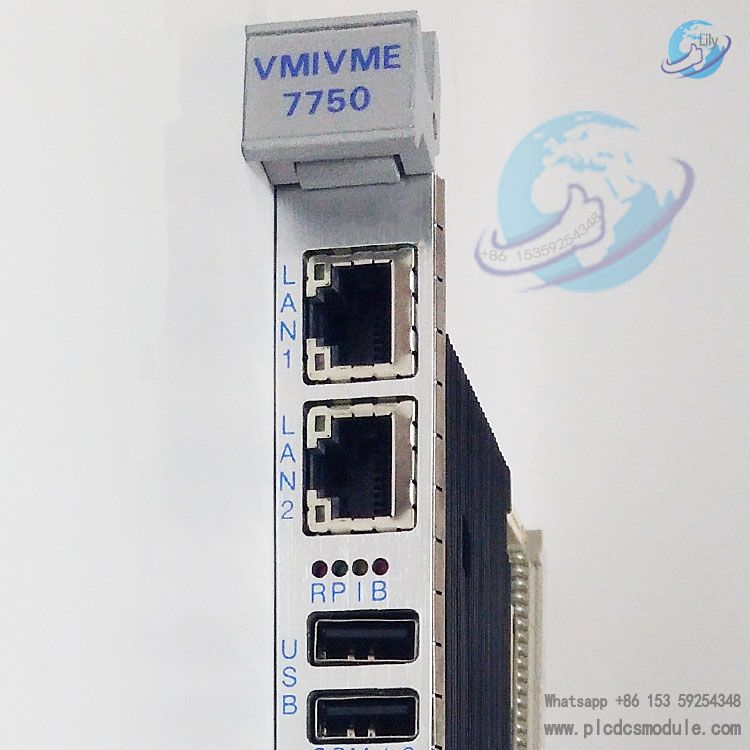
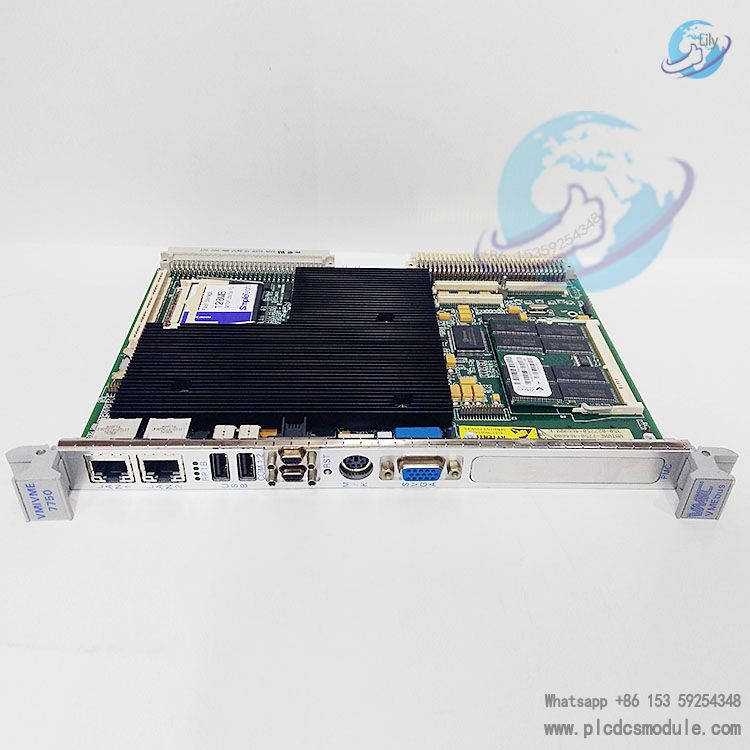
The VMIC VMIVME-7750-466000 is a single-slot VMEbus single-board computer (SBC) based on the Pentium III processor. It adopts the Intel 815E chipset and a 133MHz front-side bus, complies with the VME Specification Rev. C.1 standard, and combines the versatility of desktop computers with the dedicated functionality of embedded systems. Featuring a passive cooling design and Eurocard form factor, it supports transparent PCI-to-VME bridge technology. It can serve as either a system controller or a peripheral CPU in multi-CPU systems, and is widely suitable for scenarios requiring high-performance processing in a single VME slot, such as telecommunications, industrial control, automated testing, and data acquisition.
related documents

Core Hardware Configuration
Processor & Chipset
Memory Configuration
Built-in 32KB Non-Volatile SRAM (NVSRAM) can retain critical system data during power outages without the need for an additional backup power supply.Memory supports shared access by local processors and VMEbus master devices, enabling dual-port access via PCI-to-VME bridging. Attention should be paid to avoiding data overwriting conflicts.
Power Supply Requirements
It provides +5V (max. 1.5A) and +3.3V (max. 1.5A) power for the PMC expansion slot. The total output current of +12V and -12V shall not exceed 750mA, complying with VMEbus specifications.
Standard Functions & Interfaces
Storage Interfaces
An optional on-board flash disk, compatible with the IDE protocol, can serve as a system boot device and supports multi-partition configuration and operating system installation.
Communication & Peripheral Interfaces
Integrated SVGA video controller with 4MB display cache, supporting a maximum resolution of 1600x1200 and a refresh rate of 85Hz, compatible with VESA high-resolution standards.
Interrupt & I/O Mapping
A 64KB independent I/O address space covering standard peripheral ports such as DMA controllers, timers, keyboard controllers, and real-time clocks, with an address range compatible with desktop PCs.
Embedded & Real-Time System Features
VMEbus Bridging Function
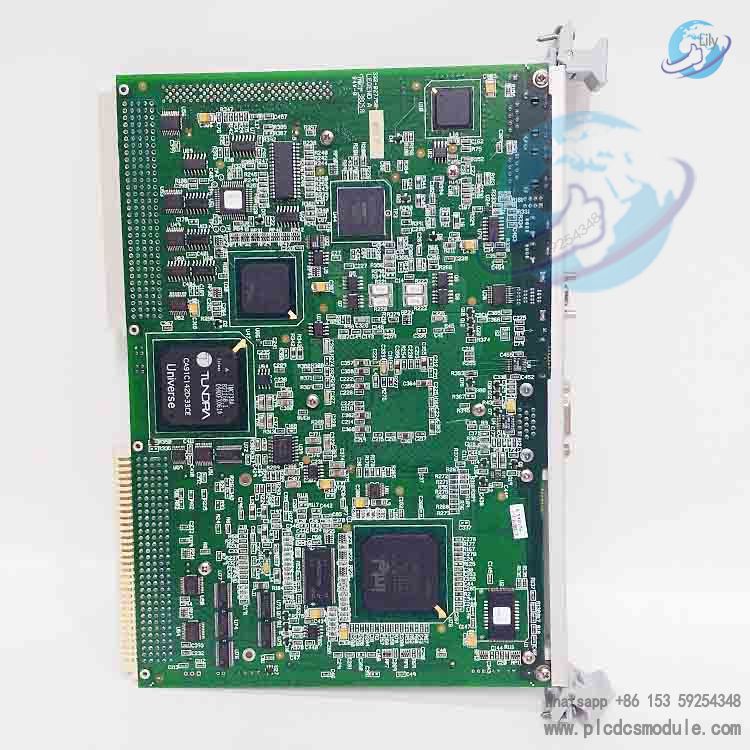
The PCI-to-VME bridging is implemented using the Tundra Universe II chip, supporting 64-bit VME64 block transfers, programmable Address Modifiers (AM-Code), and byte/word swapping in master/slave modes.It supports 5 independent protected-mode memory windows and high-throughput DMA transfers, with an optional byte-swapping bypass mode to boost performance.It can be configured as system controller mode, supporting PRI/SGL/RRS bus arbitration modes, and is equipped with programmable bus error timers and SYSFAIL signal generation functionality.
Timing & Monitoring Functions
4 x programmable general-purpose timers (2 x 16-bit + 2 x 32-bit) with selectable clock rates of 2MHz/1MHz/500kHz/250kHz, supporting timeout interrupt generation.A software-programmable Watchdog Timer (WDT) with configurable timeout periods (2.048ms–135s), supporting system reset or PCI SERR# signal output to prevent system out-of-control caused by software faults.It supports I2C bus communication, capable of connecting to I2C networks as a master/slave device. It provides SDA/SCL signals via the E17 interface, complying with the Philips I2C 2.0 specification.
Remote Boot & Expansion
It supports remote network boot via LAN1/LAN2 ports, compatible with protocols such as Netware, TCP/IP (DHCP/BootP), RPL, and PXE, eliminating the need for local storage devices.Equipped with 1 x PMC expansion slot (supporting front-side access) for expanding additional I/O function modules, with the PMC interface complying with the IEEE P1386.1 specification.
Product Advantages & Application Scenarios
Core Advantages
It combines desktop-level compatibility with embedded reliability, and its passive cooling design is suitable for harsh industrial environments.Boasts rich I/O interfaces and expansion capabilities, enabling seamless integration of VMEbus and PCI devices.Provides comprehensive real-time system support, including timers, watchdog, I2C bus and other functions, to meet real-time control requirements.
Typical Applications
Industrial Automation: Factory automation control, process monitoring systems
Test & Measurement: Automated test equipment, data acquisition systems
Telecommunications & Defense: Communication base station control, military simulation systems
Embedded Computing: Diskless workstations, dedicated control terminals
Installation & Maintenance
Installation Requirements
With a single-slot 6U double Eurocard form factor, the board must be inserted into a VMEbus backplane that supports P1/P2 dual connectors. For system controller mode, it is recommended to install the board in the first VME slot.During installation, ensure the cooling airflow rate is no less than 350LFM. Do not perform hot-swapping on the board. For peripheral connections, refer to the connector pin definitions in the appendix.
Maintenance & Support
A password-clearing jumper (E3) is provided for resetting the CMOS password. Users can configure VME-related jumpers (E12/E13), while factory-configured jumpers are prohibited from modification.The product is eligible for repair, replacement and return services. Users are required to contact VMIC customer service to obtain a Return Material Authorization (RMA) number. User-level maintenance is not recommended to be performed independently.
Customers who purchased this product are also browsing the following products:
VMIC VMIVME7698 Single-board computer module
GE IS220PVIBH1A MARK VIE Vibration I/O Pack BPPB
GE EPSCPE100-ABAC Standalone Controller
GE IS200TRLYH1BGF Mark VI Relay Output Board