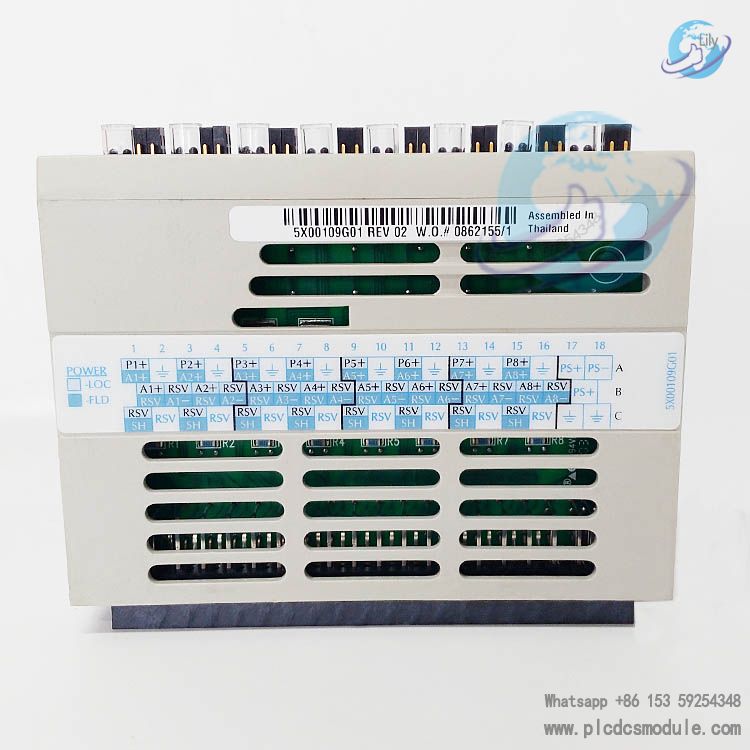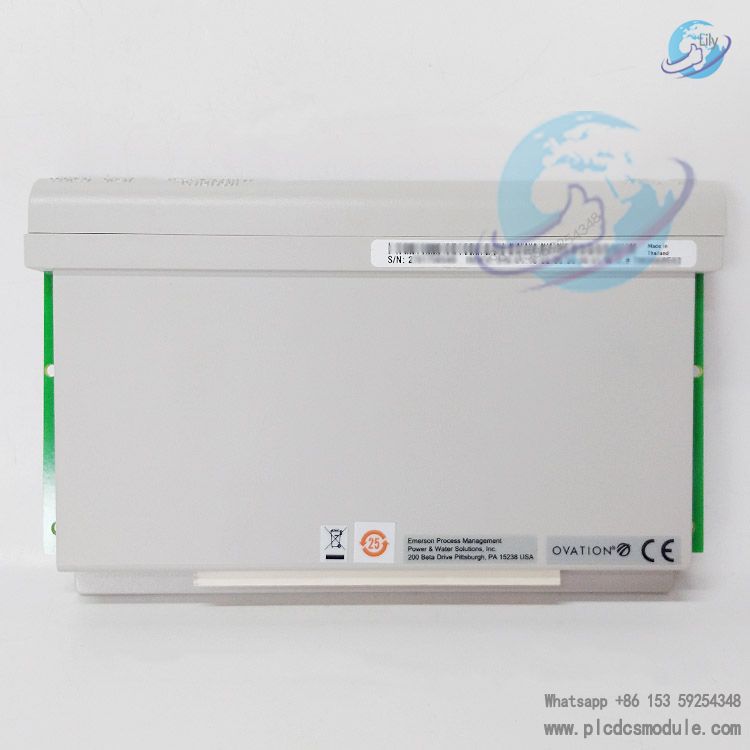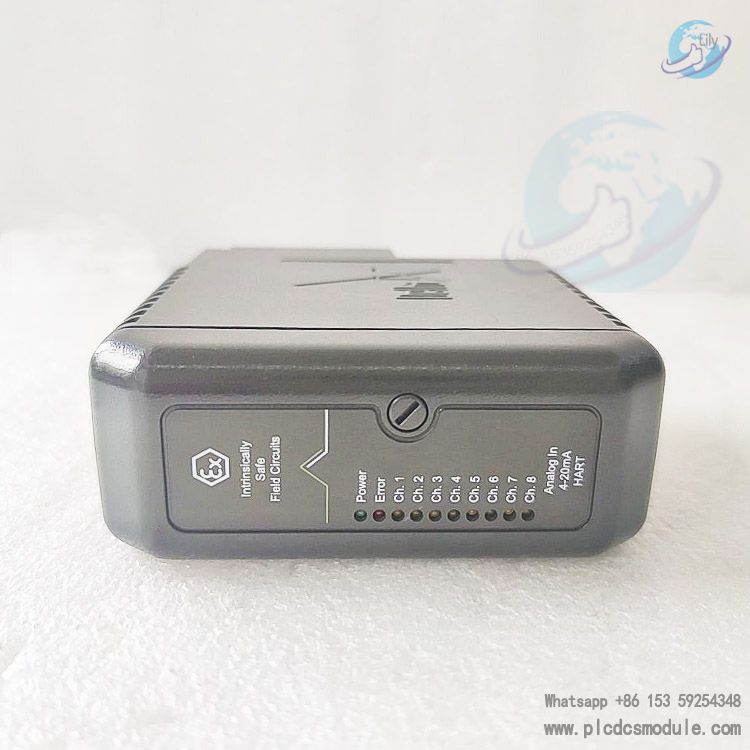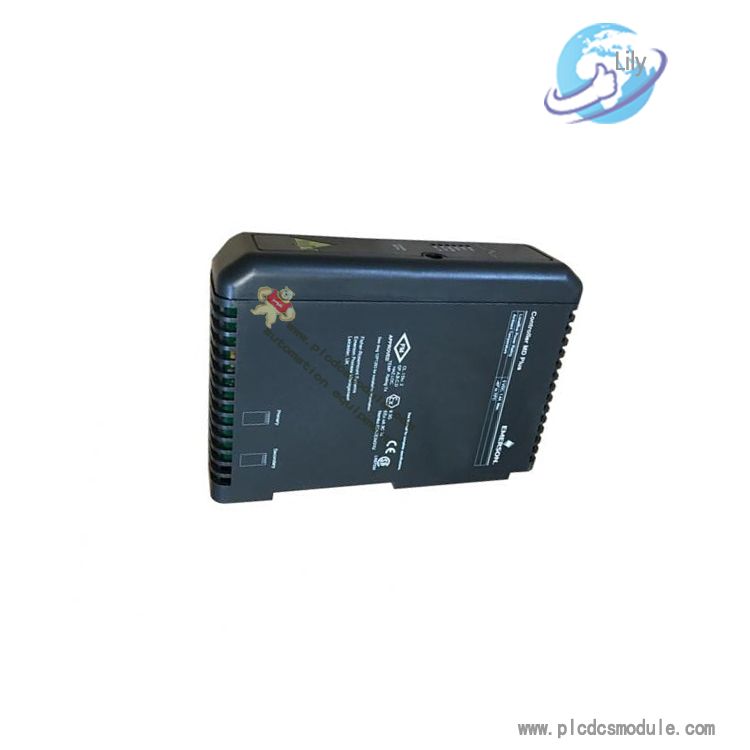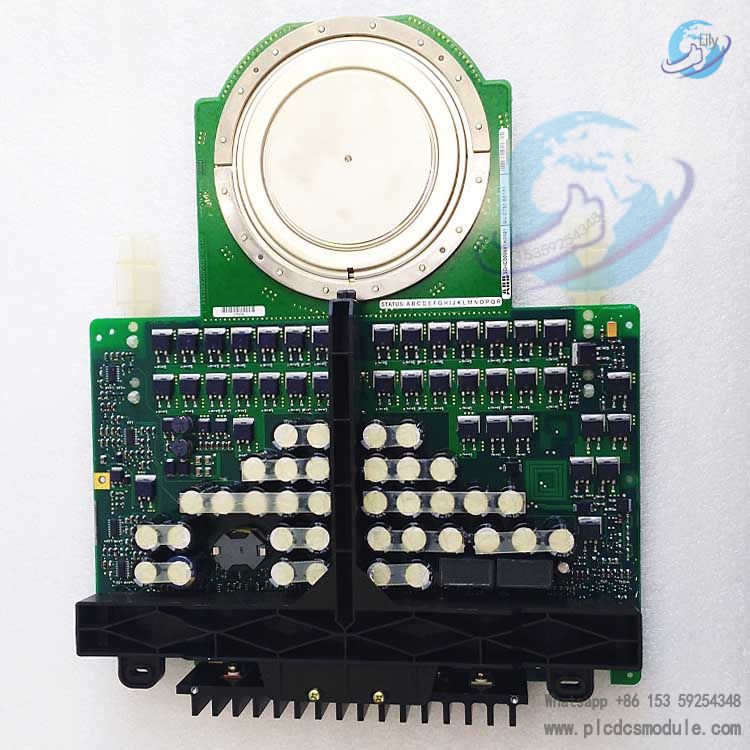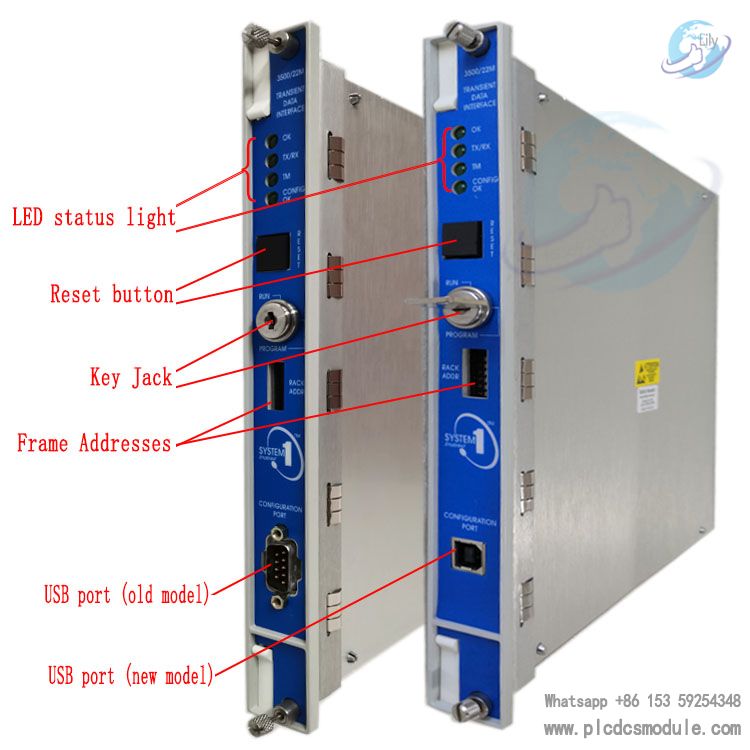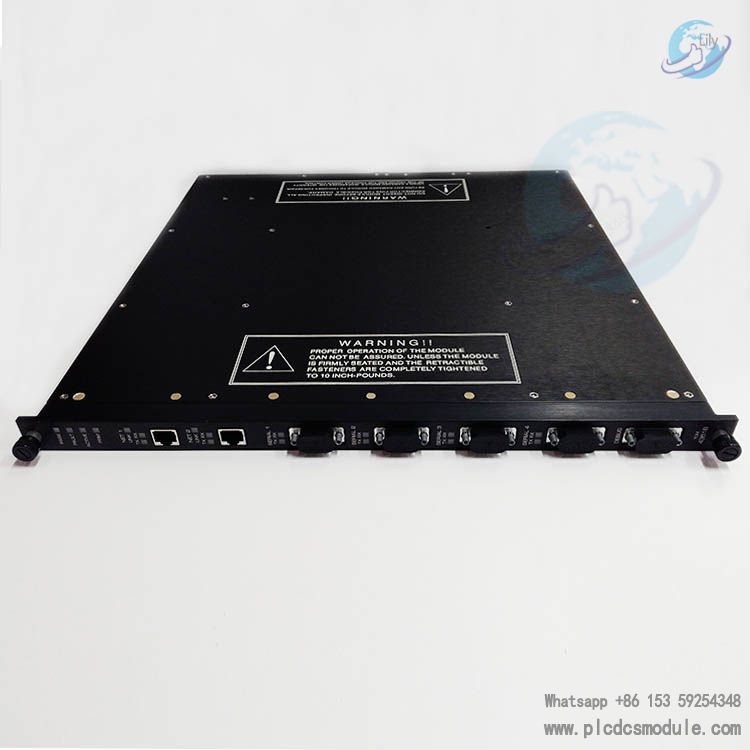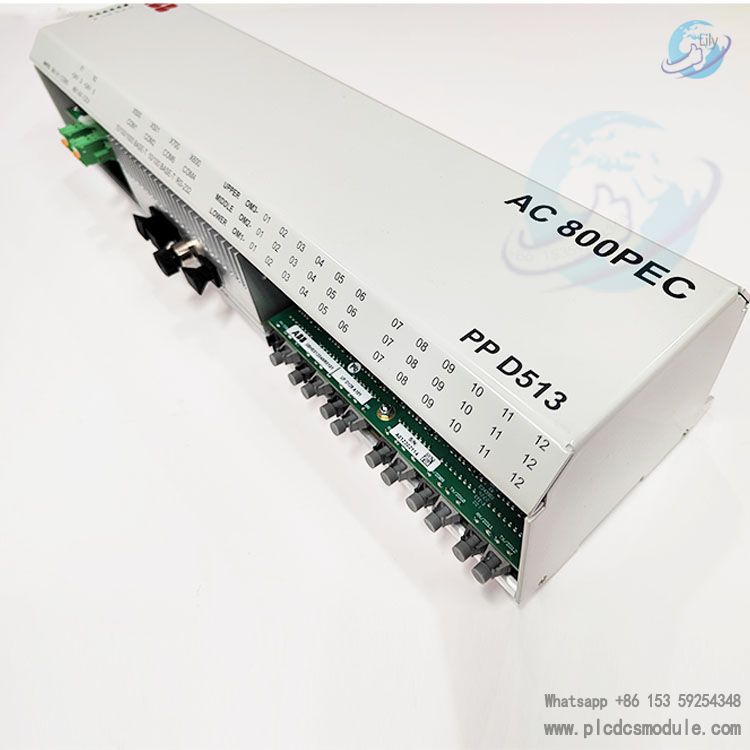


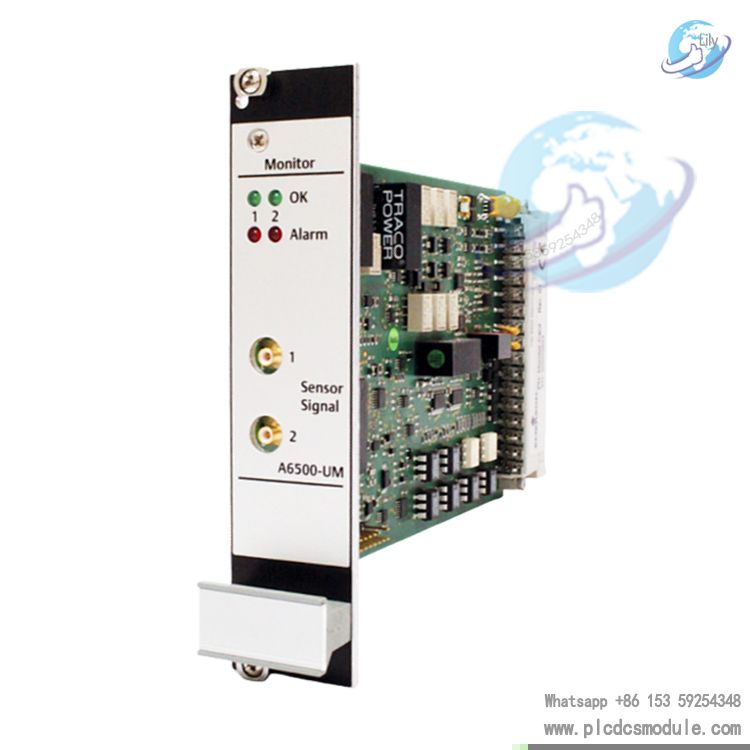
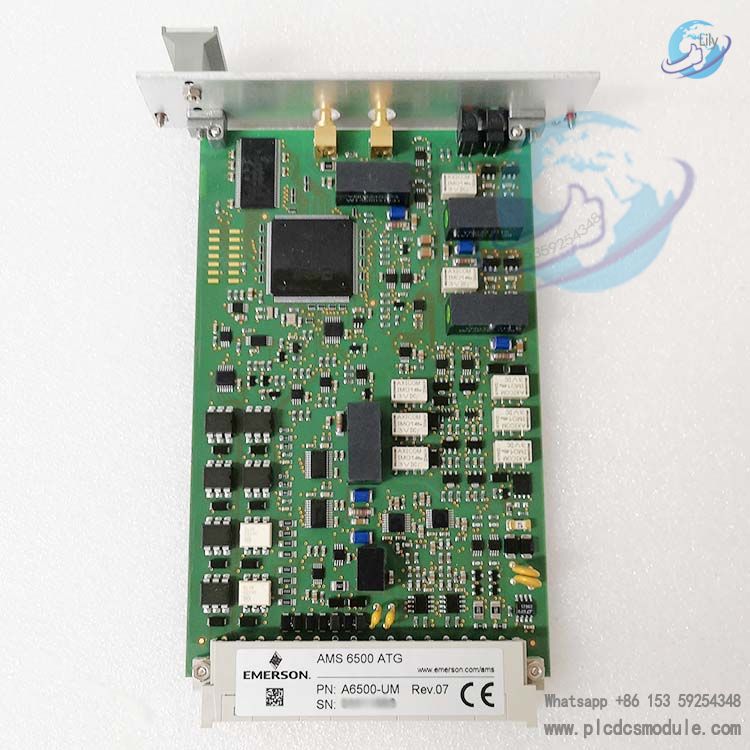
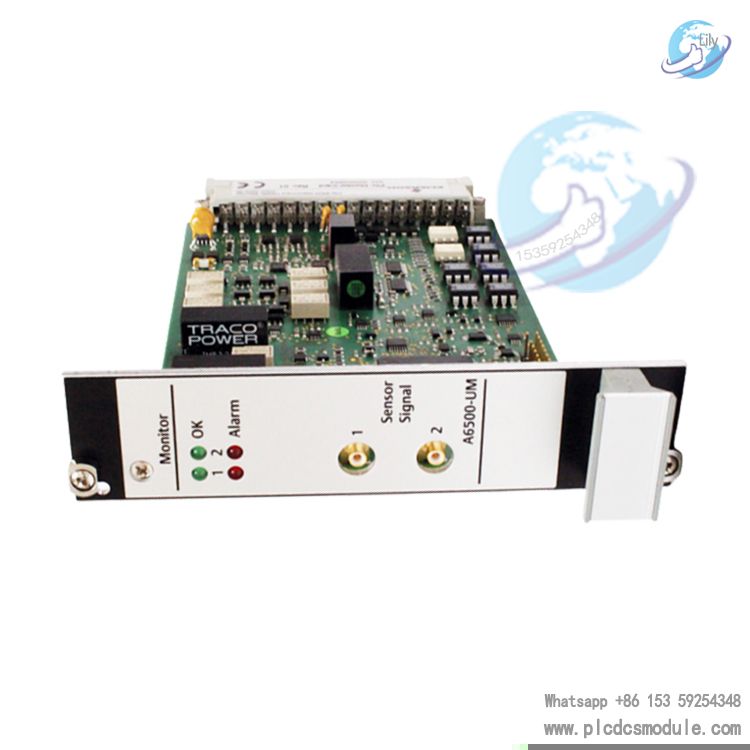
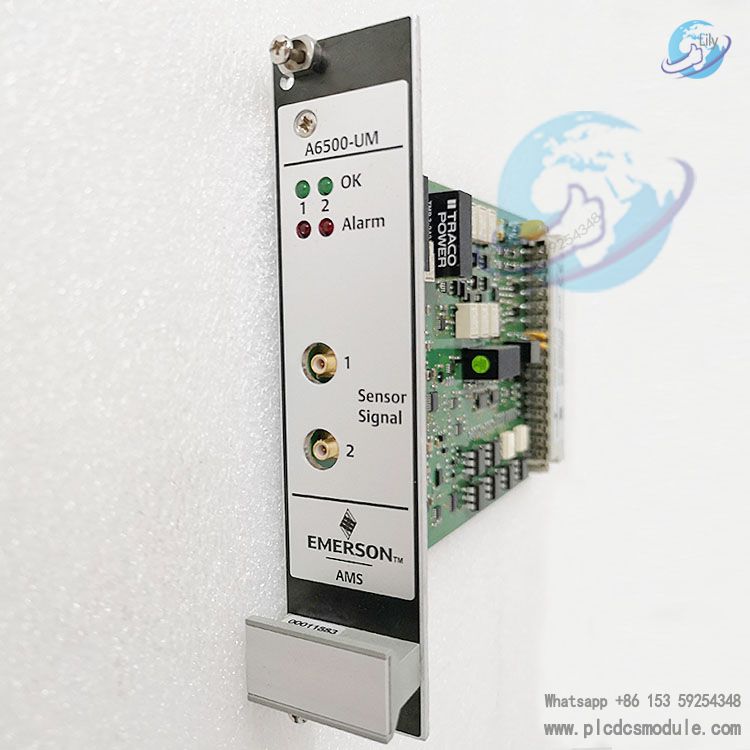
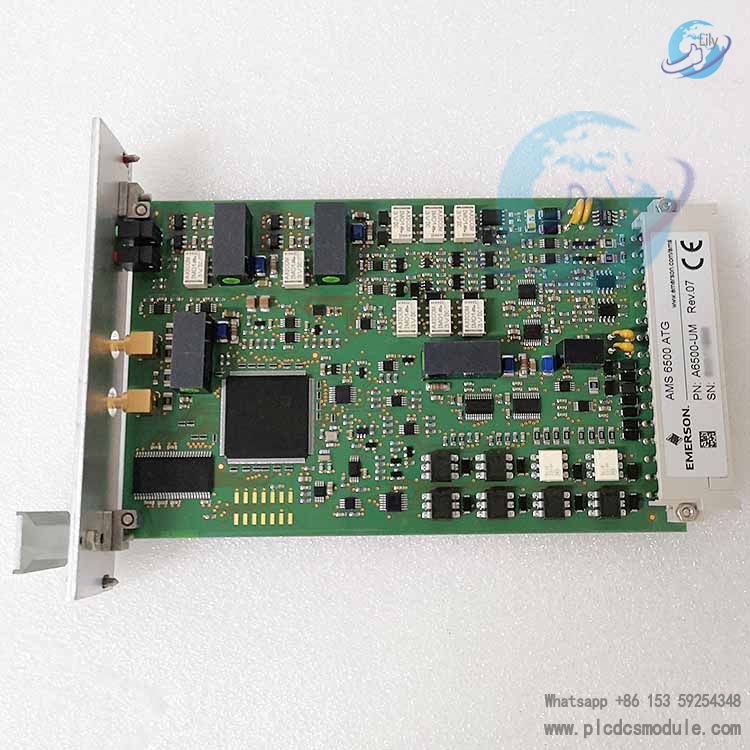
The A6500‑UM serves as the universal core measurement card for the Emerson AMS6500 ATG machinery protection monitoring system, designated by OEM as an integrated multi-parameter acquisition module for rotating machinery. It is a hot-pluggable 3U single-slot rack-mounted unit, factory-equipped with 2 independent universal sensor input channels, 5 digital input (DI) points and 6 relay-based digital output (DO) points, functioning as the standard I/O component for API670-compliant machinery protection architecture.
Natively compatible with a full range of industrial vibration and displacement transducers, the module communicates with the A6500‑CC communication card via backplane RS485 bus. It converts data into Modbus RTU/TCP for uplink transmission to host DCS and AMS online diagnostic platforms, while featuring built-in 4~20mA analog transmission outputs to accommodate legacy control systems alongside modern digital maintenance requirements. This unit is engineered for condition monitoring and protective trip interlock of critical rotating assets including steam turbines, compressors and fans.
DOCUMENT DOWNLOAD

Core Advantages
Universal sensor compatibility to reduce spare part varietiesSix sensor types (eddy current, piezoelectric acceleration, seismic velocity, low-frequency bearing, Hall-effect and LVDT with A6500-LC converter card) are configurable via software setup on one single board. Measurement modes can be switched without hardware replacement, greatly reducing procurement specifications and inventory costs.
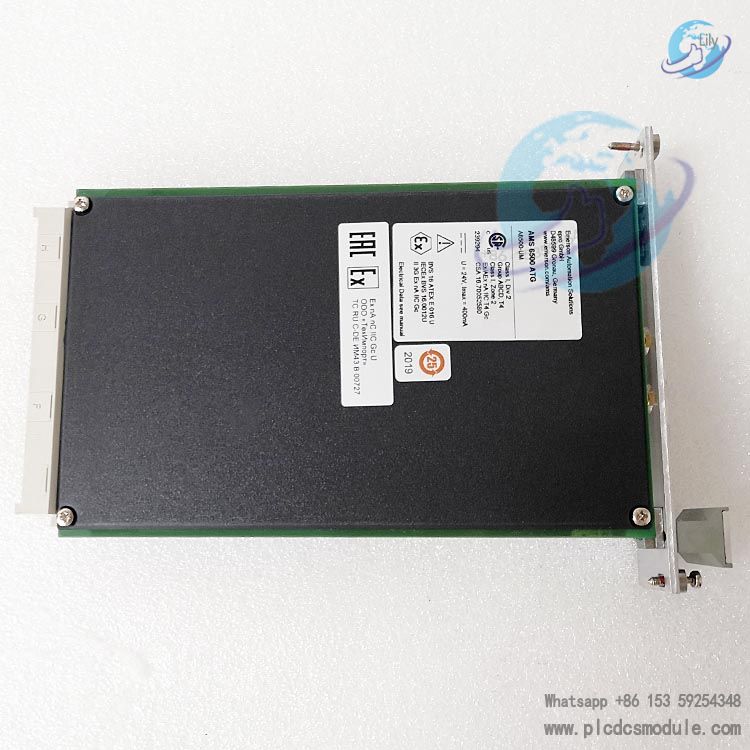
High safety compliance with authoritative certificationsApproved to API670 machinery protection, SIL2 functional safety, UL/CE and ATEX Zone 2 explosion-proof standards. It meets safety regulation requirements for interlock trip of thermal power and petrochemical units and can be directly wired into unit ESD safety loops.
Compact structure saving cabinet space3U single-slot plug-in design cuts cabinet occupancy by 50% versus older-generation 6U dedicated monitor modules. Cabinet expansion for dense layout needs no cabinet reconstruction.
Hot-swap maintenance without equipment shutdownLive rack replacement is supported. Faulty card swapping will not affect ongoing measurement of other channels on the rack, enabling on-site maintenance under running unit condition.
Integrated acquisition and interlock functionCombines analog input acquisition, digital discrete signals and relay trip output into one module. No extra signal isolators or auxiliary intermediate relays are needed to simplify field wiring and cut installation expenses.
Built-in proprietary diagnostic algorithmsEquipped with Emerson PeakVue bearing diagnosis and FFT spectrum analysis. Raw vibration data is preprocessed locally on hardware to realize early warning of hidden faults including bearing spalling and shaft rub-impact.
Specifications
(I) Hardware Channel Parameters
Analog Input: 2 independent universal measuring channelsFrequency range: 0.5 Hz ~ 18.75 kHz, input impedance>100 kΩ. Compatible with Emerson eddy-current sensors PR6422 / PR6423 paired with CON011 preamplifiers. Measuring ranges are configurable via software to switch among shaft displacement, shaft vibration, casing vibration, LVDT valve position and keyphasor speed measurement; typical measurement accuracy reaches ±0.1% FS.
Digital I/O: 5 isolated DI, 6 relay-type DO
- DI: 24 VDC passive contact input with 2500 VAC optoelectronic isolation and ≤1 ms response time, used for collecting local emergency stop, cabinet interlock and on-site start/stop switch signals.
- DO: passive dry-contact relay output with contact rating 250 VAC / 5 A, deployed for local interlock output on high-high trip and high/low alarm.
Transmission Output: 4 isolated 4~20 mA analog outputsEach channel corresponds to one measured value with galvanic isolation, directly connectable to DCS AI modules for legacy control system retrofits without Modbus upgrade.
(II) Communication & Environmental Specifications
- Bus: Internal backplane RS485 communicates with A6500‑CC communication card for Modbus RTU/TCP conversion; CC card’s USB port enables direct PC connection for on-site configuration and commissioning via AMS Suite software.
- Power Supply: Centralized 24 VDC backplane rack feeding; single-card power consumption: 24 mW.
- Ambient: Operating temperature: −20℃ ~ +70℃; storage temperature: −40℃ ~ +85℃; relative humidity 5%~95% RH (non-condensing). Vibration resistance: 55~150 Hz / 20 m/s²; shock resistance: 150 m/s², suitable for harsh environments of petrochemical plants and steam turbine workshops.
- Mechanical Structure: Dimensions 144×89×35 mm, net weight approx. 200 g, compliant with standard 19-inch rack slot of A6500‑SR chassis.
(III) Software Functional Features
- Remote software configuration of alarm thresholds, trip bypass and limit multiplier; no on-site DIP switch setting required.
- Full-board hardware self-diagnosis: automatic fault alert & fault code upload upon power failure, channel short-circuit, sensor open-circuit or over-temperature of the module.
Configurable parameters support local backup; parameters auto-download after card replacement to eliminate repeated commissioning.
Application Scenarios
- Thermal & Gas Power GenerationMonitoring for steam turbine generator sets, gas turbines, boiler induced/draft fans; measuring shaft vibration, axial displacement, bearing housing vibration, rotating speed and main steam valve LVDT position. Overshoot interlock trip complies with plant API670 machinery protection standards.
- Petroleum Refining & Coal Chemical IndustryDeployed on hydrogenation compressors, large screw compressors and air separation turbomachinery to monitor rotor vibration and thrust shaft displacement, preventing unplanned downtime caused by compressor surge or bearing burnout.
- Long-distance Oil & Gas Transmission StationsFor reciprocating and centrifugal compressors on gas boosting packages; casing vibration plus keyphasor speed monitoring. The card carries ATEX certification for installation within hazardous classified explosive areas at compressor stations.
- Iron & Steel / Cement Heavy IndustryUsed for blast furnace blowers, main sinter exhaust fans and large roller presses. PeakVue-based early bearing fault prediction enables predictive maintenance.
- Pharmaceutical & Fine ChemicalsCondition monitoring on agitator shafts of fermentation tanks and process pump units. All tagged-with-timestamp data storage meets audit traceability requirements of FDA 21CFR Part11.
FAQ
- Q: Is A6500‑CC communication card mandatory when purchasing A6500‑UM? Can UM connect directly to DCS?A: A6500‑CC installed on the same rack is mandatory. UM has no standalone external Modbus port and relies on backplane RS485 routed via CC card for Modbus conversion. Its 4~20mA analog output terminals can be wired straight into DCS AI modules without CC card.
- Q: Are extra accessories required for LVDT valve position measurement?A: A separate A6500‑LC LVDT converter daughterboard is required. LVDT signals feed into LC card first before routing to UM analog inputs; direct hardwiring to UM is not supported.
- Q: Is SIL2 certification granted per single card or for the complete system?A: Each individual card holds independent SIL2 certification. The full AMS6500 rack assembly achieves system-level SIL2 compliance. Buyers may request OEM certified SIL document copies from suppliers for safety authority filing.
- Q: Rapid troubleshooting for card LED fault alarm & sensor open-circuit alert?A: Retrieve fault codes via AMS Suite first. For open-circuit alerts, inspect field sensor cables for short or breakage. For hardware failure, hot-swap with spare UM card; preset parameters auto-download to restore measuring points quickly.
- Q: Troubleshooting for excessive drift on 4~20mA transmitted signals?A: ① Separate grounding between module and DCS side to eliminate ground loop interference; ② Perform zero & full-span recalibration via AMS software; ③ Calibrate transducer with Fluke signal generator and replace faulty sensor probe if out of specification.
- Q: Does parameter reconfiguration required after installing brand-new A6500‑UM?A: Manual configuration is normally unnecessary, as rack backplane retains all configuration data which auto-downloads to newly inserted cards. Manual restoration from backup files is only needed upon rack configuration corruption.
- Q: Extra explosion-proof accessories needed for UM under harsh hazardous chemical locations?A: The card itself is ATEX Zone2 certified and ready for installation inside certified flameproof cabinets with no additional safety barriers required. Only explosion-proof shielded cables shall be adopted for sensor wiring.